Draper's Wimbledon withdrawal turns a personal injury into a wider warning for the men's tour
Britain's Jack Draper has pulled out of Wimbledon with the arm injury that has already cost him most of a year, and his pre-tournament warning about the volume of injuries across the men's game now looks less like commentary than diagnosis.
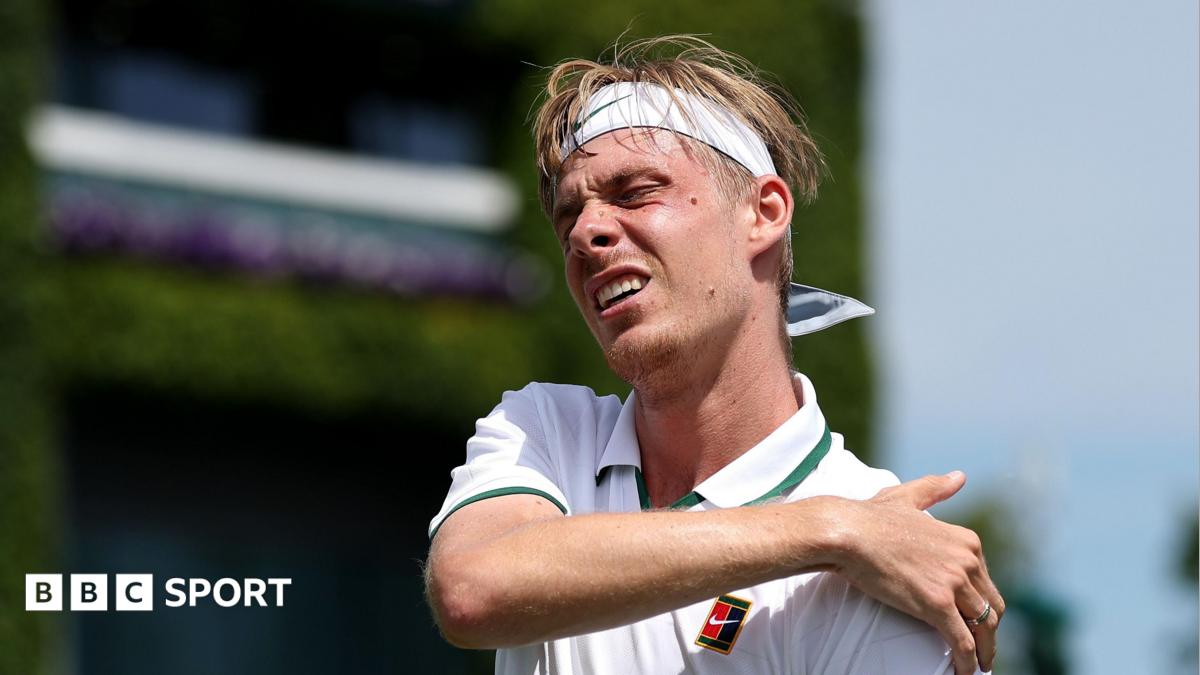
Britain's Jack Draper has withdrawn from Wimbledon on the eve of the Championships, ending his Grand Slam comeback before it began and turning a private medical problem into a public question about the state of the men's tour. The 24-year-old, seeded inside the men's draw at the All England Club, cited the arm injury that has kept him off the court for most of the past twelve months. "I'm devastated," he said, confirming he would not compete.
The withdrawal lands as the sharpest data point yet in a season Draper himself had already flagged as a warning sign. Two days before pulling out, speaking to BBC Sport on 28 June 2026, he described the number of leading players arriving in SW19 carrying injuries as "pretty worrying." What looked on Sunday like the candid observation of a player still hoping to play has, by Monday lunchtime, become the frame for his own absence.
A comeback that never began
Draper's year has been defined more by what he has not played than by what he has. The arm complaint surfaced during the 2025 season and was severe enough to interrupt his ranking trajectory at the moment he looked ready to consolidate a place inside the men's top ten. Coming into Wimbledon he had played only a handful of competitive matches in 2026, and the question hanging over his pre-tournament media appearances was not form but durability: how many games could his arm survive against the elite servers and baseliners who would be waiting for him across the net.
That question is now academic. By withdrawing before the draw was made, Draper avoids the spectacle of a first-round retirement and preserves ranking points he would otherwise have lost, but he cannot avoid the more uncomfortable statistic — that one of Britain's most promising players has now spent the majority of a calendar year unable to compete at his own level. For British tennis, which has invested heavily in the generation behind him, the timing is particularly stark: Wimbledon is the tournament where domestic players carry the heaviest expectation and the largest local following.
A tour-wide pattern, not a one-off
The more uncomfortable question is whether Draper is the symptom or the diagnosis. In his 28 June interview with BBC Sport he pointed to the volume of leading players arriving at the Championships compromised, an observation that echoed complaints that have run through locker rooms for the better part of two seasons. The men's tour has lengthened, surfaces have homogenised, and the squeeze between Masters events, ATP 500s and mandatory tournaments leaves players with fewer off-seasons and shorter recovery windows between transitions from clay to grass.
There is a counter-narrative worth taking seriously. Tennis has always been a sport of attrition, and the same surfaces and schedule that produced the current injury list also produced the deepest men's fields in the sport's history. Prize money at every level of the tour has risen, and players are free, within the constraints of the ranking system, to manage their own calendars in ways previous generations could not. It is not obvious that the present injury rate is structurally worse than in the late 1990s and early 2000s, when the tour was shorter but the playing population thinner and the medical and conditioning infrastructure less developed.
What is harder to dismiss is that the leading edge of the tour — the players who reach the second week of Slams and the late rounds of Masters events — are competing more frequently against one another than at any previous point, and that the demands of doing so have grown even as the calendar has expanded. Draper's withdrawal, in other words, is not an isolated medical file. It is a data point inside a curve that other leading players have been describing in similar terms for months.
What it means for British hopes at SW19
For British tennis, the immediate consequence is that the home narrative at this year's Championships is narrower than the organisers and broadcasters would have wanted. Draper was the most plausible British men's singles contender in the draw; his absence reorders expectations and shifts attention toward Cam Norrie, who has had a steadier if less spectacular season, and toward the qualifying draw, where British wild-card entries will need to convert. It also sharpens the questions that the Lawn Tennis Association has been reluctant to answer publicly about how it balances the commercial value of home players at Wimbledon against the medical risk of pushing them back onto court too quickly.
There is a wider reading here too. The men's tour is a global product sold on the idea of a small, recognisable set of stars turning up at the same four tournaments each year. When one of those stars withdraws before play begins, the product is weaker in a way that scheduling reform and prize-money redistribution cannot fully offset. The business of tennis is built on the assumption that elite players will be available at elite events. The current injury picture is testing that assumption in public.
What remains uncertain
The exact nature of Draper's arm injury has not been disclosed in detail, and neither he nor his team has put a return date on the record. The BBC's 29 June report confirms the withdrawal and the player's own framing but does not specify the surgical or rehabilitation pathway ahead. It is also worth noting that the wider injury picture, while widely discussed inside the sport, has not yet been the subject of a comprehensive epidemiological review from the ATP or the tours' medical staff — most of what is known comes from players' own comments and from week-by-week withdrawal notices, rather than from a published dataset that would allow season-on-season comparison.
What is clear is that Draper's voice on the subject — first as a worried observer on 28 June, then as a withdrawn entrant on 29 June — has given the issue a more visible centre of gravity than it had before the tournament began. Whether that translates into calendar reform, into more conservative scheduling by individual players, or into nothing at all, will be visible long before the next Grand Slam rolls around.
Desk note: Monexus leads on the player's own words in chronological order and treats the wider injury question as a structural issue for the men's tour, not as a personal medical story. The two BBC Sport reports cited are the wire provenance for every claim above.