Erdogan turns up the volume on Turkey's NATO bargain
Ankara is no longer asking for a seat at the table — it is demanding a re-priced membership. The message, delivered on 29 June 2026, is that European security runs through Turkish industry or it does not run efficiently.
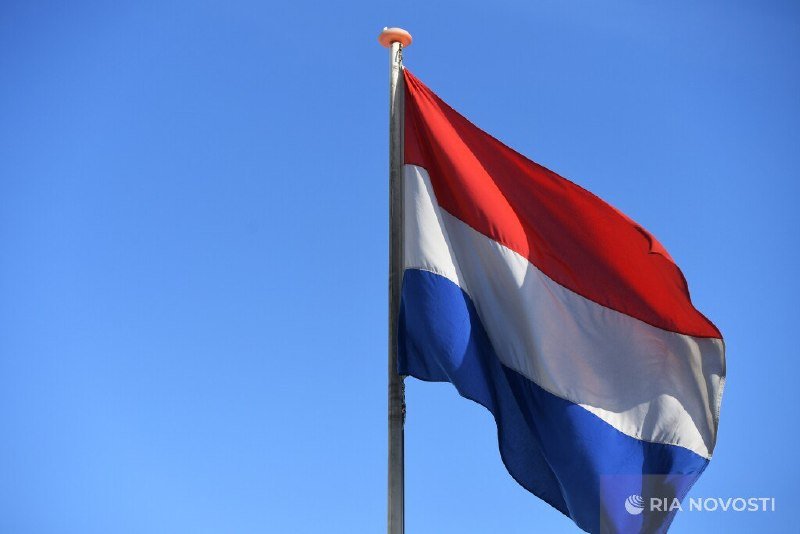
On the morning of 29 June 2026, President Recep Tayyip Erdogan used back-to-back public remarks to deliver what amounts to an updated invoice to NATO and the European Union. Turkey's contribution to the alliance, he argued, is no longer adequately matched by the access its defence industry receives inside allied markets. The subtext was sharper than the language: the second-largest standing military in the Atlantic pact is tired of being treated as a buyer rather than a builder.
The framing matters because it reframes an old Turkish grievance — exclusion from the F-35 programme after the 2019 S-400 purchase, the recurring stumbles over Sweden's NATO accession, the slow grind of visa liberalisation — as a single, coherent industrial complaint. The argument is that security cooperation and defence procurement are the same conversation, and that NATO members have been having it on the cheap.
A demand, not a request
Erdogan's first message, circulated at 10:28 UTC on 29 June, made the structural claim directly: "Despite our contributions, it is also a fact that in some cases the indispensable benefits Türkiye provides to European security are overlooked." A minute later, at 10:29 UTC, the follow-up message put a name to the remedy: "With its strong armed forces, modern military capabilities, and advanced defense industry, Türkiye has been among the leading Allies contributing to NATO." By 10:40 UTC, the third message converted the diagnosis into policy: remove the obstacles in front of defence-industry trade.
Read in sequence, that is a negotiator's cadence — grievance, capability, ask. It is also a recognisable Erdogan register: confident, transactional, and impatient with the polite euphemisms European chancelleries prefer.
What Ankara actually wants
Strip the rhetoric and the Turkish ask is concrete. Turkish defence firms — Baykar, Aselsan, Roketsan, TUSAŞ — have spent the last decade building export-grade drones, electronic-warfare suites, armoured vehicles, and naval platforms. They are price-competitive and increasingly specification-competitive. What they lack, in the Western market, is the kind of integration that comes with joint programmes, classified-data sharing, and offset arrangements.
The path Ankara appears to want is straightforward: NATO and EU members should treat Turkish platforms the way they treat French, German, Italian, or Korean ones — as candidates for joint development and procurement, not as curiosities from a partner that needs managing. The political economy of that demand is uncomfortable for capitals that have grown used to buying from their own primes.
The European counter
European capitals will not concede the point quickly, and their counter is intelligible. The S-400 episode left a documented trust deficit, particularly inside the German and Dutch procurement establishments that still manage the F-35's industrial work-share. Northern European NATO members have institutional reasons to be cautious about opening classified supply chains to Turkish partners. And the EU's own defence-market fragmentation — the PESCO and EDF instruments — was designed, in part, to spend European money inside Europe.
There is also a procedural counter: defence trade is governed by binding bilateral agreements, export-licence regimes, and ITAR-equivalent national controls. A Turkish firm denied a contract in, say, Poland or Romania is often being filtered by national-security review, not by a NATO-wide embargo. Conflating those two failures flatters Ankara's grievance but obscures the technical reality.
The structural read
What is happening here is the standard renegotiation phase of an asymmetric alliance: the junior-but-indispensable partner pressing harder once its leverage improves. Turkey's leverage has improved. Its drone exports to the Gulf, to Central Europe, and to parts of Africa have built a reference base that did not exist a decade ago. Its position on the Black Sea and the Eastern Mediterranean gives it geographic weight no NATO planner can replicate with another ally. And the Russia-Ukraine war has made the Turkish Bosphorus-Dardanelles chokepoint a permanent strategic consideration for the alliance.
In plain terms: alliances are continuously repriced by capability and geography, and Turkey is repricing its ticket. The question for NATO and the EU is whether they want to do that repricing at the policy table or in front of the cameras, where every Turkish demand gets read as a threat.
Stakes and what to watch next
If Ankara's pressure produces results, the most likely deliverables are incremental: a few more Turkish platforms on European procurement shortlists, an easing of remaining restrictions on classified-component transfers, and a softening of the language around EU defence funds flowing to Turkish primes. If it does not, the foreseeable path is a slow drift toward Turkish defence firms deepening their existing footprint in the Gulf, in North Africa, and in parts of Central Asia — a parallel market that does not depend on NATO goodwill.
The honest uncertainty here is whether Erdogan's three-message sequence on 29 June reflects a coordinated campaign or a familiar rhetorical pattern. The sources do not specify. What they do specify is that Ankara has stopped treating its defence industry as a domestic jobs programme and started treating it as a foreign-policy instrument — and that is a shift, not a slogan.
This publication framed the story around Ankara's industrial grievance rather than the S-400-era standoff that tends to dominate Western coverage; the latter is context, not the lead.
Wire provenance
This editorial synthesis draws on the following public wire/social posts:
- https://t.me/ClashReport
- https://t.me/ClashReport
- https://t.me/ClashReport