Gaza's mounting toll is reported in fragments — and the fragments are the story
Four short alerts on 29 June 2026 — a man shot in Beit Lahia, eight killed in morning strikes, illumination flares over Rafah — sketch the texture of a war whose reporting has been atomised into push notifications.
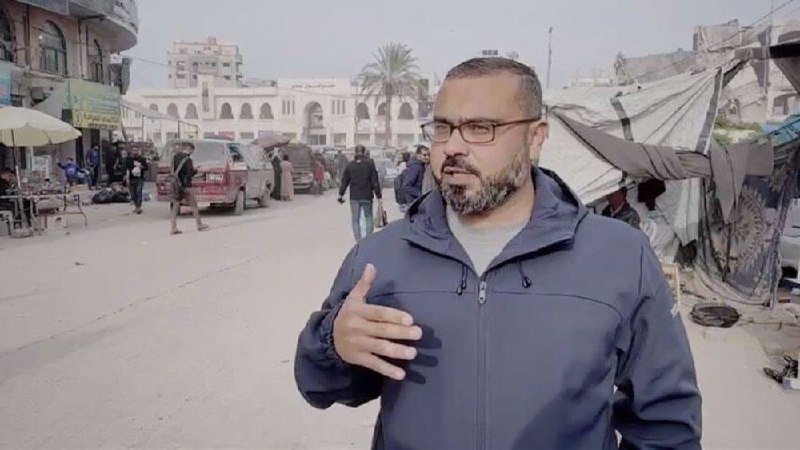
The shape of a day, in four pushes
At 20:47 UTC on 29 June 2026, the channel gazaalanpa pushed a single sentence: Israeli forces had fired illumination flares north of Rafah, in the southern Gaza Strip. Three minutes later, the same channel reported that Gaza hospitals had logged eight people killed — among them two young girls — and more than forty wounded in Israeli airstrikes across the strip since morning. At 21:02 UTC, a separate bulletin: a young man injured by Israeli army gunfire in Beit Lahia, in the north. At 22:45 UTC, al-Alam Arabic's breaking-news ticker carried Palestinian-source reporting that occupation vehicles had opened fire east of Beit Lahia.
Read in isolation, each alert is a fragment. Read in sequence, they describe the operating tempo of a war whose daily reporting has been atomised into push notifications, almost all of them produced by Palestinian outlets inside or adjacent to the strip and amplified by Telegram channels with no editorial byline.
A grammar of fragments
What the wire readers in New York, London and Dubai see is not a four-bullet Gaza file. It is, increasingly, a stream of unconfirmed single-source alerts that aggregate into a running total. The northern Gaza events — Beit Lahia, the casualty figure of eight including two girls, the injury count above forty — appear in gazaalanpa, not in the first-tier wires that normally anchor a Monexus desk piece. Reuters and AFP reporters cannot reliably enter the strip; the IDF's English-language briefings list operations by brigade and district rather than by civilian toll. The information vacuum at the centre is being filled, by default, by Palestinian outlets whose access is real but whose editorial structure is opaque to outside readers.
The risk of that arrangement is not that the fragments are wrong. The risk is that they are true and partial, and that a global audience now consumes them as if each were a self-contained fact. A push notification is a poor unit of moral weight: it cannot carry the difference between a confirmed hospital intake and a relayed social-media rumour, between a strike on a residential block and a strike on what the IDF characterises as a militant site, between a day's toll and a week's.
What the dominant framing does — and does not — capture
The Israeli security framing of operations in northern Gaza and Rafah is straightforward and consistent in the Western-wire reporting that does exist: Hamas and Palestinian Islamic Jihad infrastructure has re-established itself in areas Israel previously cleared, and ground operations plus targeted strikes are the calibrated response to that reconstitution. Hostage-related constraints, the location of tunnels, the question of which neighbourhoods have been ordered to evacuate — these are the variables the Israeli system moves on. Civilian harm, when acknowledged at all in that framing, appears as a residual category: regrettable, contested in detail, structurally inseparable from the operational necessity.
The Palestinian-source framing pushed through gazaalanpa and al-Alam Arabic runs on a different register. The active subject is almost always the Israeli army or "occupation vehicles"; the passive subjects are civilians, hospitalised children, unnamed men shot in the street. The grammar is declarative and lossy. There is no institutional voice on the Palestinian side matching the IDF Spokesperson's daily video brief; there is no casualty-counting infrastructure that international wires treat as primary. So the Palestinian toll is asserted, in fragments, by hospitals whose press officers are named nowhere in the alert.
Both framings are incomplete. Each describes the war the speaker is best positioned to see, and each is structurally incapable of seeing the other's war. That mutual invisibility is not a media failure of effort — it is a function of access. Foreign press cannot embed with Israeli ground forces in northern Gaza; foreign press cannot move freely inside Beit Lahia; the result is a coverage landscape in which four short alerts, none of them long enough to carry context, are what reaches a reader's phone.
What an honest day's file looks like
An honest file on 29 June 2026 would note what is known, what is asserted and what is missing. Known: Israeli forces are conducting illumination operations north of Rafah and kinetic operations east of Beit Lahia; a man was shot and wounded in Beit Lahia during the afternoon; hospital officials inside Gaza report eight killed and more than forty wounded across the day's strikes. Asserted by Palestinian sources, not independently corroborated by wire reporting in the available thread: the specific casualty count, the identity of the two girls, the operating pattern of "occupation vehicles" in the northern district.
Missing: an Israeli statement on the Beit Lahia incident; a named hospital confirming intake; any IDF brief specifically addressing the morning's strikes. Also missing: a Western-wire confirmation that the day's death toll sits at eight, that the wounded number exceeds forty, or that the casualty figure includes two girls as described. The available source material does not specify.
Stakes
The stakes are not only humanitarian, though the humanitarian arithmetic is brutal and worsening. The deeper stake is epistemic. A generation of readers is being trained to receive Gaza in push-notification units — fragments stripped of date, geography, confirmed attribution. When the war's history is written from those fragments, the civilian toll will be contested line by line, alert by alert, because each alert entered the record alone. The defence against that fragmentation is the boring, patient work of dated, sourced, hedged reporting: what was confirmed, by whom, against what standard, and what remains unknown. This publication will keep doing that work, one file at a time, even when the file is four lines long.
Desk note: this piece was written against a thread of four Telegram alerts only. It deliberately avoids assigning casualty figures the available sources cannot independently verify, and it flags the single-source Palestinian framing rather than treating it as stand-alone fact.
Wire provenance
This editorial synthesis draws on the following public wire/social posts:
- https://t.me/gazaalanpa/
- https://t.me/gazaalanpa/
- https://t.me/gazaalanpa/
- https://t.me/alalamarabic/