Germany's weekend of two shocks: a deadly shooting and a record heatwave converge
Six killed in a welfare-centre shooting and more than a thousand heatwave deaths across Europe in one weekend expose Germany's overlapping vulnerabilities.
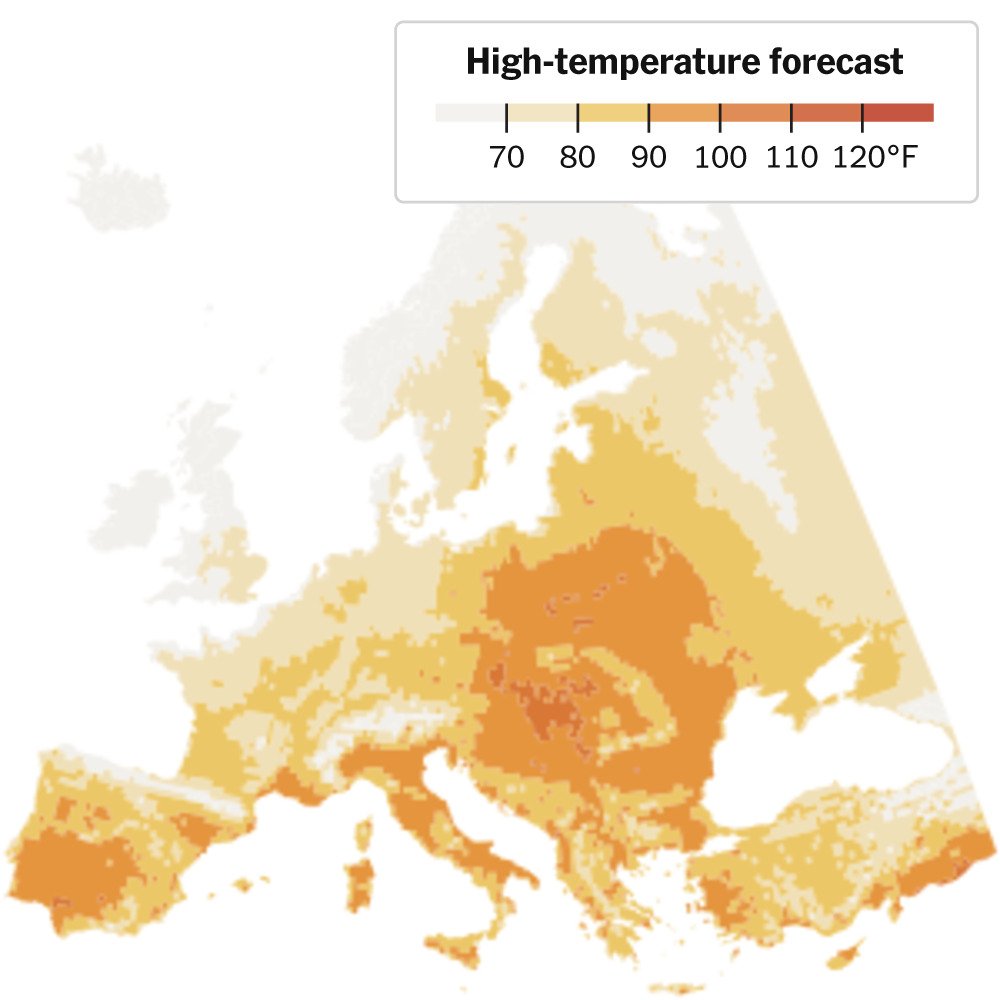
At least six people were killed and several others wounded in a shooting at a welfare centre in Germany on 29 June 2026, according to South China Morning Post reporting on the incident. Two suspects were taken into custody at the scene, the report said. Separately, the World Health Organization has linked Europe's ongoing heatwave to roughly 1,300 deaths, with Germany recording a national temperature of 41.7°C. The two stories arrived within hours of each other on the same Sunday, and neither has been overtaken by softer follow-up reporting.
Germany ended June with two shocks at once. One was a single act of mass violence in a welfare building, an event investigators are still working through. The other was a slow-moving climate event that has now killed more Europeans than most of the conflicts the continent routinely reports on. Read together, they sketch the kind of weekend that does not need a unifying theory to land: a country capable of holding a federal election, funding a defence build-up and hosting the eurozone's largest economy is also a country where a single building can become a crime scene and a single day can become a public-health emergency.
What is known about the shooting
The South China Morning Post dispatch, picked up from wire feeds, places the shooting at a welfare centre on Sunday and identifies six fatalities plus several wounded. Two people were arrested, the report added; further detail on motive, the identity of the suspects and the weapons used was not in the source item as of publication. That gap is the central one. German federal prosecutors typically assume jurisdiction within hours; until their first statement, the only verifiable facts are the casualty floor, the location type and the dual-arrest count.
Welfare centres — job centres, social-security offices, integration facilities — have been the sites of previous attacks in Europe. They are also routinely crowded, which makes a casualty count almost certain to rise as overnight triage reports filter in. Monexus's working assumption is that the headline figure is a floor, not a ceiling, until German federal police brief.
A heatwave that has already outrun the headlines
The WHO figure of "around 1,300" heat-linked deaths across Europe, circulated via social channels on 29 June, is a continent-wide number attached to a phenomenon that began days earlier. The single national reading of 41.7°C for Germany is the kind of marker that, in earlier decades, would have been thought of as a regional or once-a-generation event. Treating it as a relevant data point rather than a curiosity is the only honest framing. Europe's public-health agencies have been warning since at least 2024 that heat is now the deadliest routine weather hazard in the bloc, with elderly and chronically ill populations carrying most of the burden.
The reason the heatwave matters alongside the shooting is that both stress the same public infrastructure: emergency dispatch, hospitals, ambulance availability, cooling-centre capacity. On the weekend in question, those services were managing a mass-casualty incident and a record-temperature day simultaneously.
What Germany is actually dealing with
Two threads sit under the headlines. On security, Germany's recent experience with mass-casualty attacks — the 2020 Hanau shooting, the 2022 Heilbronn incident, periodic foiled plots — has produced a layered federal response built around post-event debriefs and rapid changes to firearms access. Those reforms are now mature enough to be tested in real time. The 29 June case will be measured against that record.
On climate, the relevant fact is structural: Germany's summer-temperature curve has been climbing in line with continental averages, and Berlin has spent the past three years building the legal scaffolding (a national adaptation strategy, federal-state heat plans, an enlarged federal hazard fund) precisely because ministries expect more days like this one. The question for next summer is not whether the system will be tested but whether the testing will outrun the spending.
Stakes and what to watch
For the shooting: federal prosecutors and a state interior ministry will name suspects, publish an initial motive hypothesis and disclose weapons histories within 48 hours if prior practice holds. Any delay beyond that, in this case, would itself be news. For the heatwave: the WHO figure will be revised as national mortality data catches up; the final number is regularly higher than the early estimate by a factor of two or three. Belgium, France, Spain and Italy are also within the affected zone, so the European bill is unlikely to settle at 1,300.
The weekend's deeper signal is simultaneity. A country that the world has spent three years describing as Europe's industrial anchor and security backbone spent this Sunday answering two sirens at once. Neither shock cancels the other; together they describe a state carrying heavier routine loads than its public conversation has caught up to.
This piece sits between desks by necessity. The shooting is treated as an active public-safety event with the discipline that requires; the heatwave is treated as a structural public-health story with the weight that 1,300 deaths warrants. Monexus will update both as German federal authorities and the WHO publish updated figures.
Wire provenance
This editorial synthesis draws on the following public wire/social posts:
- https://x.com/unusual_whales/status/
- https://en.wikipedia.org/wiki/2020_Hanau_shooting