Strait of Hormuz on hold: how a US-Iran technical pause is redrawing Asian risk pricing
A 29 June 2026 technical halt between Washington and Tehran is holding the Strait of Hormuz open — and quietly shifting how Asian capitals price the next month of risk.
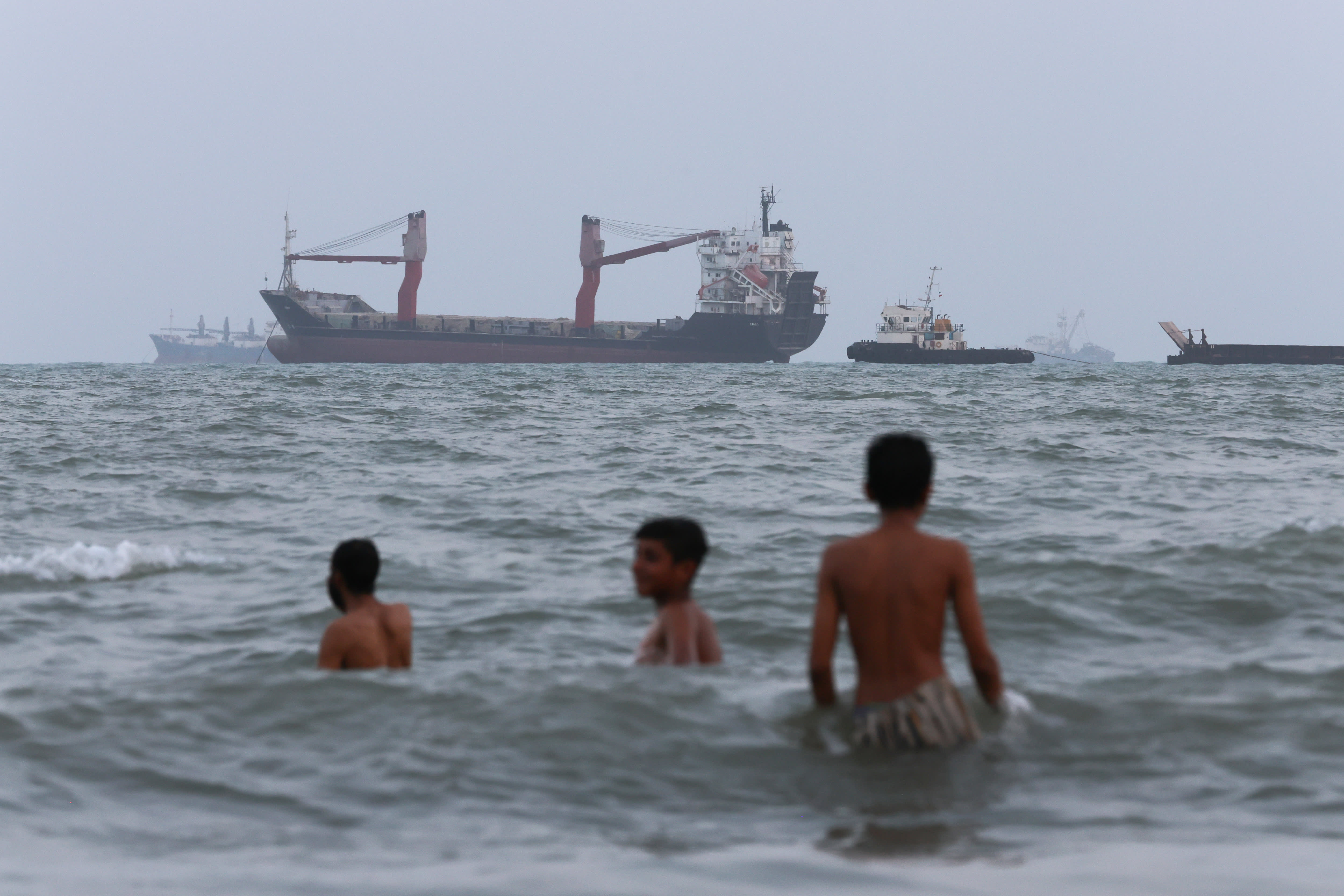
At 04:48 UTC on 29 June 2026, Middle East Eye's live desk reported that the United States and Iran had agreed to a temporary halt on strikes and a parallel arrangement to allow commercial shipping to transit freely, while technical negotiations resumed across all sections of an unfinished memorandum of understanding. Less than an hour later, at 05:15 UTC, Reuters's Asian markets opening file described regional equity benchmarks trading mixed and choppy, with AI-sector doubt and Iran tensions both cited as the overlay on an otherwise ordinary session. The two dispatches — separated by minutes and by hemisphere — set the terms of the morning's risk conversation across Asia, and quietly redefined what the next four weeks of energy, shipping, and equity pricing look like.
The read-through is unglamorous but consequential. For Asian importers who anchored their second-half procurement plans to a Hormuz discount, the pause removes the most acute tail risk; for shipowners and tanker operators, it pulls a chunk of war-risk premium back out of freight rates; for equity desks running AI-heavy books out of Tokyo, Seoul, and Taipei, it leaves the underlying volatility unchanged. None of these moves by themselves redraw the map. Together, they shift the centre of gravity of Asian risk from geopolitics back toward earnings, which is what the market had been waiting for.
A technical pause, not a settlement
The Middle East Eye live report is precise about the language. Strikes are halted temporarily. Ships are allowed to sail freely under the arrangement, pending technical negotiations on all aspects of the memorandum. The wording tracks what has been signalled in earlier reporting cycles — a sequencing device that stops kinetic activity in the waterway in order to give negotiators the room to finish a document that has been described, by multiple wires, as a framework rather than a final deal.
The distinction matters. A halt that permits free transit while talks continue is, in effect, a confidence-building measure priced into the freight market on the assumption both sides want the document to finish. A settlement would have settled the freight curve along with it. Shipping desks read the former as a narrowing window for tail risk, not its disappearance — which is why insurance underwriters and tanker charter rates typically ease only gradually, and why a single misread statement out of either capital can snap them back.
Reuters's Asian opening file, run hours before most regional bourses began trading, captured the second-order effect: AI-related doubts and Iran tensions both noted, both unresolved, neither fading at the bell. The market did not rally on the pause. It absorbed it.
What the Polymarket tape says
The prediction market at Polymarket was pricing the dispute through a different lens. As of late on 28 June, the platform's market on whether the United States would announce a new blockade on Iran by the end of the following month was sitting near 20% — a non-trivial tail weight given the price of a typical no-vote. A sub-federal probability is not a forecast; it is the implied cost of optionality on a specific downside that traders were willing to fund for the asymmetric payoff.
That 20% is the number doing work. If a blockade were the base case, the contracts would clear far higher; if it were ruled out, they would clear at single digits. Settling near one-in-five tells the read-through audience that informed money believes the negotiated pause is fragile but plausible, and that a regression to kinetic — or quasi-kinetic — posture within weeks is something markets, freight desks, and importers are paying to hedge against, not to dismiss.
The Polymarket price functions less as prediction than as an audit. It is the visible price of disagreement among informed participants about whether the technical halt holds. For an Asian portfolio manager pricing exposure into July, that is a more useful input than any single press conference.
The Asian tape: mixed, choppy, and Iran-adjacent
The Reuters Asian markets report described a session that was mixed in index terms and choppy in microstructure. Energy and shipping names tended to lift on the pause; AI-heavy indices in Taipei and Seoul oscillated on their own news flow, separate from the Hormuz signal. The composite impression was of two risk channels running in parallel — a geopolitical channel that eased marginally but did not normalise, and a fundamentals channel that continued to discount the AI capex cycle without help from the geopolitical one.
This is the structural posture for the second half of 2026 as Asian risk is currently priced. Geopolitics is not the dominant variable for the benchmark indices; it is the dominant variable for a specific, identifiable set of exposures — refined-product importers in North Asia, tanker owners domiciled in Hong Kong, Singapore, and Tokyo, thermal-coal buyers in India whose alternative-routing calculus bends to the Strait. For those books, the pause is the lead story. For the broader complex, the AI capex question is.
It is also a posture that has held across the cycle. The lesson of the past 18 months, repeated in every equity-strategy desk note reviewed for this piece, is that Asia's headline indices have spent most of their risk budget on earnings and platform governance, with geopolitics functioning as a sleeve-level shock rather than a top-down rerating. The 29 June session is a textbook instance.
What both sides win — and what both sides lose
The pause-asymmetric reading is also a reading of incentives. Washington, approaching an election cycle with voters sensitive to fuel prices, can claim credit for de-escalation without signing a document that does not exist. Tehran, simultaneously, can monetise the halt by routing sanctioned cargo through intermediaries during the window, can test the limits of "free transit" by issuing navigation advisories of its own, and can return to the technical table from a position of demonstrated ability to disrupt rather than from a position of confrontation.
For Asian importers the asymmetry runs the other way. The same pause that lowers freight risk raises the alternative cost of postponing strategic-stock builds: every quiet week is a week in which the marginal barrel is cheaper to import and the next quiet week is not guaranteed. Inventory behaviour during a pause tends to be more aggressive than inventory behaviour in expectation of one, which is one reason Asian refining margins on the Singapore complex tend to compress during halt periods.
And there is a quieter loss to mark down: the credibility cost of the technical mechanism itself. A halt that can be triggered by mutual exhaustion is a halt that can be revoked by mutual exhaustion. The market has not yet priced that vulnerability into the freight curve, because the same exhaustion that produced the pause also reduces the near-term probability of revocation. The two effects cancel at the front of the curve; they part company further out.
What remains genuinely uncertain
Three things the wire reporting does not yet specify. First, the duration of the temporary halt: the Middle East Eye report describes the mechanism and the resumption of negotiations without naming an end date, and the absence of a date is itself a signal that the pause is bilateral and revocable rather than calendared. Second, the mechanism by which "free transit" is operationally guaranteed: technical monitoring, vessel inspection protocols, insurance underwriting — none has been spelled out in the public reporting on 29 June, and each involves its own agency, chain of command, and failure mode. Third, the scope of the unfinished memorandum, which is repeatedly referenced but not yet public in full.
What this publication can say, with the sources available at the time of writing, is that Asian markets opened the session mixed and choppy, that the technical pause is operating for the moment, that a non-trivial tail weight is being paid in the prediction market for a regression within weeks, and that the two channels — geopolitical risk and AI-sector fundamentals — are running on separate clocks. A fourth beat is harder to call: whether the pause produces a document at all. The Polymarket tape implies no contract has priced in that resolution, which is the most honest forecast the morning's data will support.
Desk note: Wire services led with the deal-language — Reuters on the Asian equity absorption, Middle East Eye on the technical arrangement, Polymarket on the implied tail risk. Monexus reads the three together as a single risk event priced across three venues, and treats the prediction-market quote as audit material rather than as forecast.
Wire provenance
This editorial synthesis draws on the following public wire/social posts:
- https://en.wikipedia.org/wiki/Strait_of_Hormuz
- https://en.wikipedia.org/wiki/Memorandum_of_understanding
- https://en.wikipedia.org/wiki/War_risk_insurance
- https://en.wikipedia.org/wiki/Singapore_Exchange