A 16-kilometre tunnel, a decade-old wound: what the IDF's Rafah find does and does not settle
Israeli forces have sealed a 16-kilometre Hamas tunnel in Rafah, the route where Lt. Hadar Goldin was held in 2014. The find settles geography. It does not settle the hostage file.
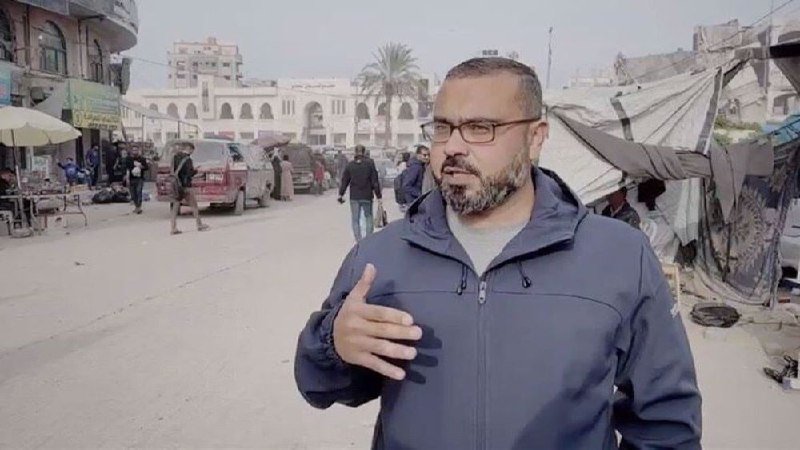
On 29 June 2026 the Israel Defense Forces announced they had sealed a 16-kilometre underground route in southern Rafah, identifying it as the network in which Lieutenant Hadar Goldin — killed in action during Operation Protective Edge in August 2014 — had been held. The finding, reported by IDF-affiliated channels on Telegram the same afternoon, required more than 30,000 cubic metres of sealing material and is described as the longest such Hamas passage uncovered to date.
The discovery is being framed in Israel as both a forensic breakthrough and a strategic one. It is the first concrete piece of physical evidence locating, more than a decade after the fact, infrastructure directly associated with Goldin's case. It is also the latest in a succession of tunnel seizures that have hollowed out the militant underground's freedom of movement beneath Rafah. The read-through is that Hamas's command economy under the Strip is being strangled inch by inch. That framing deserves scrutiny as much as it deserves credit.
What the announcement actually proves
The IDF's claim is narrow and should be received on its own terms. Israel has located a tunnel of the size, depth and routing consistent with Hamas's published doctrine — what Israeli briefings call the Rafah Brigade's subterranean headquarters — and it has tied that tunnel by name to Goldin's captivity in 2014. Two things follow directly. First, the militant group preserved the asset for at least twelve years across multiple Israeli operations, which says something real about Hamas's engineering culture and its willingness to invest in deep-buried infrastructure rather than replace it. Second, the find gives the Goldin family — and by extension a domestic Israeli constituency that has kept the case on the agenda for over a decade — a tangible object where, until now, there had only been absence.
What it does not prove is more interesting than what it does. It does not establish where Goldin's remains are. It does not establish that other hostages taken on or after 7 October 2023 were moved through this network. And it does not, on its own, undermine the broader hostage file in Gaza — the active one — which is governed by negotiation with Hamas through intermediaries, not by what IDF engineering battalions can pour concrete into.
The strategic framing — and its ceiling
Israeli commentary will treat this as a closing chapter. The argument runs: if the longest tunnel is sealed, the rest will follow; if the Goldin file is materially advanced, the public pressure that sustained Goldin-as-anchoring-case can now be redirected toward the live hostages; if Hamas's Rafah Brigade headquarters is physically gone, the capacity it represented is gone too. Each link in that chain is plausible. None of them is automatic.
Tunnels are not interchangeable with brigades. The senior cadre that built the Rafah network in 2012–14 was, in many cases, killed, captured or scattered in the operations that followed. What it built with pick-axe and concrete can be rebuilt, in places where Israel has not yet reached, by a younger generation that learned the trade from YouTube and the rubble. The longer the war runs, the more Israeli headlines about "the longest tunnel" will collide with the longer arc of insurgent adaptation that sealed passages also enable — the training, the storage, the unhurried movement that survives the headlines.
There is also a domestic-political ceiling. The Goldin and Shaul families have been the most disciplined of the hostage families in Israeli public discourse, partly because Goldin's body was never recovered and so the campaign has always been about bringing someone home, not securing a prisoner release. That moral clarity cannot be transferred wholesale onto the much messier live negotiations over the 7 October captives. The government will be tempted to draw a straight line from this find to those talks. Hamas will see that line clearly and price it accordingly.
What the framing leaves out
The Western-wire line on tunnel seizures tends to slip into two habits. The first is treating every sealed passage as if it were the last bottleneck — the implicit suggestion being that the underground economy beneath Gaza is geometric and one good closure away from collapse. The second is describing Hamas's engineering as a discrete military problem rather than as the visible product of a blockade regime that pushed governing functions underground by design. Both habits flatten what is in fact a layered terrain.
There is also a quieter omission. The find will accelerate, not slow, debate inside Israel about who knew what about Goldin in 2014 and why the negotiated-release track that might have brought him home collapsed during the ceasefire hours after his capture. That is an inquiry the IDF announcement does not invite, and one the Israeli press will pursue in due course.
What it changes, and what it doesn't
For the Goldin family, the find is closure-adjacent — a sign that the place where their son died can now, after twelve years, be physically visited, marked and mourned. That is not nothing; it is the kind of thing governments are sometimes able to give grieving families and sometimes not.
For the war, it changes the geography. It does not, by itself, change the hostage arithmetic, the cease-fire politics, or the question of who governs Gaza the morning after. Anyone reading these announcements as dominoes will end up reading them backwards.
This publication covered the announcement as engineering news with hostage-file political weight, not as a strategic turning point — a distinction that the wire services were inclined to elide.
Wire provenance
This editorial synthesis draws on the following public wire/social posts:
- https://t.me/abualiexpress
- https://t.me/amitsegal