A reservist, a blast, and the quiet arithmetic of southern Lebanon
An IDF reserve soldier was seriously wounded in a southern Lebanon explosion on Monday. The incident arrives against a fragile ceasefire and a slow, grinding tempo of incidents that the official framing rarely slows down to count.

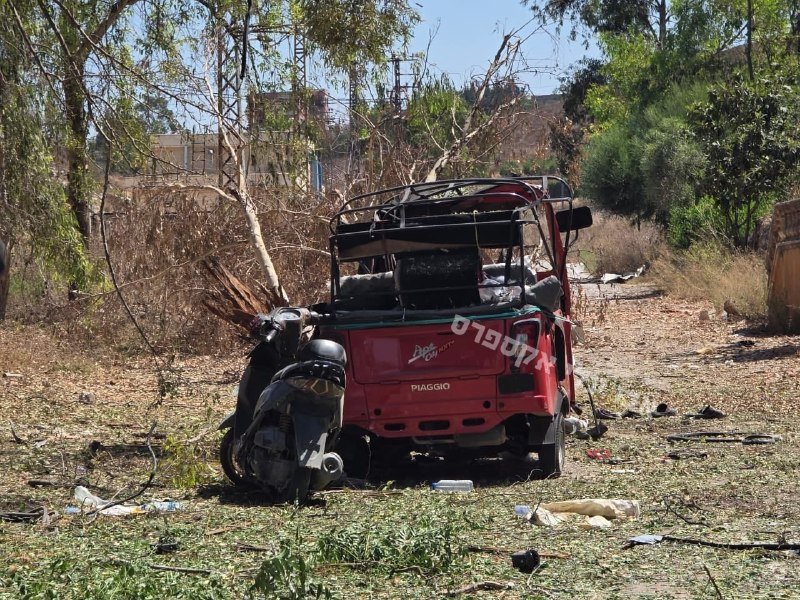
A reserve soldier in the Israel Defense Forces was seriously injured on Monday by an explosion in southern Lebanon, according to the IDF Spokesperson, who disclosed the incident before sunset local time and said the wounded soldier had been evacuated to a hospital for treatment, with his family informed. The two-word scene — reserve soldier, southern Lebanon — has become almost a refrain of the past year, and the framing of each new incident tends to follow the same template: a brief statement, an evacuation, a continuation of normal life on the Israeli side of the border. The arithmetic that the official line rarely itemises, however, keeps adding up.
What we know, and what we don't
The IDF's own channels posted the announcement shortly before 17:00 UTC on 29 June 2026, in near-identical wording across its Arabic-language outlet abu ali express and its English-language channel IDF Official. Both specified that the soldier was a reservist, that the injury was classified as serious, and that the family had been notified. Neither statement named the unit, the precise location within southern Lebanon, or the nature of the explosive device. The absence is itself revealing: in the months since the November 2024 ceasefire arrangement took hold along the Lebanon frontier, the Israeli military has generally disclosed only the bare minimum needed to confirm that operations are continuing, and to reassure the domestic audience that wounded personnel are receiving care.
The ceasefire that did not stop the incidents
The November 2024 arrangement formally ended a year of cross-border fire between Israel and Hezbollah. Its terms required the militant organisation to pull its fighters and infrastructure north of the Litani River, and required Israel to wind down its offensive operations in southern Lebanon. Both sides have publicly accused the other of violations in the months since, and UNIFIL, the UN force monitoring the line, has logged a steady cadence of low-level incidents — rockets, drones, improvised explosive devices, and Israeli strikes on what the IDF describes as Hezbollah assets. In that sense, the wounding of a single reservist is not an aberration but an entry in an ongoing ledger. The arithmetic — one reservist seriously injured today, one last week, one the week before — is the kind of data point that does not register as a crisis until a family, or a chain of families, breaks.
The framing we are not getting
Coverage of incidents along the Israeli-Lebanese frontier tends to bifurcate. Western-wire reports typically lead with the IDF account and treat Lebanese accounts as a secondary confirmation at best. Lebanese state-aligned outlets, when they pick the story up at all, frame Israeli operations inside Lebanon as a continuing violation of sovereignty. The structural reality — a heavily armed non-state actor operating a few hundred metres from the border, an Israeli military conducting what it calls targeted operations, and a UN mission with limited enforcement capacity — sits awkwardly between those two narratives. Neither frame is wrong; neither is sufficient on its own. The Israeli security concern is a real one; so is the daily exposure of southern Lebanese villages to detonations that the international press rarely visits.
Why one wounded reservist still matters
There is a temptation to dismiss the incident as routine. The IDF evidently does not — a serious injury in southern Lebanon is treated, internally, as both an operational failure and a political embarrassment, because the whole premise of the post-November 2024 posture is that operations inside Lebanon have been wound down. Each new serious casualty reframes the question of whether the arrangement is functioning as its signatories intended. It also reframes, for the Israeli public, the cost of the looser, less-visible posture that has replaced the open fighting of 2023–24. The reservist injured on Monday was, by definition, a citizen-soldier called back into uniform long after his mandatory service had ended. That choice is private. The arithmetic of how often it is being made is public.
What remains uncertain
The sources do not yet state what kind of device detonated, whether it was a planted IED or an active munition, or whether any specific militant faction has claimed responsibility. The Lebanese state has not, in the immediate aftermath, issued a parallel statement visible in the wires this desk tracks. UNIFIL's reporting cycle has not, at the time of writing, published a new incident flag for 29 June. Where the evidence is thin, this publication will say so plainly: the incident is confirmed; the picture around it is not.
Desk note: Western wires treated this as a one-line IDF confirmation. Monexus framed it against the post-November 2024 ceasefire arithmetic — that is, not as an isolated event but as the latest entry in a slow, ongoing ledger of low-level incidents along a border that the official record rarely slows down to count.
Wire provenance
This editorial synthesis draws on the following public wire/social posts:
- https://t.me/abualiexpress
- https://t.me/idfofficial