57.7% and a 20% Line: Two Numbers That Sketch Iran's Year of Squeeze
A 57.7% annual inflation print from Tehran and a Polymarket contract pricing a renewed US blockade at 20% sketch the same year of squeeze from two angles.
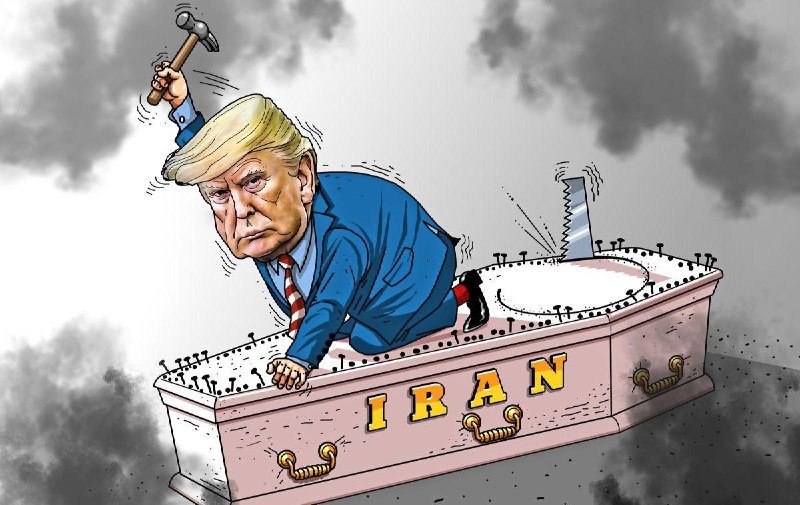
Iranian state media put the country's headline inflation at 57.7% on 29 June 2026, the highest twelve-month print Tehran has reported in this cycle, and the number lands on the same day that prediction markets were quietly pricing the chance of a renewed US naval blockade of the Islamic Republic at roughly one in five by the end of July. Read separately the two data points are routine. Read together, they sketch a country running out of cushions faster than its negotiators can replenish them.
The thesis here is not that inflation causes blockade risk, or that blockade risk causes inflation. Both move on the same underlying pressure: an Iranian economy that has been compressed for years, and is now visibly closer to a phase change. Prices are the domestic face of that pressure; positioning off the Strait of Hormuz is its foreign face. The interesting question is what a year of squeeze looks like when the squeeze is real but not yet terminal.
The 57.7% print, and what is actually in it
Tasnim, the English service of an outlet affiliated with the Islamic Revolutionary Guard Corps, reported on 29 June 2026 that Iran's Central Bank put twelve-month consumer-price inflation at 57.7% through the end of the Iranian month of Khordad 1405 (mid-June 2026). The number is the headline figure. It does not break out food, fuel, services, or housing the way Western statisticians would, and the methodology is not externally audited. Iranian official inflation has historically run below the lived experience of Tehran's bazaars; the gap between the printed number and the price of bread, lamb, and housing is the part of the story that does not need a footnote.
What matters analytically is the direction. A print in the high-50s for an economy that is nominally sanctions-aware but not formally at war is consistent with a currency that has been losing ground in parallel, a budget that is paying subsidies by issuing rial liquidity, and a population that has been doing what it can to move savings out of bank deposits and into hard currency, gold, and property. None of that is visible in a single release. All of it is implicit in a number that high.
The 20% line on Polymarket
Two days earlier, on 28 June 2026, the prediction market Polymarket was pricing the implied probability of a US naval blockade of Iran being announced by the end of the following month at 20%. A one-in-five line is not a forecast of war. It is a market signal that a meaningful share of well-capitalised bettors take the scenario seriously enough to take the other side of the trade. That is the kind of signal that the daily news flow can wash past.
A naval blockade, in the legal sense the markets are pricing, is a step beyond the sanctions architecture that has been in place since the early 2010s and tightened through successive administrations. It is kinetic, visible, and aimed at the country's export lifeline through the Strait of Hormuz. The bet is not about whether the policy is on the table in Washington; it is about whether the political calendar and an incident in the Gulf line up in the next thirty days. A 20% line a month out is the kind of reading that would have looked exotic three years ago and now sits on the same dashboard as oil futures.
Squeeze economics, not sanctions economics
What we are watching in Iran is no longer sanctions economics in the old sense — the controlled strangulation that produces a known equilibrium in which a sanctioned state trades at a discount and the rest of the world routes around it. The price level now being reported out of Tehran is the kind of print that historically belongs to a wartime economy, a hyperinflationary episode, or a country in the middle of a balance-of-payments crisis with no central-bank backstop.
That framing matters for the rest of the world, and not only for oil traders. An economy that has been compressed this hard for this long develops its own workarounds: deeper reliance on informal hawala channels for trade with neighbours, a wider gap between the official and the bazaari rial, and a state that finds it easier to monetise its bills than to roll its debt. Each workaround looks resilient until it isn't. The failure modes tend to arrive quickly once a confidence threshold is crossed, and the threshold is not visible from outside.
Stakes, and what the next quarter looks like
If the present trajectory holds, the next three months will see two clocks running. The domestic one is whether the 57.7% print becomes 60% and starts to bleed into food-price politics in a way the bazaaris cannot absorb. The foreign one is whether the 20% Polymarket line moves sharply up on a Gulf incident and forces the regime into a posture that raises the oil price enough to feed back into the inflation print. The two clocks have been running in parallel for the better part of a decade. The argument for paying closer attention now is that the parallel is tightening.
The honest caveat is that both inputs are noisy in their own ways. Tehran's inflation methodology is not externally auditable; Polymarket is a thin market for a contract this exotic, and the implied probability can move on small order flow. Neither number should be read as gospel. Read together, however, they describe the same year from two angles, and the picture they draw is a country nearer to a phase change than the cable-news equilibrium usually concedes.
How Monexus framed this vs the wire: the wire outlets have run the Iranian inflation print and the Polymarket blockade contract as separate stories. This piece reads them as one.
Wire provenance
This editorial synthesis draws on the following public wire/social posts:
- https://t.me/tasnimnews_en/
- https://t.me/TSN_ua/