Iran puts the MOU first, talks later — and the framing tells you everything
Tehran says no final deal is on the table, only the implementation of an existing memorandum. That detail — which outlet ran it, and which buried it — is the story.
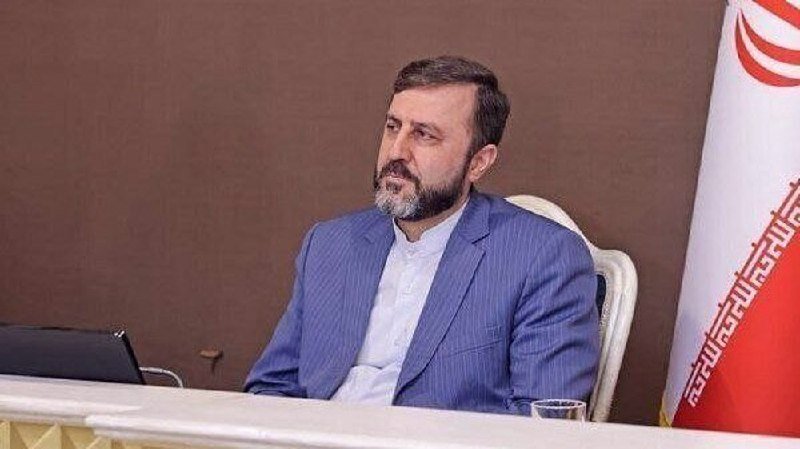
Iran's Foreign Ministry drew a sharp line on 29 June 2026: there will be no negotiation for a final deal with the United States in the days ahead, and the American delegation currently travelling to Qatar has nothing to do with Iran's own delegation in Doha. The spokesperson's framing was deliberate. Implementation of an existing memorandum of understanding, the ministry said, comes first; negotiations for anything beyond it require that foundation to be in place. The implication, left unsaid but visible to anyone reading the transcript, is that Washington is being managed, not met.
The sequencing matters. When a major power publicly rebukes the timing of another major power's diplomacy, the story is not only what was said — it is what the statement reveals about the diplomatic temperature. Tehran is signalling, in plain language, that the calendar belongs to it. That posture, and the relatively muted Western coverage it has so far received, is worth sitting with.
A spokesperson, on the record, setting the pace
The three readouts — all from the Foreign Ministry briefing published via social channels at roughly 17:42–17:43 UTC on 29 June — were pointed. Iran's priority is the MOU. There are no talks with the US in the coming days. Final-deal negotiations have not started, and when they do, they will be conditional on the implementation of "certain points" already agreed.
Each of those moves is a tactical choice. By foregrounding the MOU and demoting the broader negotiation, Tehran denies Washington the optics of a rolling, summit-style process — the kind of steady-drip diplomacy that tends to generate Western headlines about "progress" and "tracks." By publicly distinguishing its own Doha presence from the US delegation's Qatar visit, the ministry closes off any chance of a chance encounter being spun into a breakthrough.
What the Western framing tends to omit
Western wire coverage of US–Iran talks in recent cycles has leaned heavily on the choreography: who flew where, who shook hands at the airport, who was "open" to a meeting. The substance — what was actually agreed, what remains disputed, who is implementing what — has often been paraphrased out of view in favour of atmospherics. Tehran's 29 June statement is the inverse: almost entirely substance, almost no atmospherics. The spokesperson is saying, in effect, that the atmospherics are a distraction they will not perform.
There is a plausible alternative read: that Tehran is also performing — that the tough posture is calibrated for a domestic audience that wants to see the foreign ministry push back against a sanctions regime that has squeezed the economy for years. Both readings can be true. What distinguishes them is evidence: implementation milestones on the MOU, in writing, verifiable by third parties. By that test, neither side has much of a public record to point to yet.
The structural picture, in plain language
The pattern across the last several rounds is that the United States and Iran agree to talk, agree that their agreement to talk is itself an achievement, and then disagree about whether anything substantive was agreed. The MOU-first language cuts against that drift. It tells the American side that any further commitment has to be earned through delivery on what is already on paper, not through another round of optics. For a sanctions architecture that depends on periodic relief windows, that is a meaningful shift in tempo. It favours whichever side has more patience and more to lose from a rushed settlement.
The counterweight is real. Iranian officials also have reasons to keep the diplomatic aperture open: the economic cost of the existing measures, the political value of being seen as a negotiating partner rather than an isolated actor, the leverage that comes from sitting across the table from a great power. The MOU-first posture is consistent with that interest too — it is the position you take when you want the door open without committing to walk through it on someone else's clock.
Stakes, and what to watch next
If the sequencing holds, the immediate question is which "points of the MOU" Tehran considers unimplemented and which Washington concedes are. Oil markets, regional de-escalation tracks, and the posture of Gulf intermediaries all bend on those answers. If the sequencing breaks — if a US and Iranian delegation end up in the same room in Doha by accident or design — the story pivots from substance back to atmospherics, and the framing battle starts over.
The honest uncertainty here is straightforward: the public readouts do not yet tell us whether the MOU's disputed clauses are technical and resolvable, or whether they sit on top of deeper disagreements the spokesperson is not naming. The next test is not a handshake. It is whether either side publishes a list of what it considers implemented, and what remains to be done.
This publication read the 29 June Iranian Foreign Ministry readouts in full before drawing conclusions. Where Western wires had already framed the day around US travel to Qatar, we foregrounded Tehran's sequencing of implementation first, final-deal talks later — and flagged that the discrepancy is itself part of the story.
Wire provenance
This editorial synthesis draws on the following public wire/social posts:
- https://t.me/s/osintlive
- https://t.me/s/osintlive
- https://t.me/s/osintlive