Tehran Rejects Doha Invite as Trump Envoys Board the Plane
Tehran's refusal to send a delegation to Doha leaves Witkoff and Kushner in a Qatari capital with no one across the table, and exposes how thin the diplomatic fuel has become on the Iran file.
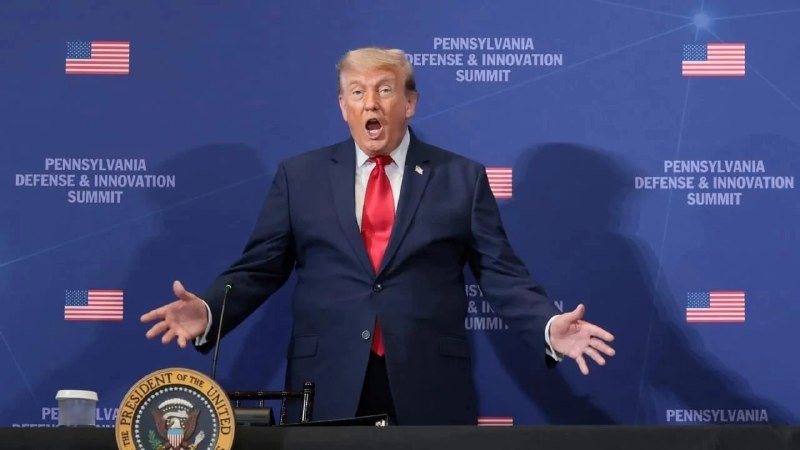
Tehran has turned down an invitation to the next round of US-brokered talks in Doha, leaving the Trump administration's special envoys on a plane to Qatar with no confirmed Iranian counterpart across the table. The refusal, communicated through back-channels in the days before the 1 July 1 meeting, was framed by Iranian officials as a matter of dignity rather than doctrine, a point the Islamic Republic has now made public in unusually explicit terms.
The diplomatic choreography matters. Steve Witkoff, the White House special envoy, and Jared Kushner, the senior adviser who has run the Middle East portfolio since the first Trump term, were already in the air when Iran's foreign ministry confirmed it would not be sending a delegation. The talks, designed to revive a nuclear framework and to keep regional de-escalation on life support, will now proceed as a one-sided conversation, with Qatari mediators shuttling between empty rooms. That is a familiar posture for Doha, which has hosted these rounds before, but the optics this time are harsher: a US team visibly extending a hand and an Iranian system that has decided, at least for now, that the hand is not worth grasping.
What Tehran is actually saying
Iran's public line has hardened over the past week. Officials have insisted that any new round of talks must produce a concrete framework before Iranian negotiators will travel, a position the US side describes as preconditions and Tehran frames as the minimum guarantee that the exercise will not collapse on contact with Washington. The Iranian foreign ministry's statement, carried by state-aligned outlets and partially relayed through Telegram channels tracking the back-and-forth, rejected the idea that participation in Doha was an end in itself. Talks, the argument runs, are not a favour to the mediators or to the American envoys; they are an instrument, and an instrument that produces no output is not worth picking up.
The harder subtext is domestic. The Iranian system has spent two decades negotiating with US-led processes that produced the Joint Plan of Action, the JCPOA, and then the wreckage of the JCPOA. The argument inside Tehran, voiced in recent weeks by figures close to the foreign-policy committee, is that a third round of negotiation on similar terms would amount to a managed surrender, with sanctions relief slow, verifications intrusive, and the political return small enough to be invisible to an Iranian street already paying the price of isolation. The Doha refusal is therefore not a no; it is a repositioning, a way of forcing the diplomatic calendar onto terms that require the United States to put something on the table before Iran treats the table as set.
The American side: envoys in motion, framework in doubt
The Trump team has approached the Middle East portfolio the way it approaches a hostile corporate takeover: as a sequence of deadlines, deliverables, and forced choices. Witkoff and Kushner have been the operational layer, with the president's instincts running above them, visible in off-the-cuff remarks about Iran's leaders that Tehran's readout channels read as either provocation or theatre, depending on the hour. The Doha round was meant to lock in a sequencing deal: Iran caps enrichment, the US loosens a tranche of sanctions, both sides move to a longer negotiation. The sequencing has now slipped, and the slippage is being absorbed by the calendar, not the substance.
Inside Washington, the readout is mixed. Hardliners argue that Iran's refusal is evidence that engagement was always a delaying tactic and that the next move should be a tightening of enforcement, including secondary sanctions on the small fleet of Chinese refiners that still buy Iranian crude at a discount. The more moderate position, associated with Witkoff's posture, is that a non-attendance is a tactical move, not a strategic one, and that the right response is to keep the diplomatic channel warm, even if the room is empty. The administration has so far split the difference: the plane took off, the channel stayed open, and the public messaging maintained that a deal remained within reach.
The Qatar factor
Doha has spent more than a decade positioning itself as the indispensable middleman of Gulf diplomacy, hosting the Afghan-talks-to-the-US track, the intra-Afghan track, the Palestinian-file back-channel, and now the Iran-US track. The Qatari calculus is straightforward: being the only capital where all sides will accept the furniture is itself a form of strategic asset. Iran's refusal to send a delegation does not damage that asset. It validates it. A mediator's value is highest when at least one party is willing to walk past the table to prove the mediator matters, and that is the position Tehran has now put Qatar in.
The cost is borne by Doha's diplomatic staff, who will spend the coming days shuttling between a US team eager to demonstrate progress and an Iranian side that prefers the symbolism of absence. There is also a quieter cost on the broader file. The Board of Peace architecture, the Trump-era vehicle for the Gaza ceasefire and its humanitarian follow-through, is supposed to launch a series of so-called Hamas-free humanitarian zones in the coming weeks, according to Israeli press reports reviewed this week. That parallel track requires Iranian quiet acquiescence at minimum, and an Iranian refusal to even show up at Doha raises the cost of that acquiescence without changing its necessity.
The wider frame: a regional order running on fumes
The Doha no is a symptom, not a cause. The regional order the United States has been trying to sustain, an order in which Gulf monarchies host US bases, in which Israel's security is underwritten by Washington, in which Iran's nuclear file is held inside a managed equilibrium, is creaking at every joint. The Israeli file alone has absorbed more diplomatic capital in the past year than the Iran file, and the humanitarian-zone rollout is going to require sustained American attention at exactly the moment the Iran track is producing nothing but plane tickets. The board Trump has built to manage Gaza is, in effect, a parallel administration, and parallel administrations run on the same fuel the rest of the foreign-policy machine runs on: presidential attention. There is only so much of it.
The deeper question is whether the United States and Iran can sustain a negotiation that neither side fully believes in, but both sides need for different reasons. Washington needs an Iran file because the alternative, a renewed sanctions-and-sabotage cycle, is expensive and unstable. Tehran needs a negotiation because the cost of total isolation is no longer theoretical. The Doha refusal is a reminder that the willingness to talk is itself a depleting resource, and that the next round, whenever it comes, will be more expensive than the round that did not happen.
What to watch
Three dates matter from here. The first is the next scheduled Doha window, likely to be pushed into late summer unless something moves. The second is the IAEA Board of Governors meeting in September, where the technical file on Iran's enrichment cascade will be reopened and where Iran's no-show in Doha will be read as a signal either of compliance or of preparation. The third is the US domestic political calendar, where any move on Iran sanctions will collide with budget fights and election-year positioning. The plane that took off on 1 July 1 landed in a capital that is used to empty rooms. The question is not whether Iran will eventually come to the table. It is what will be on the table when it does.
Sources
- http://reut.rs/4uWM9vL
- https://t.me/ClashReport
- https://t.me/ClashReport
- Reuters dispatch on the Doha round, 30 June 2026
- Israel Hayom reporting on the Board of Peace humanitarian-zone rollout, cited via Middle East Eye, 1 July 2026
Desk note
Monexus treated the Doha refusal as a first-order Iranian position, not as a footnote to the American travel schedule. The Western-wire record is thin on what was said behind closed doors; where it is, we used it, and where it was not, we read the public framing instead of inventing the private one.
Follow the event.
These dated source records provide context. They do not retrospectively verify this archive article.
Separate what the nuclear watchdog reported from what it could not determine after the June 2025 strikes.