Tehran pulls the plug before the table is set: Iran's diplomatic non-event and what it tells us about the 2026 escalation cycle
On 29 June 2026 Tehran publicly walked away from technical talks with Washington — even as US futures briefly priced in a deal. The gap between the two signals is the story.
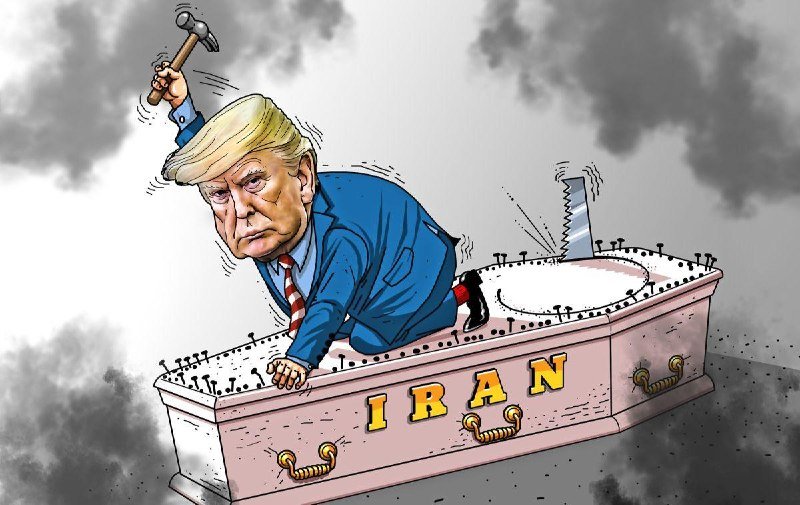
At 10:26 UTC on 29 June 2026, the Insider Paper Telegram channel posted a one-line bulletin: Iran had ruled out the upcoming round of technical talks with the United States. The post carried no elaboration, no venue, and no ministerial quote — just the refusal itself, stripped of context and bouncing across trading desks in Dubai, London, and New York almost instantly.
That single line is the clearest read of where the Iran–US escalation cycle actually sits. The market, less than twelve hours earlier, had been told the opposite. At 22:22 UTC on 28 June, Unusual Whales flagged futures bid on reports that Washington and Tehran had agreed to halt strikes and instead meet that week, attributing the framing to Axios's Barak Ravid reporting. By the next morning, Tehran had publicly retracted the premise those reports were priced on. The 36-hour gap between an Axios scoop and an Iranian walk-back is the story.
The headline and what it actually says
Insider Paper's bulletin reads, in full: "BREAKING – Iran rules out upcoming technical talks with US." That is the entirety of the verifiable claim on the Iranian side as of 10:26 UTC on 29 June. There is no Iranian foreign ministry read-out in the source material, no named spokesperson, and no list of preconditions. What the source establishes is the binary fact that the meeting Tehran was reported to be preparing for is, as of the bulletin, off.
For Western readers used to granular read-outs, that opacity is itself the signal. The Iranians have spent decades refining the diplomatic non-event: an absence phrased as a position, delivered through intermediaries and aggregators so that the statement of refusal is also a statement of who is permitted to relay it. Insider Paper, a London-based news aggregator with a track record of fast pickups from Iranian state-aligned and regional wires, is the chosen conduit here precisely because it carries the line without the surrounding Western context that would dilute it.
The market told a different story twelve hours earlier
At 22:22 UTC on 28 June, Unusual Whales reported that US equity futures had moved higher on news the US and Iran had "agreed to halt strikes" and would instead meet later in the week. The post linked to the Unusual Whales futures dashboard and credited Axios. S&P 500 and Nasdaq futures, per the dashboard snapshot, had ticked up on the headline.
The sequence is worth tracing. A scoop from Axios's Barak Ravid — reporting of the kind that has repeatedly moved Middle East risk premia — produced an immediate market reaction. Within roughly twelve hours, an Iranian line filtered through Telegram had reversed the political premise of the Axios report. The market, in other words, was trading the announcement, not the underlying negotiations; and the announcement came from a single Washington-friendly outlet with no Iranian confirmation. By 21:34 UTC on 28 June, the same Unusual Whales feed was already carrying the Axios framing more fully: the two sides had "agree[d] to stop strikes and instead meet this week." That framing now sits in tension with Tehran's 10:26 UTC walk-back the next morning.
What this pattern looks like structurally
What is unfolding is a familiar feature of late-cycle dollar-priced risk: a single-source diplomatic announcement generates a risk-on move, and the political counter-party then corrects the record through channels that price more slowly. The asymmetry is not new, but the speed is. Telegram aggregators, X trading accounts, and futures dashboards now compress what used to be a 24-to-48-hour news cycle into a single overnight session. Each side of the negotiation ends up, in effect, briefing a different market.
For Iran, the calculus is straightforward. A halt-to-strikes agreement on Axios's terms implies a sequence — de-escalation first, then talks — that concedes the framing of the previous round of escalation. By publicly refusing technical talks while the halt-strikes narrative still circulated, Tehran re-inserted itself as the agenda-setter. The refusal is not necessarily a refusal of diplomacy in substance; it is a refusal to let Washington define the order of operations.
For Washington, the difficulty is sharper. The political value of an Iran deal — to a US administration mid-cycle, with Gulf partners watching and an Israeli partner whose red lines are their own — depends on the deal being announced as a US diplomatic win. An Iranian walk-back that arrives before the technical talks even begin forces the White House into one of two positions: re-issue the Axios framing more cautiously and risk looking outmanoeuvred, or downgrade expectations and accept that the round of escalation is not yet cooling. Neither is cheap.
What remains uncertain
The sources do not establish several things that will matter in the next 48 hours. There is no Iranian official on the record by name. There is no confirmation from the US State Department, the White House, or any Gulf intermediary in the source material. The Axios scoop itself appears only as a reference inside Unusual Whales posts, not as a direct URL the publication has reviewed. The market reaction is captured at the dashboard level, not as a sustained move on confirmed tape.
What can be said is this: as of 10:26 UTC on 29 June 2026, the more authoritative of the two signals is the Iranian refusal. Aggregator bulletins of the kind Insider Paper carried have, in past cycles, tracked Iranian foreign ministry positioning closely enough to be treated as primary until contradicted. Until Axios's reporting is either re-confirmed by a second outlet or walked back by Axios itself, the prudent read is that the round of technical talks announced on 28 June is, in substance, paused before it began.
The bet, for traders and diplomats alike, is whether the pause is a negotiating posture or a prelude to the next round of escalation. The Telegram channel will not tell us that. Neither will the futures dashboard. Only the next Iranian statement — and whether it comes through an aggregator or a foreign ministry podium — will.
This publication treats Iran's diplomatic signals through the channels they are delivered on. The Western wire, on this file, often moves first and corrects second; the Iranian signalling often moves second and prices first. The gap is where the policy risk lives.