Iran reasserts sole authority over Strait of Hormuz mine clearance after Macron offer
Tehran declares that only Iranian crews will clear mines from the Strait of Hormuz, rejecting a French offer to help and tightening its grip on one of the world's most sensitive energy corridors.
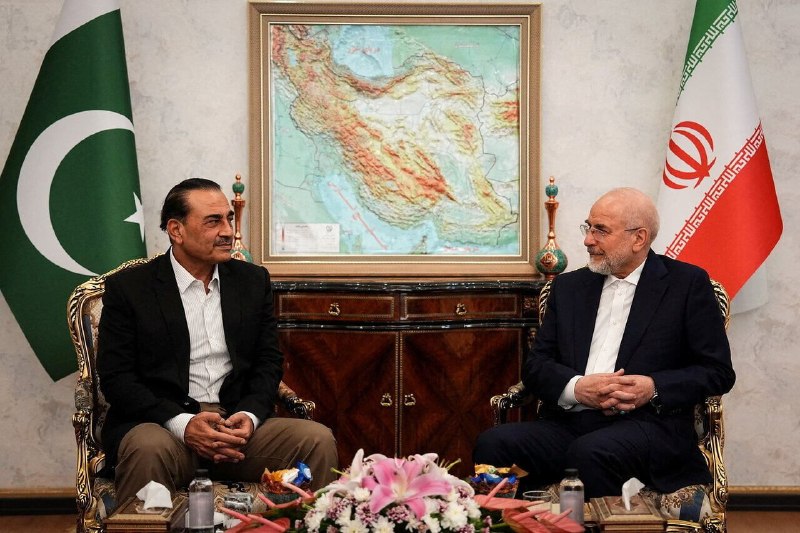
Iran moved on 29 June 2026 to publicly shut down a French proposal to assist in clearing mines from the Strait of Hormuz, with Deputy Foreign Minister Kazem Gharibabadi declaring in a statement carried by Iranian state outlets that the work "is done only by Iran." The rebuttal, delivered in response to remarks attributed to French President Emmanuel Macron saying France was prepared to cooperate with partners on mine clearance in the waterway, signals that Tehran is unwilling to dilute its operational monopoly over one of the world's most sensitive energy chokepoints.
The exchange is more than a diplomatic slap. It puts a hard public marker around an Iranian prerogative — keeping the technical and political business of demining inside Iranian hands — at a moment when Western navies are openly talking about helping secure the same stretch of water. Tehran's framing matters because the Strait of Hormuz sits at the intersection of energy markets, great-power naval posture, and Iran's self-image as the regional gatekeeper. Whoever runs the mine-clearance file, in practical terms, holds a lever over global shipping.
What was said, and by whom
According to a 19:55 UTC dispatch from PressTV's English feed, Iran's Deputy Foreign Minister Gharibabadi stated that French President Emmanuel Macron had said France was prepared to cooperate with partners on clearing mines from the Strait of Hormuz, and that Gharibabadi was responding to that offer. A separate 19:11 UTC dispatch from Fars News International reported Gharibabadi saying that "demining in the Strait of Hormuz is done only by Iran," framing the statement as a direct reply to the French position. IRNA English, the official state news agency, summarised the same message at 18:47 UTC, attributing the position to Gharibabadi in his capacity as deputy foreign minister for legal and international affairs.
All three of the wire items in circulation on the evening of 29 June describe a single sequence: a French offer, an Iranian refusal, and an assertion of exclusive Iranian competence. The pieces do not detail when Macron's remarks were made, what mines are at issue, or whether the offer referred to commercial clearance, military mine countermeasures, or both. The Iranian statements also do not specify whether any new mines have actually been laid — they read as a reassertion of authority over the corridor rather than a fresh operational announcement.
Why Iran insists on doing it alone
The Strait of Hormuz is the world's single most concentrated oil transit chokepoint. The waterway links Persian Gulf producers — Iran, Iraq, Kuwait, Saudi Arabia, the UAE, Qatar — to the Gulf of Oman and, from there, to global markets. Any disruption to navigation, whether through mines, fast-attack craft, or anti-ship missiles, has an immediate effect on crude flows and freight pricing. Iran's naval doctrine treats control of the strait, or at minimum the credible ability to threaten it, as the centre of gravity of its deterrence posture.
That doctrine gives mine-clearance operations a political weight that exceeds their technical content. Allowing a foreign navy — particularly a French or broader European one — to conduct demining in the strait would, from Tehran's vantage point, cede a slice of that authority. It would also create an opening for intelligence-gathering vessels to operate inside Iranian-claimed waters under a humanitarian cover. Iranian messaging over the years has consistently framed external naval activity in the Gulf as provocative, and insisted that regional security be managed by littoral states.
Gharibabadi's choice of phrasing — "only by Iran" — extends a pattern. The Islamic Republic has, in past episodes, insisted on Iranian management of incidents involving tankers, disputed islands, and military incidents in the Gulf, often rebuffing offers of international investigation. The political logic is consistent: externalise nothing that can be kept internal, and reframe anything that cannot be externalised as a matter of Iranian sovereignty.
The French offer and what it signals
Macron's reported willingness to assist is itself a signal. France maintains a permanent naval presence in the Gulf through its base in the UAE and through regular task-group deployments. French naval doctrine treats freedom of navigation in the strait as a non-negotiable interest, and Paris has been one of the more vocal European capitals on the security of Gulf energy routes. An offer to help with mine-clearance, even if framed as cooperative, falls inside that older posture.
The offer can also be read as a confidence-building gesture aimed at Iran rather than a confrontational move. Mine-clearance cooperation has historically been one of the less politically toxic forms of military-to-military contact; it can proceed under technical ministries or coast guards rather than uniformed combat formations. From Paris's side, putting the offer on the table allows France to position itself as a responsible actor willing to absorb risk for the stability of a corridor that matters to European energy security, without committing to a wider military role.
Iran's flat rejection suggests Tehran reads the offer differently. In the current climate, with sanctions enforcement, nuclear-file negotiations, and regional proxy alignments all in play, any external military presence in the strait is likely to be treated as a net negative regardless of how it is packaged. The demining file, in other words, is being kept closed.
The corridor underneath the row
The dispute over who clears mines is also a dispute over who decides when the waterway is safe. Insurance underwriters, oil traders, and shipping companies price risk on the assumption that the strait is a navigable space under multi-state stewardship. Iranian insistence that only Iranian crews will handle clearance pushes the operational reality closer to a single-actor model, in which Tehran's technical decisions — when to certify a lane open, when to slow traffic, when to halt a vessel for inspection — carry commercial weight far beyond Iran's own tanker fleet.
This is the structural point: in a corridor where a large share of the world's seaborne crude transits a narrow channel, the question of who holds the toolbox is the question of who holds the traffic light. France's offer, however politely framed, was an attempt to share that toolbox. Gharibabadi's reply, however curtly framed, was an attempt to lock it shut.
The sources circulated on 29 June do not provide evidence of fresh mine-laying, nor do they specify the operational status of the strait's mine stockpile or any clearance campaign in progress. They describe a diplomatic exchange and a declared position. What is not yet on the record, and what would matter most to shipowners and underwriters, is whether the current Iranian posture amounts to business as usual or to a tightening of an already tight grip. The next signal will be operational — a clearance sortie, a navigational warning, a tanker inspection — rather than rhetorical.
Stakes and forward view
If Iran holds the line, the practical consequence is continuity: demining in the strait, if and when it occurs, remains an Iranian-run affair with no European naval footprint inside the operation. France retains the right to keep its task group in the wider Gulf and to speak about the corridor; it does not gain a seat at the technical table. For European energy importers, that means relying on Tehran's continued willingness to keep the waterway open, mediated through whatever back-channel diplomacy accompanies the public exchange.
If the position softens, the more likely path is incremental — technical cooperation on survey vessels or hydrographic data routed through neutral intermediaries, with no French flag flying over an Iranian minefield. There is no public sign of that softening in the 29 June statements; if anything, the Iranian messaging is calibrated to make any such offer more politically expensive to accept. The framing in Tehran is straightforward: the strait is Iran's business, and offers of help, however well-intentioned, will be turned away.
The narrow read of 29 June is that an offer was made and rejected. The wider read is that the strait's operating rules are being re-negotiated in public, one statement at a time, with Iran setting the tempo and external powers confined to the role of commentors. Whether that tempo holds or breaks will be visible in the next operational move, not in the next press release.
This publication's framing tracks the Iranian state wire's account of the exchange as the primary record of what was said, while reading Gharibabadi's "only by Iran" line as a continuation of Iran's longstanding position on sovereign management of the strait rather than as a fresh operational claim. The Macaron offer, as reported in the Iranian feed, has not yet been confirmed by a French government readout in the sources circulated on 29 June; the diplomatic record on that side of the exchange remains thinner than the Iranian side.
Wire provenance
This editorial synthesis draws on the following public wire/social posts:
- https://t.me/presstv/
- https://t.me/FarsNewsInt/
- https://t.me/Irna_en/