A 30-Day Truce on the Strait: What the Iran–US Qatar Talks Actually Settle, and What They Don't
Mediators have opened a channel in Doha aimed at reopening the world's most important oil chokepoint. The agreement is narrow, the calendar is short, and the freight market is already voting.
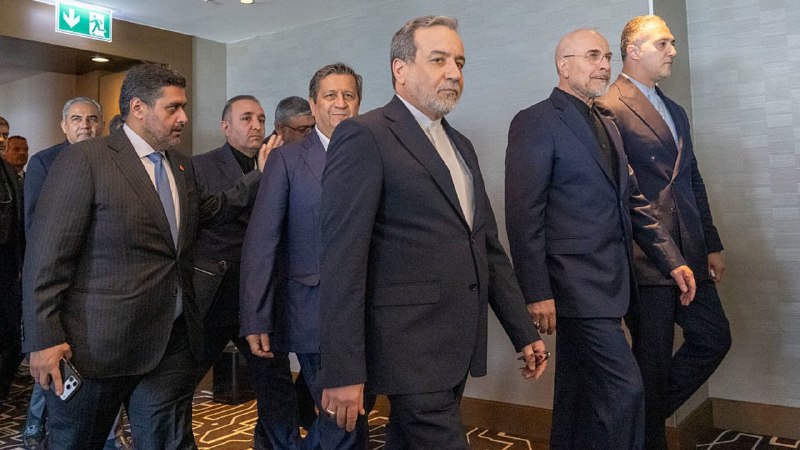
Doha has become, in the space of seventy-two hours, the most consequential diplomatic address in global energy. On 28 June 2026, Iran's foreign minister declared that the Strait of Hormuz would remain under Iranian control for thirty days; within hours, multiple feeds reported that Washington and Tehran had agreed to a stand-down and to meet in Qatar during the week of 29 June. By midday on 29 June, Iran's president was announcing that Qatar would release roughly $6 billion in previously frozen Iranian assets as part of the de-escalation track. The sequence is striking less for its novelty than for the fact that it has produced a specific number — thirty days — at exactly the moment a calendar-driven energy market is trying to price a contested waterway.
What is on the table in Doha is narrow, technical, and unusually short. The reported frame is de-confliction in and around the Strait of Hormuz, the resumption of technical talks, and the release of frozen balances. What is not on the table — the nuclear file, the regional proxy architecture, the broader question of US force posture in the Gulf — is doing most of the work in defining how durable any agreement proves to be. The temptation to read the thirty-day window as a peace dividend is real. The discipline to read it as a clock is more useful.
The narrow deal: a stand-down, not a settlement
The substantive core, as reported across wire and aggregator channels on 28–29 June, is procedural. The Jerusalem Post feed on 29 June at 12:00 UTC described mediators establishing communications channels to de-escalate incidents, with technical talks set to continue. The polymarket-syndicated line at 20:50 UTC on 28 June was blunter: the two sides had "reportedly agreed to stand down for now" and to meet "this week in Qatar over the Strait of Hormuz." The Iranian foreign minister's statement, captured in the same aggregator feed at 14:10 UTC, set the operative duration: thirty days of Iranian control.
The wording matters. A "stand-down" is the language of military de-confliction, the kind of arrangement naval commanders sign after a near-miss in a crowded sea lane. It is not the language of a political settlement. It commits the parties to a period in which they do not add new provocations, but it does not commit them to resolve the underlying grievance that produced the original confrontation. A stand-down is a respirator, not a cure.
The financial component, announced by Iran's president on 29 June, is the more concrete deliverable. Six billion dollars in frozen assets, released through a Qatari channel, gives Tehran immediate liquidity at a moment when sanctions enforcement has tightened the country's access to hard currency. For a government weighing whether to escalate, the option value of that cash — and the cost of forfeiting it — is not zero. Whether the release is structured as a single tranche or as a programmed release tied to conduct will determine whether the money functions as a confidence-building measure or as a deposit against future behaviour.
The counter-narrative: control of the waterway, not its closure
The most consequential sentence in the source record is the Iranian foreign minister's declaration that the strait "remains under Iranian control for thirty days." Read in Tehran, the statement is an assertion of sovereignty over a waterway that Iran has long claimed as its strategic preserve, and a confirmation that transit will continue on Iranian terms. Read in Western chancelleries, the same sentence raises the question of what "control" means in operational practice: regime notice, selective inspection, levy of transit fees, the ability to deny passage to specific flag states.
The alternative read is more uncomfortable. A waterway that is "under Iranian control" for thirty days is, from a shipowner's perspective, a waterway that is not under multilateral control for thirty days. Insurers and charterers price the difference. Even if no tanker is touched, the existence of a sovereign assertion of control is itself a market event: war-risk premiums, route deviation, and the slow re-routing of crude flows around the cape rather than through the gulf.
A second counter-narrative deserves airtime. The 30-day window can also be read as Iranian bargaining leverage, a public countdown that forces Washington to either negotiate in earnest or absorb the reputational cost of a confrontation inside a window the Iranian side has named. If the Iranian calendar is doing the work, the Qatari venue is a venue in which the United States must now show up.
The structural frame: chokepoints, corridors, and the price of optionality
The Strait of Hormuz is the canonical chokepoint in the modern energy economy — narrow, irreplaceable, and exposed to political risk that no volume of pipeline diplomacy can fully diversify away. Roughly a fifth of global seaborne oil passes through it. The political economy of the strait is not a function of the water itself but of the alternatives that don't exist at scale. Pipelines bypassing the strait have spare capacity, but the spare is measured in single-digit millions of barrels per day — meaningful at the margin, not enough to clear the market if Iranian action and Gulf state retaliation disrupted normal flow for weeks.
This is the structural reason the 30-day window matters beyond its face value. Energy markets price optionality: the right, but not the obligation, to move physical barrels at a given price. A strait that is technically open but politically contested compresses the value of optionality upward. Charterers pay for the option of routing around the cape. Refiners pay for the option of holding inventory through the window. The market is not pricing war; it is pricing the cost of being wrong about war.
A second structural element is the role of the mediator. Qatar's positioning — simultaneously host to a major US airbase, holder of diplomatic relations with Tehran, and conduit for the $6 billion release — is the kind of asymmetric leverage small Gulf states have built for themselves over two decades of patient mediation. The Qatari channel is not a neutral post office. It is a piece of national infrastructure. The fact that both sides have accepted it signals that the alternatives — direct talks, Russian or Chinese mediation, or no talks at all — were deemed inferior by both.
The political economy of frozen money
The release of the $6 billion deserves its own paragraph because it is the most tangible good changing hands. Frozen-asset releases in the Iran file have a mixed record. Some have functioned as bridge financing, smoothing the period between sanctions enforcement and diplomatic resolution. Others have been clawed back, frozen again, or repurposed as leverage when the political weather changed.
The mechanism matters. If the release is routed through escrow with verified end-use monitoring for humanitarian goods, the political cost of re-freezing rises. If it is delivered as a single unmonitored tranche, the political cost of re-freezing falls — and with it Tehran's incentive to treat the cash as a deposit against future restraint rather than as a confidence-building measure with teeth. The 30-day window functions as a near-term compliance horizon: any reversal inside that window would forfeit not just the financial value but the credibility of the Qatari channel itself.
The political economy also runs in the other direction. For a US administration, a successful, narrow, technical de-escalation has a clean electoral logic: lower gasoline prices, no US casualties, a demonstrable win on a high-salience issue. For an Iranian government, the equivalent logic is relief from sanctions pressure, hard currency, and a diplomatic seal on its regional posture. The two incentive structures are not incompatible, which is precisely why a narrow deal is possible. They are also not sufficient to carry a deeper settlement, which is precisely why a narrow deal is what is on offer.
Stakes and forward calendar
If the 30-day window holds, the market will treat it as a partial normalisation: war-risk premia ease, freight rates drift down, and the geopolitical risk premium embedded in Middle East benchmark crudes compresses. The first-order winners are Gulf hydrocarbon exporters, whose realised prices track both the volume and the risk discount; the second-order winners are the insurers and tanker operators who have been absorbing the premium. The first-order losers are the alternative-route pipeline operators in the UAE and Saudi Arabia, whose spare capacity becomes a less-stressed asset; the second-order losers are the budget projections of sanctions enforcers who have been counting on revenue compression as a tool of statecraft.
If the window does not hold — if an incident inside the strait forces a re-escalation, or if one side reads the other's behaviour as breach — the freight market's first move will be large. War-risk underwriters do not price linearly. A single incident, particularly one involving a flagged vessel from a major importing economy, can move premia in a single business day by more than the cumulative effect of the previous month's de-escalation. The strategic question for both governments is whether the political cost of that single-day move is bearable in their respective domestic calendars.
The most plausible trajectory is neither settlement nor rupture. It is a rolling extension — the 30-day window lapsing into a 60-day, then a 90-day, framework of technical talks, with the underlying political file moving at a different speed than the de-confliction calendar. That outcome is also the least satisfying to a market that wants a binary.
What the sources do not settle
The source record is unusually thin on three things that the analysis cannot fake. First, the specific design of the $6 billion release — escrow, monitoring, end-use controls, single or staged delivery — is not described in the available material. Second, the operational meaning of "Iranian control" for thirty days — whether that includes selective inspection, transit levies, or flag-state notification requirements — is not described. Third, the status of the nuclear file and the regional proxy architecture during the 30-day window is not described. The Doha track is, by every indication, deliberately narrow. The narrowness is the design, and the design carries its own fragility.
What the available record does establish, with reasonable confidence, is that both governments have accepted a procedural arrangement with a defined calendar, that a third government (Qatar) has converted its diplomatic position into a piece of mediating infrastructure, and that the asset transfer is the most tangible good changing hands. Whether the procedural arrangement becomes a settlement or a clock that runs out is a question that the next thirty days will answer in the language of tonnage, premia, and the political costs each side can bear.
— Monexus framed this as a 30-day de-confliction with a financial component, not as a political settlement. The wire consensus on 29 June was that talks are happening; the contested question is what they are for. Monexus reads the available record as a narrow deal, with the larger file moving at a different speed.
Wire provenance
This editorial synthesis draws on the following public wire/social posts:
- https://t.me/The_Jerusalem_Post
- https://x.com/polymarket/status/
- https://x.com/polymarket/status/
- https://en.wikipedia.org/wiki/Strait_of_Hormuz
- https://en.wikipedia.org/wiki/2024_Iran%E2%80%93Qatar_agreement
- https://en.wikipedia.org/wiki/Qatar%E2%80%93United_States_relations
- https://en.wikipedia.org/wiki/Hormuz_strait_crude_oil_flows