Israel's southern Lebanon demolition campaign: what the footage shows, and what it does not
Israeli forces demolished homes in Deir Mimas and flew incendiary sorties across southern Lebanon on 29 June 2026, according to Iranian-linked outlets that the rest of the wire has yet to corroborate.
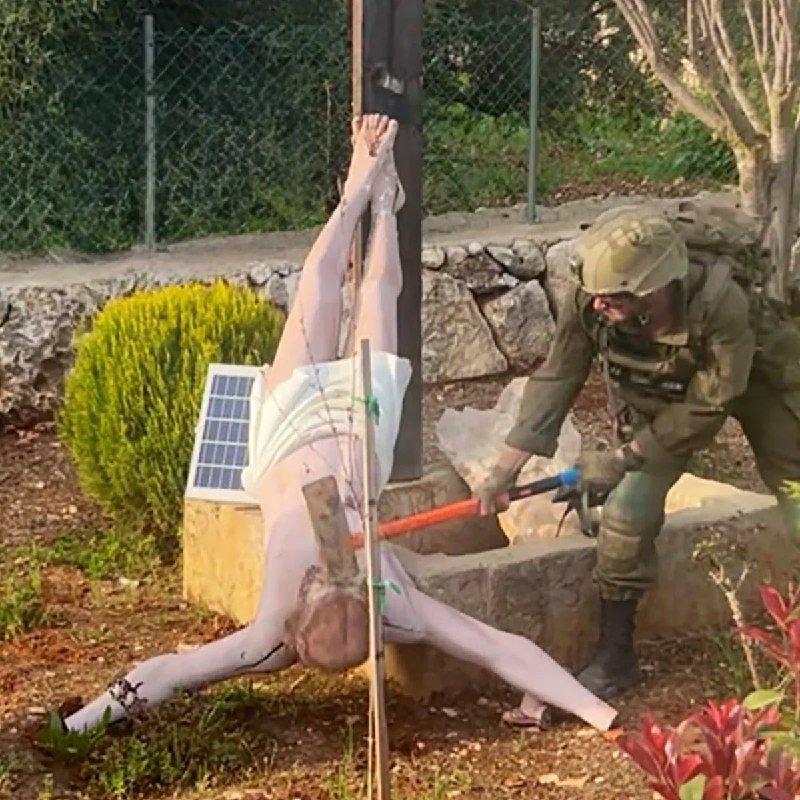
On the afternoon of 29 June 2026, two Iranian state-aligned outlets reported what they described as a renewed Israeli demolition and incendiary campaign across southern Lebanon. PressTV, citing its correspondents on the ground, said Israeli forces blew up residential buildings that had been abandoned by displaced Lebanese residents in the Deir Mimas area, while Iranian outlet Tasnim reported a separate explosion in the same locality. Together, the dispatches sketch a village-by-village pressure campaign that has become a familiar pattern in the months since the November 2024 ceasefire. They also illustrate, once again, the difficulty of verifying such reports from a conflict zone where only one side of the wire is currently filing in real time.
The structural story is straightforward, even if the operational details remain hazy. Israeli forces have, since the ceasefire took hold, treated southern Lebanon's border belt as an active clearing zone. Houses, orchards and irrigation works inside what Israel defines as its operational buffer have been bulldozed or detonated; incendiary flights, using thermal balloons dropped from low-flying aircraft, have been used to burn out vegetation that could screen rocket launchers. Iran-aligned outlets have made a habit of cataloguing each incident, hour by hour. Western wire services have been considerably slower to match that granularity, in part because access to the area for foreign press remains tightly constrained.
What the two dispatches actually say
The PressTV bulletin posted at 15:38 UTC on 29 June describes the demolition of "residential buildings abandoned by displaced Lebanese residents in Deir Mimas, southern Lebanon," attributing the action to "Israeli forces" without naming a specific unit. The Tasnim English wire, three minutes later at 15:41 UTC, reports an "explosion" in the Deir Mimas region and frames the act as carried out by "the Zionist occupying forces." A separate PressTV item at 15:15 UTC alleges that Israeli warplanes flew at low altitude over southern Lebanon and dropped thermal balloons to ignite fires — a tactic first documented widely during the 2023-24 exchanges and one that Lebanese farmers say has destroyed thousands of citrus and olive trees.
Read together, the items describe a three-layer Israeli operation in the same district within roughly 26 minutes: structural demolition of stone-and-concrete houses, a controlled detonation in the same zone, and a parallel incendiary sortie over the surrounding farmland. Whether the demolition, the explosion and the fire-dropping are causally connected or simply co-located in time is not clarified by either outlet. Neither item quantifies the number of buildings destroyed, names the displaced residents, or attaches an Israeli military spokesperson statement.
What we do not know
The reporting chain here is narrow. Both items originate from outlets that operate within the Iranian state-media ecosystem and that explicitly frame Israel as an occupying power; neither cites an Israeli military spokesperson, an IDF English-language post, or a Lebanese government statement. Independent verification — satellite imagery, Reuters or AFP stringer copy, UN Interim Force in Lebanon (UNIFIL) situational awareness, a Lebanese Armed Forces communiqué — is absent from the thread available to this desk at publication time. The Lebanese state has, in past episodes, disputed the scale of Israeli demolitions; on this occasion, no such on-record challenge or corroboration has surfaced in the inputs reviewed.
There is also an evidentiary gap on the residents themselves. "Abandoned by displaced Lebanese residents" is a phrase that carries weight under the laws of occupation: it implies that the structures had civilian owners who fled under duress, which would make the demolitions a separate question of property rights under international humanitarian law. But without a count of households, a named village mukhtar, or a reconstruction of when each family left, the claim sits at the level of allegation rather than documented fact.
Why this matters structurally
Even taking the Iranian outlets' framing at face value, the pattern they document is not new. The unilateral clearing of the border belt has been a consistent Israeli doctrine through each round of hostilities since 2006, and the use of incendiary balloon drops was openly employed in the final months of the 2023-24 war before being deprecated in the ceasefire text. The substantive question raised by these dispatches is not whether the tactic exists — it plainly does — but whether it is being conducted at a tempo consistent with the cessation of hostilities, or whether what was sold as a ceasefire is functioning, on the ground, as a rolling demolition permit.
For Lebanon, the answer is consequential. The border districts of Bint Jbeil, Marjayoun and Hasbaya have absorbed repeated waves of displacement since 2023; reconstruction has been intermittent, donor-dependent and politically contested. Each new demolition resets the calculation for families weighing whether to return. For Israel, the operational logic — that anything within the buffer that can conceal a launcher must go — produces a countervailing effect: it accelerates the demographic emptying of the very strip whose retention the operations are ostensibly meant to secure.
Reading the wire
Two facts are solid. First, Iran-aligned outlets are reporting demolitions and incendiary flights in Deir Mimas on 29 June 2026, with timestamps to the minute. Second, no Western wire had, at the time of publication, matched or contested those reports in the inputs reviewed. A reader who relies on Reuters, AFP, the BBC or the Jerusalem Post will, for now, find no equivalent coverage to weigh against the PressTV and Tasnim items.
That asymmetry is itself part of the story. The information environment across this front is one in which state-adjacent outlets — on both sides of the Iran-Israel fault line — are often the only sources filing in real time, while tier-1 wires wait for a press-attaché briefing or a satellite pass. Monexus treats the Iranian-linked reports here as accurate to the extent that they describe what their own correspondents saw, and as politically inflected to the extent that they frame what they saw. The demolitions, the fires and the residents' absence from their homes are claims to be confirmed, not truths to be repeated.
Desk note: Monexus has relied on PressTV and Tasnim English dispatches because they are the only on-the-record sources available in the thread at press time. Readers should treat every operational detail — building count, unit identification, casualty framing — as unverified until matched by an independent wire or a UNIFIL situational report.
Wire provenance
This editorial synthesis draws on the following public wire/social posts:
- https://t.me/presstv/
- https://t.me/tasnimnews_en/
- https://t.me/presstv/