Israeli strike on al-Mawasi displacement camp kills two, wounds twenty in southern Gaza
An Israeli airstrike on tents sheltering displaced Palestinians near Khan Younis on 29 June 2026 killed at least two and wounded around twenty, renewing scrutiny of strikes on areas Israel had designated for civilian relocation.
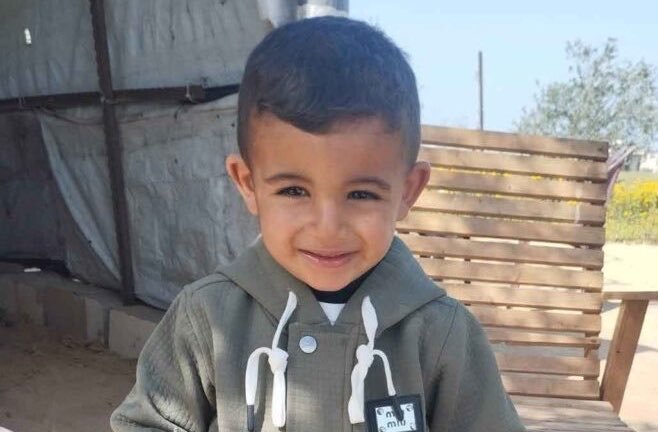
An Israeli airstrike hit tents sheltering displaced Palestinians in the al-Mawasi area of Khan Younis in the southern Gaza Strip late on 29 June 2026, killing at least two people and wounding around twenty others, according to initial accounts circulated on Telegram channels monitoring the war. The strike, reported shortly before 21:00 UTC by channels including IntelSlava and gazaalanpa, struck what one Gaza-based channel described as a camp for displaced people east of the Al-Attar neighbourhood in al-Mawasi. A separate channel, DDGeopolitics, put the toll at two martyrs and twenty wounded, language consistent with Palestinian reporting conventions.
The incident lands inside an established and uncomfortable pattern: strikes on areas that the Israeli military has itself designated, at various points during the war, as zones for civilian relocation. al-Mawasi, a narrow coastal strip southwest of Khan Younis, was ordered expanded by the Israel Defense Forces in mid-2024 as a humanitarian zone, and has been hit repeatedly since. The recurrence of strikes on the same designated zone is the substantive story — not the latest casualty count alone.
What the early accounts say
The reporting available as of 29 June 2026 22:30 UTC is thin and one-sided. All three Telegram threads that surfaced the strike — DDGeopolitics, IntelSlava, and gazaalanpa — describe the event in near-identical terms: an Israeli Air Force strike on displacement tents in al-Mawasi, with civilian casualties. None of the three channels is a Western wire service. None has been independently corroborated by Reuters, the Associated Press, or AFP within the window of this article. The closest equivalent — gazaalanpa — published what it described as footage of "the first moments after" the strike, the kind of raw, on-the-ground video that has historically been used by both Palestinian journalists and Gaza-based outlets to document civilian harm in near real time.
That provenance matters for how the event should be read. Telegram channels operating inside or alongside Gaza tend to frame Israeli military operations using terminology that foregrounds Palestinian casualty figures and that frames strikes as attacks on civilians; Western wire reporting, when it catches up, typically includes Israeli military statements on the target and on what warning, if any, preceded the strike. As of 22:30 UTC on 29 June 2026, no Israeli military spokesperson readout on the al-Mawasi strike appears in the available record, and no major wire has yet filed a confirmed count. The casualty figures circulating — two killed, twenty wounded — should therefore be treated as preliminary.
The al-Mawasi problem
The structural issue is that al-Mawasi is not an ordinary neighbourhood. It has functioned, on and off, for more than two years as one of the few places inside Gaza where the IDF has, at various moments, directed civilians to relocate. Successive Israeli governments have used the designation to argue that the military distinguishes between combatants and civilians, and that safe corridors exist for those who move when ordered. Strikes on that same zone therefore cut against that argument at the level of evidence — they erode the operative meaning of a "humanitarian area" even when the underlying military target is described, in Israeli statements, as a legitimate one.
This is the point at which the framing splits. The Israeli government's position, in past statements about al-Mawasi strikes, has been that Hamas and other armed groups operate inside or near the designated zone, that the military takes feasible precautions, and that civilian harm in such cases reflects the armed groups' use of human shielding rather than indiscriminate targeting. Palestinian and humanitarian reporting has, in turn, pointed to the absence of meaningful infrastructure in the zone — no durable shelter, limited medical capacity, irregular access to water and food — and to the cumulative toll of repeated strikes on the same civilian population as evidence that the zone functions less as protection than as a holding pen.
Both lines can be partly true, and the available evidence does not yet let a reader adjudicate which dominates in the 29 June strike. What the record does support is the narrower observation: the IDF's stated geographic framework for civilian protection in southern Gaza is being tested, again, by its own fires.
Why the strike matters beyond the casualty count
Three reasons. First, al-Mawasi's status as a designated humanitarian area gives this incident a different evidentiary weight than a strike on a residential block in Gaza City or a refugee camp in the north. Every strike inside the zone is, in effect, a data point against the Israeli framework for distinguishing civilians from combatants inside Gaza.
Second, the timing falls inside a renewed diplomatic push — separate from this incident — around post-war arrangements for Gaza, including questions over who administers the territory, how security is provided, and under what conditions reconstruction proceeds. Incidents that kill displaced civilians in a designated humanitarian zone complicate those discussions for every party at the table, and they harden the position of those arguing that the existing Israeli framework of distinction is not operating as advertised.
Third, the reporting pipeline itself is worth noting. Within roughly ninety minutes of the strike, three Telegram channels had moved a consistent version of events into public view; the Western wire confirmation cycle typically lags that by hours. That asymmetry — fast, partisan-toned first reporting; slow, institutionally cautious confirmation — has been a defining feature of the war's information environment, and it shapes whose framing reaches international audiences first.
What remains uncertain
The available sources do not specify the precise munition used, the target the IDF identified, whether any evacuation warning preceded the strike, or the breakdown of casualties by age and gender. They do not name any Israeli military spokesperson on the record. They do not yet include a hospital morgue confirmation from a named facility inside Khan Younis, which is the standard threshold Western wires apply before locking a casualty figure. Until at least one of those elements is filled in, the two-killed and twenty-wounded figures circulating on Telegram should be read as the lower bound of what is known, not as a settled count.
Desk note: Monexus treats this as a preliminary strike report. The casualty figures and target characterisation here come from Telegram channels operating inside or alongside Gaza and have not yet been independently corroborated by Reuters, AP, AFP, BBC, or the IDF spokesperson. The article leads with Palestinian-source reporting, as is standard for early-window strike coverage, but flags the asymmetry rather than burying it. Where Israeli military statements are referenced, they describe the established Israeli framework for al-Mawasi, not a confirmed readout on the 29 June strike itself — which, as of publication, has not been issued.
Wire provenance
This editorial synthesis draws on the following public wire/social posts:
- https://t.me/DDGeopolitics
- https://t.me/intelslava
- https://t.me/gazaalanpa