Macron courts Oman as the Gulf's neutral middlemen get a second look
A two-day state visit to Paris gives Macron an opening to position Europe as a security and energy partner for the Gulf monarchies hedging between Washington and Tehran.
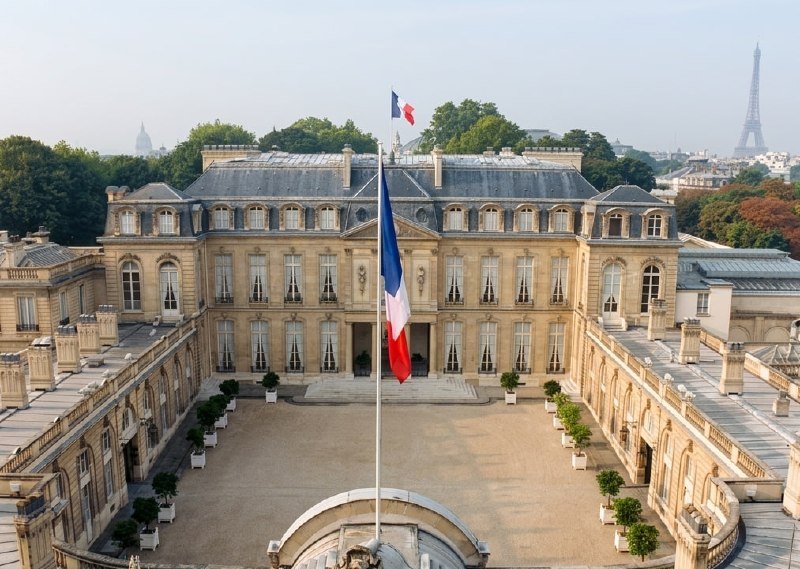
French President Emmanuel Macron received Sultan Haitham bin Tariq Al Said of Oman at the Élysée Palace on Monday 29 June 2026, opening a two-day state visit that France is explicitly framing around regional security and the Strait of Hormuz. The optics, captured on the steps of the palace in Paris at roughly 10:36 UTC and circulated by Telegram channel Clash Report, were as deliberate as the underlying diplomatic arithmetic: a Western European head of state rolling out the red carpet for a Gulf monarch who has spent the past two and a half years quietly positioning himself as a broker between Washington and Tehran.
What is on the table is not a treaty. It is something more useful for Paris — a working relationship with a Gulf state whose neutrality still has commercial value, at a moment when the security of the world's most important oil chokepoint is back on Europe's agenda.
Why Oman, and why now
Sultan Haitham's government sits in an unusual position. Muscat maintains diplomatic ties with Tehran, including mediation channels that helped shape the 2023 de-escalation arrangements, while remaining close enough to the Gulf Cooperation Council to participate in its security architecture. Paris wants that profile. A France 24 brief on the visit, filed at 09:41 UTC on 29 June, pointed to "regional security" as the headline agenda item, with the Strait of Hormuz implicitly framing the talks.
The visit lands at a moment when European capitals have run out of patience with the assumption that Gulf energy security is Washington's problem. Roughly a fifth of the world's seaborne crude transits Hormuz; European refiners, despite the diversification push of the past three years, remain exposed to shocks in the corridor. A relationship with Oman is not a substitute for that exposure, but it is a hedge.
The European energy angle
France's courtship of the smaller Gulf monarchies has accelerated since 2024. TotalEnergies has long-standing upstream interests in the sultanate, and Muscat has been one of the more accommodating partners on LNG offtake terms during the post-2022 reshuffle of European gas supply. A successful state visit lays political groundwork for the kind of long-duration contracts European utilities are now willing to sign, and which Omani planners increasingly prefer over spot-market exposure.
The structural reading is straightforward. Europe is rebuilding a diversified energy import portfolio after the shock of 2022. Gulf states with spare export capacity — and the political cover to negotiate independently of Washington — are useful counterparties. Oman fits that bill more comfortably than Saudi Arabia, where human-rights files and the lingering aftermath of the 2018 Khashoggi affair continue to constrain deal-making.
Reading the Gulf reaction
The framing the European press adopts is "Europe re-engages the Gulf." The framing that circulates in Gulf-based outlets tends to invert the verb: the Gulf states are re-engaging Europe, on terms that diversify their own external portfolios after a decade in which the United States has been an erratic partner. Both readings are partially correct.
For Oman in particular, the calculus is one of optionality. Active mediation around Hormuz traffic and broader Iran-Gulf de-escalation routes Muscat into both Washington and Beijing's strategic thinking. A visible Paris leg adds a third pole. None of this requires choosing between them. Sultan Haitham's preference for quiet, procedural diplomacy — visible in the unflashy choreography of Monday's welcome compared with some regional state visits — is itself an instrument.
The harder question is whether European leaders can convert photo opportunities into operational cooperation. France does not control the navy task forces that escort tanker traffic in the Strait; that remains predominantly a US Fifth Fleet mandate, with British and occasional French contributions. What Paris can offer is a diplomatic venue outside the Gulf where Omani, Iranian, and European officials can meet without the theatre of regional summits — and that, for now, may be enough.
What the sources don't yet settle
Neither the Telegram imagery nor the France 24 brief confirms specific agreements signed at the palace on Monday. The sources do not specify whether energy contracts, defence cooperation, or a structured consultation mechanism on Strait security will be announced at the visit's conclusion. What can be said with confidence is that the visit itself — and the framing both sides chose for it — places Oman back at the centre of Europe's near-term Hormuz planning. The harder work of turning that framing into infrastructure, contracts, and naval arrangements will play out in the weeks after the cameras leave Paris.
A modest state visit is rarely the moment that resets a region. But the diplomatic fact that it is happening, and the way both governments are willing to be seen making it happen, is the story worth noting.
Desk note: Monexus framed this as a European energy and security story centred on optionality, rather than the wire-level read of a one-off bilateral. The Oman-Iran mediation background is flagged as structural context, not editorial speculation.
Wire provenance
This editorial synthesis draws on the following public wire/social posts:
- https://t.me/ClashReport