Orbital data centers, Nasdaq-100 admission and a 55th birthday: the week Musk's empire closed ranks
A fast-tracked Nasdaq-100 entry, an unverified orbital data center pitch, and a personal milestone converge on the same week — exposing how thin the line between Musk's corporate empire and his speculative pronouncements has become.
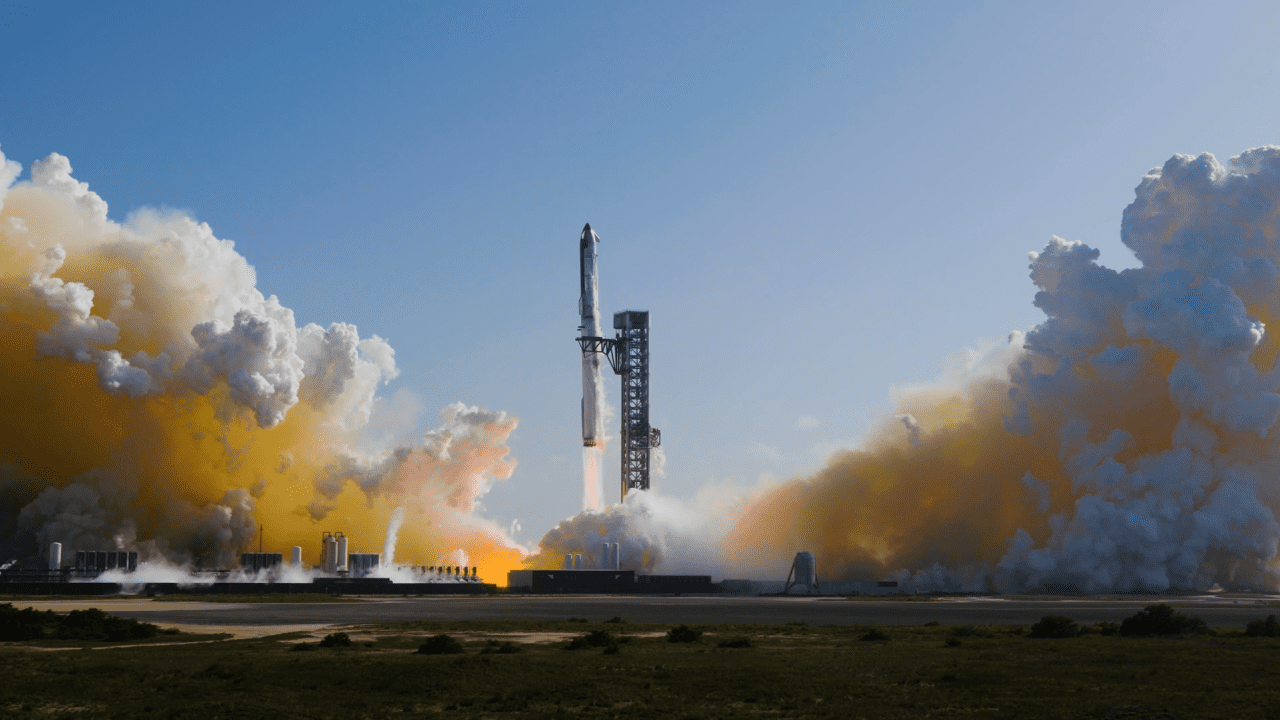
At 01:25 UTC on 29 June 2026, the Telegram channel rnintel logged a small personal milestone for the world's richest individual: Elon Musk turned 55. The note was almost throwaway — a single line tucked between operational briefings and naval tracking threads — but its timing mattered. Forty-eight hours earlier, on 27 June, a finance-side thread reported that SpaceX, the Musk-controlled launch and satellite company, was being steered into the Nasdaq-100 on an unusually compressed timeline under a framework Nasdaq had only recently adopted. The same evening, a TechCrunch item carried a sharper story: SoftBank's chief executive was not alone in questioning Musk's pitch for orbital data centers. Three threads, three registers, three days. Read together, they sketch the shape of a corporate-political complex that has grown difficult to separate from the man at its center.
The pattern is not new, but the convergence is. For most of the past two years, Musk's empire has generated its loudest headlines from xAI, from the Department of Government Efficiency, and from the political fights swirling around X. The financial plumbing underneath — the index inclusions, the listing mechanics, the speculative architecture pitches — has tended to run on a slower cycle. This week the cycles collided, and the collision is itself the story. A fast-tracked index entry, a thinly substantiated infrastructure vision, and a birthday reminder together expose how thin the buffer has become between Musk's pronouncements and the market structure that prices his companies.
Nasdaq's fast-track and the ETF gravity well
The 27 June finance thread describes a process that would, on its face, look unremarkable to anyone who has watched index governance for the past decade: a large private company crosses the threshold for inclusion in a benchmark equity index, and benchmark-tracking funds are obliged to buy. SpaceX, however, is not a routine case. The thread notes that Nasdaq is preparing to add SpaceX under a fast-track inclusion framework the exchange only recently adopted, a structural change that compresses the timeline between qualification and rebalancing. For an issuer of SpaceX's implied valuation, the mechanical consequence is significant. Index-tracking and index-closely-following funds manage trillions of dollars in aggregate; when a new entrant arrives at index weight, a portion of that capital is compelled to follow.
The headline effect — "huge ETF buying demand," in the thread's framing — is the obvious part. The less obvious part is the choice Nasdaq has made to operate the new framework in the way the thread describes. Fast-track inclusion is, in essence, a market-structure decision about who gets to skip the queue. Established practice gives newly public companies time to demonstrate float, liquidity and disclosure depth before index governors incorporate them. A compressed path compresses the due-diligence window for everyone else in the system — analysts, benchmark subscribers, and ultimately the pension funds and retail savers whose savings ride along in the ETFs. The thread does not specify the threshold SpaceX is reported to have crossed, nor the precise wording of Nasdaq's inclusion criteria, and this publication has not independently verified the procedural detail beyond what the source describes. The structural point, however, is independent of the specifics: the faster the gate opens, the less the gate functions as a gate.
There is also a feedback loop worth naming. Musk's companies trade, when they trade at all, on a premium that already prices in significant future cash flows. Index inclusion does not create that premium; it amplifies it by attaching a guaranteed buyer of last resort. For a private company on the cusp of going public — which SpaceX has long been reported to be — a fast-track slot also signals something to prospective IPO buyers: the market structure has already been pre-arranged to absorb the float. The price discovery that is supposed to accompany a listing is, in this framing, partially back-loaded onto the post-IPO period, when the index-tracking bid is already in place.
Orbital data centers and the problem of proof
If the Nasdaq story is about market plumbing, the TechCrunch item from the same evening is about something harder to price. The headline — that SoftBank's chief executive is not the only one with questions about Musk's orbital data center hype — frames a genuine engineering and economic disagreement. The underlying claim, familiar from Musk's own public statements, is that compute infrastructure can be moved off-planet, where solar power is continuous and cooling is free, and beamed back to Earth. The appeal is intuitive: launch costs have fallen sharply over the past decade, the in-orbit power budget is effectively unbounded, and the thermal-management problem that keeps terrestrial data centers in cold climates and cold water goes away.
The criticism, as carried in the TechCrunch item, is that none of these intuitions survive contact with current launch economics at the scale required. Orbital data centers are not a question of physics; they are a question of mass to orbit, radiation hardening of commodity compute, continuous link capacity to ground stations, and the replacement cycle for hardware that cannot be physically serviced the way a ground-based rack can be. The TechCrunch thread does not catalogue these objections in detail — its function is to flag that a major strategic investor in Musk-adjacent ventures has, at minimum, declined to underwrite the pitch. SoftBank's hesitation is the news, not the rebuttal; the rebuttal is the news, framed through SoftBank's hesitation.
The structural risk here is not that Musk is wrong about orbital compute in some absolute sense. Twenty-year horizons have surprised skeptics before. The structural risk is the gap between the deployment of the claim and the deployment of the proof. When a CEO of Musk's reach announces a category, the announcement itself moves capital — into adjacent listed plays, into private fundraising rounds for startups that brand themselves as "orbital," and into the equity of the announcing company, whether through direct exposure or through index effects of the kind discussed above. The proof, when it comes, will come at a different tempo than the announcement, and the announcement has already been priced.
Three threads, one empire, one week
The reason these three items belong in the same article is the week. A Nasdaq-100 fast-track, a CEO-level rebuttal of an infrastructure pitch, and a 55th birthday all landed in a 48-hour window. None of them is a crisis. None of them is a scandal in the conventional sense. What they collectively show is the operating texture of the Musk enterprise at mid-2026: corporate milestones and personal milestones publicly tracked across channels, infrastructure visions that move stock prices before they move metal, and market-structure decisions that quietly enlarge the bid for the most contested private issuer of the cycle.
This is also where the editorial line has to be drawn carefully. There is a familiar reflex in Western coverage to read any Musk-related story as a morality play: the errant CEO, the captured regulator, the credulous market. That framing is easy to write and often wrong. The Nasdaq governance described in the finance thread is a procedural decision taken by an exchange with its own incentives and its own reputational calculus; the index framework exists for a reason, and not every fast-track is a favor. The orbital data center disagreement is a substantive technical dispute in which Musk is, on the merits, allowed to be right in the long run and wrong in the short run; the SoftBank hesitation is evidence, not verdict. The birthday is a birthday.
What the sources do support is a more specific claim: the connective tissue between Musk's corporate actions, his speculative pronouncements, and the market infrastructure that prices both has tightened in 2026 to the point where each piece can be read only in light of the others. A fast-tracked index inclusion for SpaceX is not only a listing story; it is a story about how the market absorbs the float of an issuer whose CEO is simultaneously the most-followed infrastructure narrator on the public internet.
The counter-read: this is how capital formation is supposed to work
The defensible counter-read is straightforward and should be stated in its strongest form. Large private companies reach scale, list, enter benchmarks, attract index flows, and use the resulting capital base to fund long-horizon infrastructure bets. The Nasdaq fast-track is, on this account, a response to a real problem: marquee listings that drag through traditional timelines lose momentum and sometimes structure, and the framework exists to prevent that. Orbital compute is a defensible long-horizon thesis in a category — energy-intensive AI infrastructure — where every plausible terrestrial alternative is also being pursued at enormous cost and with non-trivial environmental objections. The skepticism of SoftBank's CEO is healthy investor discipline, not a debunking. Musk turning 55 is, plainly, a non-story.
Each of those points has force. The objection is not that any single piece is wrong; it is that the three pieces together describe a configuration in which the cost of being wrong is borne asymmetrically. If SpaceX's index entry is well-handled, the gain accrues to early backers and to the company. If it is poorly handled — if float, liquidity or disclosure turn out to be thinner than the fast-track assumes — the loss accrues to the passive capital that was required to buy by index construction, not by judgment. If orbital data centers work, Musk will be vindicated and SoftBank will have missed a cycle. If they do not, the capital that priced the announcement has already moved on. The structural asymmetry is not a conspiracy; it is the natural output of the system as currently configured.
What remains uncertain
The sources available to this publication do not, in several places, settle the underlying questions. The finance thread reports the fast-track inclusion but does not detail the procedural mechanism beyond referring to a framework Nasdaq recently adopted. The TechCrunch item registers the SoftBank skepticism but does not enumerate the technical objections or quote a specific on-record executive statement. The birthday note is a Telegram line, not a corporate disclosure. Monexus has therefore written to the level of claim supported by the source material and has not extrapolated. Where the wire has not specified, this article has not specified either.
What can be said with confidence is narrower than the headlines suggest, and that is itself a finding. The fastest-moving corporate-political complexes of 2026 are not the ones whose every detail is settled; they are the ones whose every detail is unsettled, where the announcement outruns the proof and the market structure has been pre-arranged to absorb the float. The week of 27–29 June 2026, as recorded in three separate threads, was a small but clean example.
This article treats Nasdaq governance as a procedural matter on which reasonable observers can disagree, and treats Musk's orbital data center pitch as a long-horizon thesis on which the market is entitled to skepticism without being entitled to dismissal. Monexus sources three threads rather than one because the week's story is the convergence, not any single item.
Wire provenance
This editorial synthesis draws on the following public wire/social posts:
- https://t.me/rnintel
- https://t.me/
- https://www.sec.gov/divisions/investment/imissues.shtml
- https://en.wikipedia.org/wiki/Nasdaq-100
- https://en.wikipedia.org/wiki/SpaceX