Penelope Keith and the quiet authority of British sitcom's upper register
The actor who made snobbery a craft has died at eighty-five. Her best work held a mirror up to a class system that no longer knows where to look.
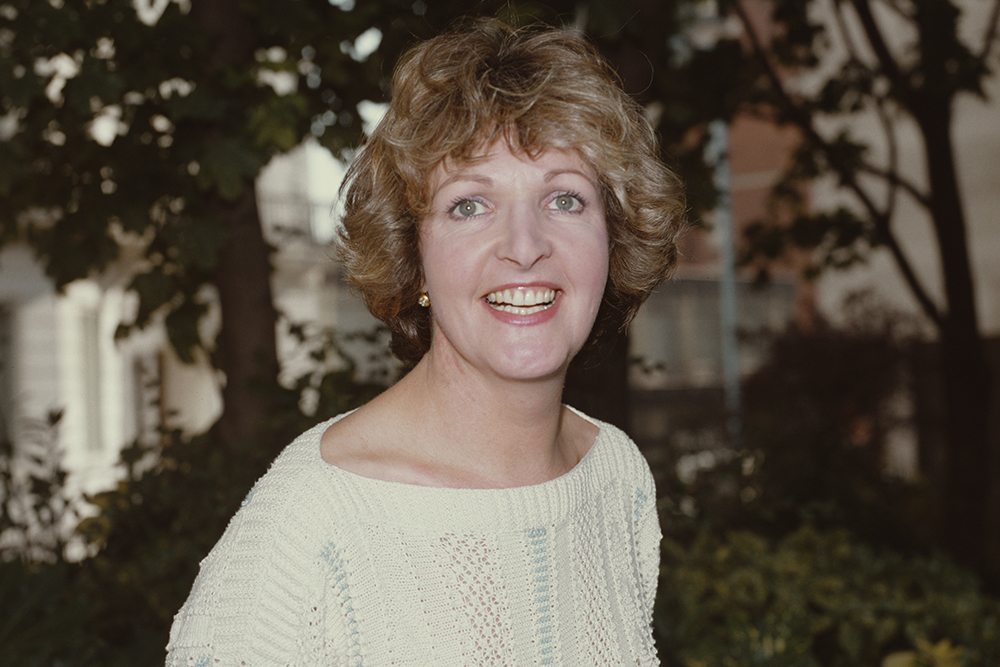
Dame Penelope Keith, who has died aged eighty-five, spent half a century making the English upper-middle register behave like a comic instrument. Her gift was not impersonation but precision: the slightly raised eyebrow over a perfectly enunciated vowel, the pause that landed a line about an inconvenient neighbour or a misplaced husband. She turned snobbery into something audiences could recognise without endorsing, and that tension — between what her characters claimed and what the laughter released — defined a strand of British situation comedy that has no clean successor.
The thread that runs through her work is the unglamorous craft of the sitcom itself: the long apprenticeship in rep, the willingness to be a supporting player in someone else's scene, the trust that the writing would hold. Her death, confirmed by her agent on 29 June 2026, invites a stocktake of what British television has gained and quietly lost in the half-century since The Good Life and To the Manor Born first aired.
A voice tuned before the sitcom years
According to The Guardian's obituary, Keith's comic instincts were already visible in her early work on the stage, where her sense of humour and her instinct for making a company laugh long preceded the television roles that would make her a household name. That pre-history matters. British sitcom in the 1970s rewarded performers who arrived with a stage physique — actors who knew how to land a line in the back row of a provincial theatre, who understood timing as breath control rather than as editing. Keith came up through repertory and the subsidised sector, the same training ground that produced her contemporaries in the genre. The result, on screen, was an absence of effort that disguised considerable technical work.
The Guardian's photographic retrospective, published alongside the obituary, traces the visual continuity: the same lifted chin, the same amused disbelief, deployed across decades of magazine covers, studio portraits and on-set stills. The face did not change so much as the framing around it.
What the snob figure was for
To play the upper-middle woman well is to hold two ideas at once — that the character believes entirely in the rightness of her own taste, and that the audience is permitted to enjoy that belief without having to share it. To the Manor Born placed that figure at the centre of a rural English village and let the class system do the rest of the work. The Good Life placed her next door to a couple who had opted out of it, and let the friction carry the writing. In both cases, the comedy depended on a society that still had a legible class architecture to be flouted, charmed or, occasionally, escaped.
The genre has not disappeared, but its centre of gravity has shifted. Contemporary British comedy tends to draw its humour from precarity rather than from aspiration — from the difficulty of holding a job, a flat, a relationship — and the figure of the comfortably-off woman surveying her domain with a well-modulated sigh is, by 2026, almost a period piece. Keith's characters pointed forward to a Britain whose property prices and professional hierarchies were still legible enough that the joke landed. The joke requires that the audience knows, more or less, where the speaker stands. That shared knowledge is rarer now.
The class joke, after the class audience
There is a temptation, in any obituary of a performer associated with the English upper register, to treat the snob figure as a relic and to celebrate its passing. The evidence from Keith's career suggests something more complicated. Her characters were not the butt of the joke so much as its instrument. They allowed a wider audience — the viewers who would never own a manor or be invited to one — to enjoy the vocabulary of aspiration without having to claim it. The laughter was democratic even when the speaker was not.
That distinction matters for how her work will read in coming years. Streaming catalogues have made the archive of 1970s British sitcom available to viewers who did not grow up with it, and the genre has found second lives on platforms whose commissioning logic is the opposite of the BBC's. The Good Life in particular has travelled further than its original production budget could have predicted, partly because the central premise — two people opting out of the professional middle class — reads, in a post-pandemic economy of insecure work, as closer to prophecy than as nostalgia. Keith's neighbour, with her firm views on Aga maintenance and the etiquette of the village fête, becomes the marker of a world that the central couple have decided to leave. Without her, the joke loses its frame.
What the form loses
The structural question the obituary leaves open is whether the apprenticeship that produced Keith still exists. The subsidised regional theatre, the repertory circuit, the BBC commissioning room that would green-light a pilot about a self-sufficient couple in Surbiton — each of those institutions has been hollowed out, on a timeline long enough that the loss is rarely named as such. What replaces them is a production culture organised around short runs, international sales and the visual grammar of the half-hour prestige comedy. That culture produces excellent work, but it produces it on different assumptions about audience, about character, about how long a performer is allowed to develop a voice before the algorithm requires a hook.
Keith's death, then, is not only a personal loss. It is a small data point in a longer argument about the institutional conditions under which a particular kind of British comic voice gets made at all. The argument is unresolved; the archive remains; the laughter, for now, still travels.
Desk note: The Guardian's obituary and photographic essay are the source for the death, the age, and the pre-television reputation cited above; Monexus has framed this as a stocktake of the sitcom form rather than as a profile of the woman.