The Supreme Court Closes Its Term — And Reshapes the Presidency in the Process
Three rulings in 24 hours — on removal, on late ballots, and on birthright citizenship — are redrawing the boundaries of the American presidency faster than Congress can respond.
On Monday afternoon in Washington, the United States Supreme Court did what the modern Court rarely does in a single week: it ruled that the President may remove executive-branch officers and agency appointees at will, that Justice Samuel Alito would warn — in a published opinion — that a companion decision on late-arriving ballots had left "open opportunities" for fraud, and that a decision reshaping birthright citizenship would be published the following morning. By Tuesday morning, the court had confirmed it would formally release that birthright ruling, completing a 24-hour sequence in which three of the most contested constitutional questions of the decade were settled in directions the framers would have recognised — and in at least one direction the framers would not.
The picture that emerges is not a single ruling but a pattern. Across the same week in late June 2026, the court has reallocated authority away from Congress and toward the executive, narrowed the procedural windows through which election disputes can be adjudicated, and teed up a ruling on who counts as a citizen from birth. Read separately, each ruling is a technical legal artefact about a particular clause of the Constitution. Read together, they describe a court that is choosing to expand the presidency — and to constrain the safeguards that historically contained it.
The removal case: a president with a much longer arm
The first of the three rulings, issued on Monday afternoon, addressed the President's authority to remove principal officers of the executive branch. The decision, as flagged by the prediction-market signal that has tracked the court's calendar closely through the term, holds that the President possesses the constitutional authority to remove executive-branch officers and agency appointees at his discretion. The immediate effect is to dismantle much of the 20th-century architecture of "independent" regulatory agencies — bodies whose heads, by statute, had been shielded from at-will removal to insulate them from political turnover.
For decades, the workhorse precedent governing removal has been a 1935 ruling, Humphrey's Executor v. United States, which upheld the Federal Trade Commission's structure and, by extension, the model of bipartisan regulatory commissions. Monday's ruling does not formally overrule that precedent in name, but it functionally dissolves its reach: any officer exercising substantial executive authority, the court reasoned, must answer to the President who appoints them. The downstream consequences are concrete. Independent agencies — from the Federal Trade Commission and Federal Communications Commission to the National Labor Relations Board, the Securities and Exchange Commission and the Consumer Product Safety Commission — operate under multimember boards whose members serve fixed terms precisely so that a single election does not reset their policy direction. If the President can remove those commissioners at will, the independence that Congress wrote into those statutes becomes theoretical.
Legal commentators across the spectrum note that Congress could attempt to claw back independence through new statutory design — by, for example, restructuring agencies so that fewer of their officials exercise what the court now calls "substantial executive authority." That is a heavy lift against a Congress that has spent most of the term unable to pass its own organisational legislation. The institutional tilt, on the evidence of Monday's ruling, runs toward the White House.
The late-ballots warning: Alito opens a fault line
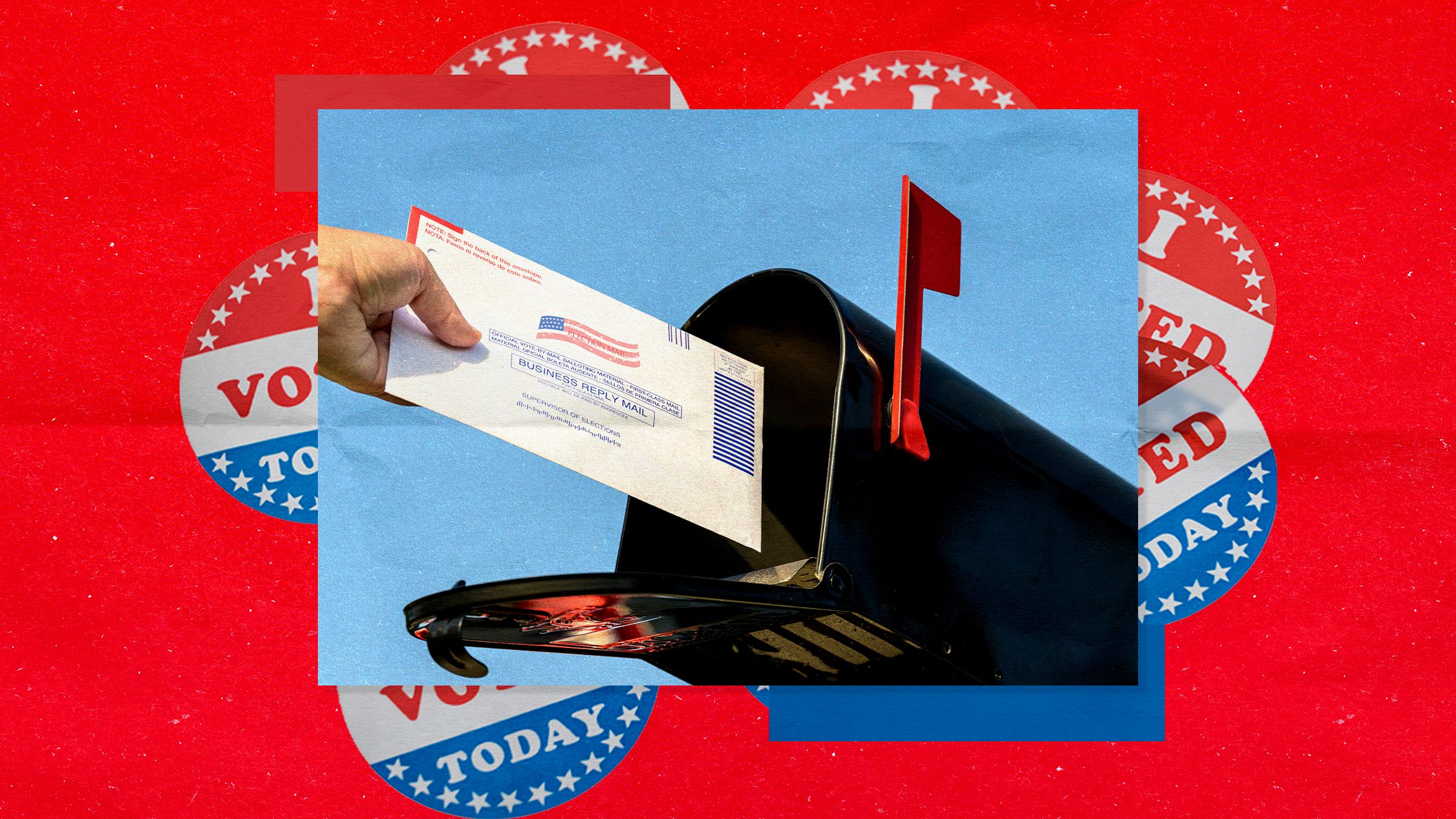
The companion ruling — also released on Monday, addressing the counting of ballots received after Election Day — drew a separate concurrence from Justice Alito, and that concurrence has done more damage to the Court's perceived neutrality than the holding itself. According to the language circulated after the ruling, Alito warned that the decision left "open opportunities" for fraud, language that goes well beyond the typically narrow register of a statutory interpretation and reaches directly into the contested politics of post-2020 election litigation.
The substance of the holding matters. States are the primary administrators of federal elections, and the ruling resolves a long-running split among federal circuits over how much leeway federal courts have to substitute federal deadlines for state ones. What the court ultimately accepted — by leaving state procedures intact while imposing a tighter federal review window — is a compromise that, in its narrow form, defers to state administrators. But Justice Alito's concurrence reframes that compromise as a temporary truce. The court, he warned, will be back, and the next round will not be so accommodating.
This is the language that election lawyers will parse for the rest of the cycle. It does not change a vote count. It does change the temperature of the courtroom.
Birthright citizenship: the ruling that reorders the franchise
Tuesday's release — the court's official ruling on birthright citizenship, formally scheduled to be handed down at the court's Tuesday morning session — is the largest of the three by historical weight. The Constitution's 14th Amendment, drafted in the wreckage of the Civil War to overturn Dred Scott, begins with the words "All persons born or naturalised in the United States, and subject to the jurisdiction thereof." On that sentence hangs the legal status of every American whose family arrived after 1868.
The exact disposition of the ruling was not in the source material reviewed at publication time; the court had confirmed only the schedule of release. What can be said is that the question on which the court granted review — whether the executive branch may, by regulation, restrict the recognition of birthright citizenship to children whose parents are lawfully or permanently resident — is structurally distinct from anything the court has adjudicated in modern memory. The 14th Amendment's text is unusually plain for constitutional language; it has been read that way, without serious contestation, since the Slaughter-House Cases of 1873. A reversal or qualification of that understanding would, in practical terms, create a population of Americans whose citizenship is contingent rather than automatic — a category that has not existed in US law for 150 years.
State-level implementation, including in Colorado where the state Supreme Court earlier in the week issued a redistricting decision with implications for the 2028 cycle, will follow. The downstream question — how the federal government, the states, employers, schools, and hospitals determine who is a citizen — falls outside what the ruling itself can resolve and shapes the litigation calendar for the rest of the decade.
Counter-narrative: the strong constitutionalist defence
The three rulings together, read from inside the legalist tradition, do not amount to the dismantling of a republic. They reflect, on this reading, a court doing what it is designed to do: reasserting the structural meaning of the Constitution against a thicket of 20th-century statutes that had drifted away from it. The unitary-executive theory — long a minority doctrine in legal academia — argues that the Constitution's Article II vests executive power in a single person, and that attempts by Congress to balkanise that power through for-cause removal protections are themselves unconstitutional. The late-ballots decision, on this view, returns election administration to the states where Article I puts it. The birthright ruling, depending on its final text, narrows the reach of an Amendment that, in the late 19th-century view, was meant to overrule the Dred Scott doctrine rather than to confer open-ended membership.
This case is not frivolous. It has been the dominant framework inside a serious and credentialed constitutionalist wing for decades, and it has produced three Supreme Court justices in this century. The empirical question is whether the United States, as a polity, has the administrative, judicial and civic capacity to absorb the consequences — particularly on the birthright question — without producing the same kinds of contested-status populations that the 14th Amendment was written to prevent.
What this Court is now, and what it isn't
The structural pattern across the 2025-26 term is not new in the 21st century but it is unusually concentrated. The court that produced Citizens United in 2010, Shelby County in 2013 and the abortion reversal in 2022 is the same court that, in the final rulings of this term, has narrowed the constraints on executive removal, narrowed the procedural margin for federal review of election disputes, and now narrowed — or is on the verge of narrowing — the constitutional definition of birthright citizenship. The current Court's center of gravity is consistently toward reduced statutory insulation, reduced federal judicial oversight of state election administration, and a more muscular reading of executive and state authority.
What is absent is equally important. There is no ruling from this term that expands the franchise, expands administrative authority in the public-interest direction, or expands the remedial powers of federal courts over state institutions that systematically underdeliver. If the term had a single editorial centre, it is that the court has chosen to read the Constitution's architecture of checks and balances more narrowly than its 20th-century predecessors did — not in service of a single ideological outcome, but in service of a more general reconstruction of where authority should sit.
Stakes: who wins, who absorbs the cost
Read across the next 18 months, the practical implications are asymmetric. The President wins a meaningfully longer arm over the regulatory state, with corresponding leverage over rule-making in telecommunications, finance, labour, antitrust and consumer protection. The political party that holds the White House wins the same leverage. State election administrators — secretaries of state, county clerks, election boards — inherit the late-ballots ruling as a problem to manage, with federal judicial review narrowed. And the population of Americans whose citizenship status depends on the birthright ruling absorbs the cost of any narrowing: a category of people, most of them children, whose paperwork will need to demonstrate something that prior generations of Americans have never had to demonstrate.
The forward calendar is set. The 2026 midterms will be the first federal election conducted under the late-ballots ruling. The 2028 presidential cycle will be the first conducted with whatever regulatory architecture emerges from the removal decision. And the population affected by the birthright ruling will live with its consequences for considerably longer than the political careers of the justices who produced it.
This publication tracked the court's final-week rulings through prediction-market signals and wire reports; the underlying opinions remain the best primary source for their precise scope.
Wire provenance
This editorial synthesis draws on the following public wire/social posts:
- http://reut.rs/4oTTsDb
- https://t.me/firstpostindia
- https://t.me/rnintel
- https://en.wikipedia.org/wiki/Humphrey%27s_Executor_v._United_States