Serena Williams returns to Wimbledon — and the doping regime almost talked her out of it
Four years after her last appearance at the All England Club, Serena Williams steps back on the grass on 30 June 2026 — and says the anti-doping testing regime, not the tennis, nearly kept her on the sideline.
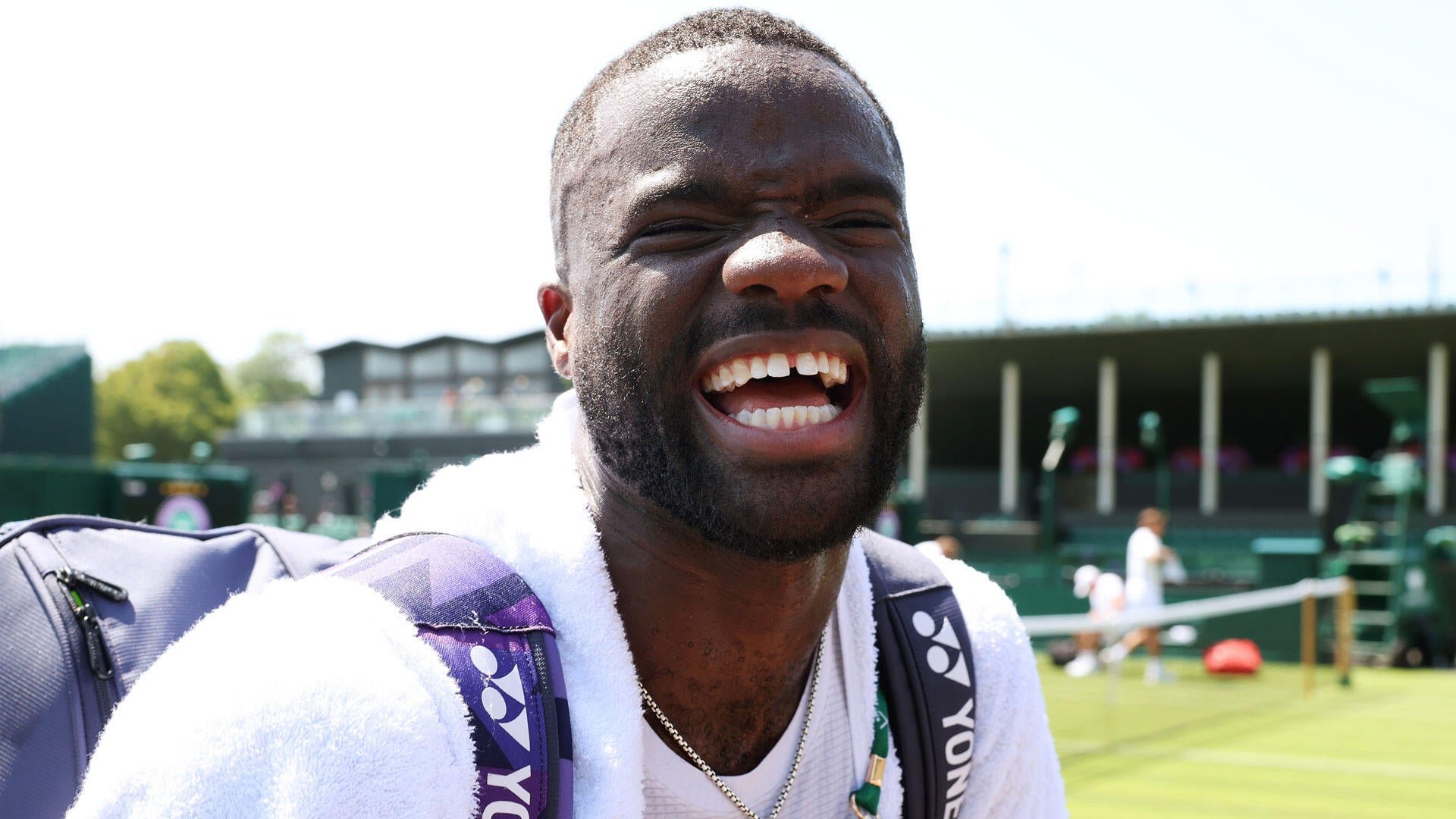
On Tuesday 30 June 2026, in the first round of the Championships at the All England Club in south-west London, Serena Williams walks back onto the Wimbledon lawns she last graced four years ago. The occasion is unusual even by the standards of a career that has already absorbed every major inflection point the modern women's game has to offer: a 23-time Grand Slam singles champion returning as a curiosity, an event, a question mark.
The storyline is no longer whether Williams, now in her mid-forties, can still compete. It is what the experience of returning cost her on the way in — and whether the bureaucratic scaffolding that hangs around elite tennis in 2026 is fit for purpose when the athlete in question is also a mother, a business owner, and a part-time broadcaster.
A return she nearly did not make
In an interview published on Sunday 28 June 2026 by BBC Sport, Williams said the nature of the anti-doping testing regime "almost stopped" her from making the comeback. She described the protocols as "gruelling," a word that has since done quiet rounds through the wider tennis press. The detail matters less than the framing: the obstacle was not the tennis. It was the paperwork, the whereabouts filings, the unannounced testers, and the calendar management that an elite return now entails.
That is a striking admission from an athlete who has navigated the regime for the better part of two decades without complaint. It also lands at a moment when the International Tennis Integrity Agency (ITIA), the body that administers anti-doping in tennis, is under unusual scrutiny from player councils, agents, and a handful of national federations who argue that the testing architecture has not been recalibrated for athletes who compete intermittently, retire, and then attempt to come back.
ESPN's feature on Williams's preparation, published on Monday 29 June 2026, made the same point from a different angle: the work itself — the hitting, the scheduling, the physical reconditioning — was the easy part. The administrative layer around the return was where the time went.
What the regime actually requires
A player returning to competition after a period of inactivity is not automatically removed from the registered testing pool. Under ITIA rules, a player remains subject to testing for at least six months after their last competitive match, and re-entering competition triggers a fresh registration cycle that includes quarterly whereabouts filings, advance notice of every location for an hour a day, every day, and the obligation to make oneself available for unannounced testing year-round.
For a player who travels, runs a venture capital portfolio, and has school-age children, the practical implication is that the sport requires a degree of life architecture that very few professions outside elite sport demand. Williams's account — that this almost stopped her coming back — is less a complaint about the principle of clean sport than an indictment of how the principle is operationalised.
The ITIA's own position, restated in its annual report, is that whereabouts rules are a non-negotiable pillar of the World Anti-Doping Code and that any loosening would weaken the system for the roughly 600 ranked players on its books. That is the standard defence. It is also the defence that produces, every few months, a story in which a marquee player publicly questions the cost of compliance.
Why this story is not just about Williams
Williams is unusually well-placed to make the point. She is a former world number one, a 23-time Grand Slam champion in singles, a four-time Olympic gold medallist, and one of the very few athletes in any sport who can credibly claim to have transcended the sport itself. When she says a system is gruelling, the system cannot easily dismiss her as a peripheral figure.
But the underlying issue is not new, and it does not belong to her alone. The wider player council has been raising the same point for at least three seasons: that the cost of compliance — measured in time, in privacy, in the planning overhead of any non-tennis commitment — falls disproportionately on athletes who are mothers, who run businesses, or who take mid-career breaks for any reason. The ITIA's response has been procedural adjustment, not structural rethink. Whether Williams's intervention shifts the balance is a different question.
The stakes on Tuesday
The first-round draw, the crowd, the cameras, and the broadcast slots will all tell the story that tennis viewers expect to see: can she still play? On the available evidence — practice footage, the ESPN account of her preparation block, and her own measured public comments — the answer is that she believes she can, and that is normally enough.
The less visible story is whether the sport's integrity apparatus will read this moment as a warning. A returning 23-time major champion saying publicly that the testing regime almost kept her home is, in effect, a usability test of the entire system. Either the system absorbs the criticism, files it, and continues; or it uses the moment to reconsider what proportionality looks like when the athlete in question is no longer a 20-something touring professional.
Williams will play on Tuesday either way. The sport around her has slightly more to answer for.
— Desk note: Monexus framed this less as a comeback story and more as a governance story — the obstacle Williams flagged was administrative, not athletic — drawing primarily on the BBC Sport interview and ESPN's preparation feature rather than the broader celebrity-comparison framing that dominates the US tabloid wires.