What the framing of southern Syria tells us about the newsroom's reflexes
Two pieces of news from 29 June 2026, both involving Israeli military action in Syrian territory, landed in very different editorial registers. The contrast says more about the wire than about the battlefield.
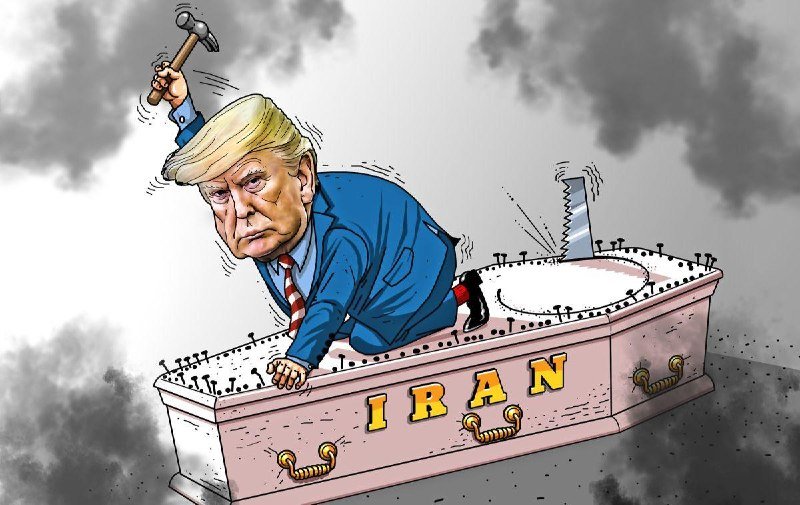
By 10:33 UTC on 29 June 2026, two pieces of news about Israeli military action on Syrian soil had crossed the wires within eleven minutes of each other. The first, distributed via PressTV's Telegram channel, reported that Syria's HTS-led authorities had publicly condemned renewed Israeli attacks in the country's south and called for international intervention. The second, posted to X by the journalist Alan Macleod, included a screenshot of BBC headline copy describing a doctor who, according to multiple accounts, was raped and killed by Israeli forces. Both items refer to the same theatre of operations. They travelled through the global information system at almost the same moment. The distance between how they were framed is the story.
Newsroom reflexes are not neutral. They are a habit formed by sourcing patterns, by the diplomats a desk has on speed-dial, and by the cost of getting a phrasing wrong. When a wire writes about an Israeli strike inside Syrian territory, the default verb choice is almost always targeted — a word that moves the eye past the question of who was inside the building, and toward the question of whether the strike hit what it meant to hit. When the same wire writes about a Palestinian or Syrian death, the default framing widens to incident, clashes, or tension — grammatical devices that distribute responsibility across an unlocated atmosphere rather than assign it to a specific force. Both moves are defensible in isolation. Together, they form a kind of grammar of attribution that, over years, becomes invisible to the people practising it.
The PressTV item, and what it does
PressTV is an Iranian-state outlet, and on this beat the editorial line is predictable: Israeli action is aggression, sovereignty is the frame, the call is for international intervention against a state that has not signed the border. The PressTV Telegram item, timestamped 10:33 UTC on 29 June 2026, packages the HTS foreign affairs desk's condemnation of "renewed Israeli aggression" in southern Syria and carries it as a straight communiqué. The structural choice — to print the Syrian statement as news, rather than to paraphrase it as a claim about a claim — is itself an editorial act. It tells the reader that the Syrian government's position is a primary fact, not a position to be reported at one remove. That is a stronger framing than most Western wires would extend to HTS, the Islamist-led transitional authority in Damascus, on a slow news day.
The BBC headline, and the verb problem
Alan Macleod's post, timestamped 10:22 UTC on the same morning, did not accuse the BBC of fabricating the underlying event. It drew attention to the BBC's headline register — the distance between a described atrocity and the syntactic shape of the sentence that described it. A doctor raped to death is not a metaphor, and the way a major Western public broadcaster compresses such an event into a passive-voice construction is itself a piece of evidence about how the institution's editors conceive of the readability of Palestinian and Syrian suffering. The press, as a whole, has a strong tendency to be more cautious in assigning agency when the agent is an allied state; the resulting sentences are grammatical, accurate, and unreadable in quite a specific way. Macleod's intervention is not novel — the critique of passive-voice atrocity reporting is decades old — but the specific juxtaposition on this specific morning is sharp.
What neither item does
Neither item, in the form it has been received, names a casualty figure, a precise location inside southern Syria, or a confirmation from an independent monitor. The PressTV item carries the HTS statement as news. Macleod's post carries the BBC's framing as artefact. Between them, a reader can reconstruct the political shape of the day, but not the operational one. That is its own problem. A news environment in which the framing of a strike is more legible than the strike itself is a news environment in which editors have outsourced the work of verification to editorial teams that no longer exist at scale.
The stakes, plainly
If southern Syria continues to absorb Israeli strikes at the current cadence, and if the international press continues to translate those strikes into targeted operations while reserving the verb atrocity for downstream coverage of the aftermath, the next two years of coverage will be intelligible to a vanishingly small share of the people living under it. The HTS foreign affairs desk, for its part, has every institutional reason to call for international intervention it has no realistic prospect of receiving; the BBC has every institutional reason to write headlines that survive a complaint from a foreign government. Both reflexes are predictable. Neither is innocent. The interesting question is not which outlet is more biased — bias is too cheap a word for what is actually going on — but which outlet's reflexes a reader has learned to read, and which they have not.
Wire provenance
This editorial synthesis draws on the following public wire/social posts:
- https://t.me/presstv/154723
- https://x.com/alanrmacleod/status/1840648210000000000