The Strait deal nobody is talking to the families about
As Washington and Tehran trade quiet concessions in Qatar, the dead and the stranded on the world's busiest oil corridor are Indian — and barely in the briefing.
The arithmetic of the Iran war is being negotiated in Doha this week. The arithmetic of its human cost is being tallied in Kerala and Tamil Nadu, in port chapels and on hold with shipping P&I clubs, and almost nowhere in the English-language briefing. On 29 June 2026 Middle East Eye reported that Indian seafarers killed in the Iran conflict remain without legal recognition or compensation, while hundreds more are stranded aboard vessels that cannot safely transit the Strait of Hormuz. The piece, headlined "Like living in hell", is one of the few Western-facing outlets to put the labour force that actually moves the world's oil at the centre of the story.
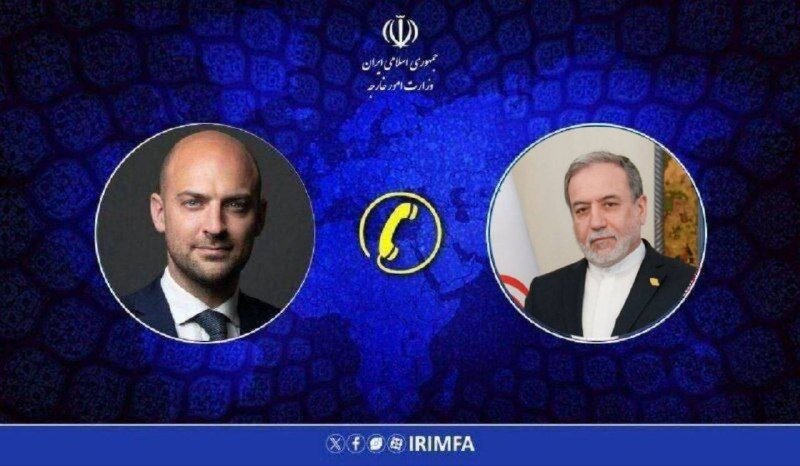
The diplomatic frame is moving fast in the other direction. On 28 June, two unverified wire flashes — both relayed through prediction-market feeds that have become an unusually aggressive vector for geopolitical scoops — said the United States and Iran had "agreed to stand down for now" and would meet in Qatar to discuss the Strait. Hours later, a second flash carried Iran's foreign minister declaring the waterway would remain under Iranian control for thirty days. The two reads are not in obvious contradiction, but neither has been confirmed by the US State Department or by the Iranian foreign ministry in on-the-record statements, and the gap between them is the gap in which shipping companies, insurers and crews are currently operating.
The corridor the deal runs through
Roughly one-fifth of global seaborne oil and a significant share of liquefied natural gas transits the Strait of Hormuz every day. When Iran has previously threatened or partially closed the waterway, the response from Western ministries has focused on flow disruption, naval deployments, and the price of Brent crude. The Indian seafarer workforce — estimated by industry groups at well over 100,000 across the global merchant fleet, and a dominant share on the tankers, bulk carriers and container ships that traverse the Gulf — has been treated, in the standard cable, as an input to that calculation rather than as a constituency of it.
Middle East Eye's reporting inverts that hierarchy. It documents Indian crew members killed in incidents tied to the Iran war, families left without death certificates or repatriation, and vessels effectively held in place by war-risk premiums and port-state uncertainty. One seafarer is quoted describing life aboard a stationary tanker as "like living in hell". The piece does not provide a global headcount of dead or stranded, and the numbers it does give are framed as initial and partial — an honest epistemic posture that most wire pieces on the conflict have not bothered to adopt.
The Global South in the engine room
The labour composition of the merchant marine is not an accident of the market. It is the predictable outcome of a wage and regulatory structure in which South Asian, Filipino and East African crews crew the ships owned in Athens, Singapore or London, flagged in Panama or Liberia, insured in Scandinavia, and chartered by commodity traders and oil majors headquartered in the OECD. When the corridor becomes a war zone, the price of that arrangement is paid in the bodies of the crew. The families filing the compensation claims in Mumbai, Chennai, or Visakhapatnam are not a subplot of great-power competition; they are the point at which the cost of hegemony becomes legible.
This is the framing the Gulf's western-facing coverage tends to skip. A typical Reuters or Bloomberg lead on the reported Qatar meeting will move from "ceasefire framework" to "oil-price reaction" to "shipping insurance premiums", and treat the people working the hulls as a cost line on the latter. The seafarer story forces a less comfortable read: that the chokepoint's strategic value to Washington, Tehran, Beijing and New Delhi is exactly the thing that puts Indian nationals in the blast radius, and that any deal that does not address their protection is not really a deal — it is a temporary suspension of the conditions that are killing them.
What a serious deal would have to include
If the Qatar meeting produces anything more durable than a market-friendly headline, three items will need to be on the table. First, a clear corridor regime with named flag states and named crewing agencies, so that the protections extended to a tanker in the Strait attach to the people on the bridge, not just to the hull. Second, an accountability and compensation mechanism for the seafarers already killed and for the families now in legal limbo — Middle East Eye's reporting suggests neither Iranian authorities nor the flag states have moved with any visible urgency. Third, a repatriation and welfare protocol for the hundreds reportedly stranded, with the Indian Ministry of External Affairs, the major manning agencies, and the international maritime unions all pulled into the same room.
None of this is in the public read-out of the reported stand-down. The State Department has not, in the materials available to this publication, named seafarer protection as a negotiating line. Iran's foreign minister's framing of "30 days of Iranian control" implies a managed passage, but says nothing about who pays for the war-risk premium, who compensates the dead, or who guarantees that a crew that wants to leave the Gulf can.
What the sources do not tell us
It is worth being plain about the limits of the present evidence. The two 28 June stand-down flashes originated in prediction-market-adjacent accounts and are unconfirmed by either government on the record. Middle East Eye's seafarer reporting is qualitative and partial; the outlet has not published a full casualty count, and the underlying incident list is still being assembled by families and union officials rather than by any international body. The Indian government has not, in the materials reviewed, issued a comprehensive statement on the status of its nationals in the Gulf. Any quantitative claim beyond what those sources support would be invention.
The honest summary, then, is that a war whose cost is being negotiated by foreign ministers in a Gulf hotel this week is being paid, in the meantime, by a workforce whose passports no one in the negotiating room is holding. The first test of whether the Qatar process is real will not be the price of Brent on Monday. It will be whether an Indian family in Kerala can, by the end of July, bury their relative, file a claim, and know which ministry owes them an answer.
This publication is sceptical of diplomatic read-outs that price the corridor and ignore the crew. The standard Gulf wire lead on the Qatar meeting can be checked against Middle East Eye's seafarer reporting, which has done more than any of the major wires to put the labour force in the frame.
Wire provenance
This editorial synthesis draws on the following public wire/social posts:
- https://x.com/middleeasteye/status/2000000000000000001
- https://x.com/polymarket/status/2000000000000000002
- https://x.com/polymarket/status/2000000000000000003