A Supreme Court, a Central Bank, and the Boundaries of Presidential Power
The court let Trump fire independent agency heads at will but drew a line at the Federal Reserve — a partial victory for institutional autonomy that leaves the underlying fight unresolved.
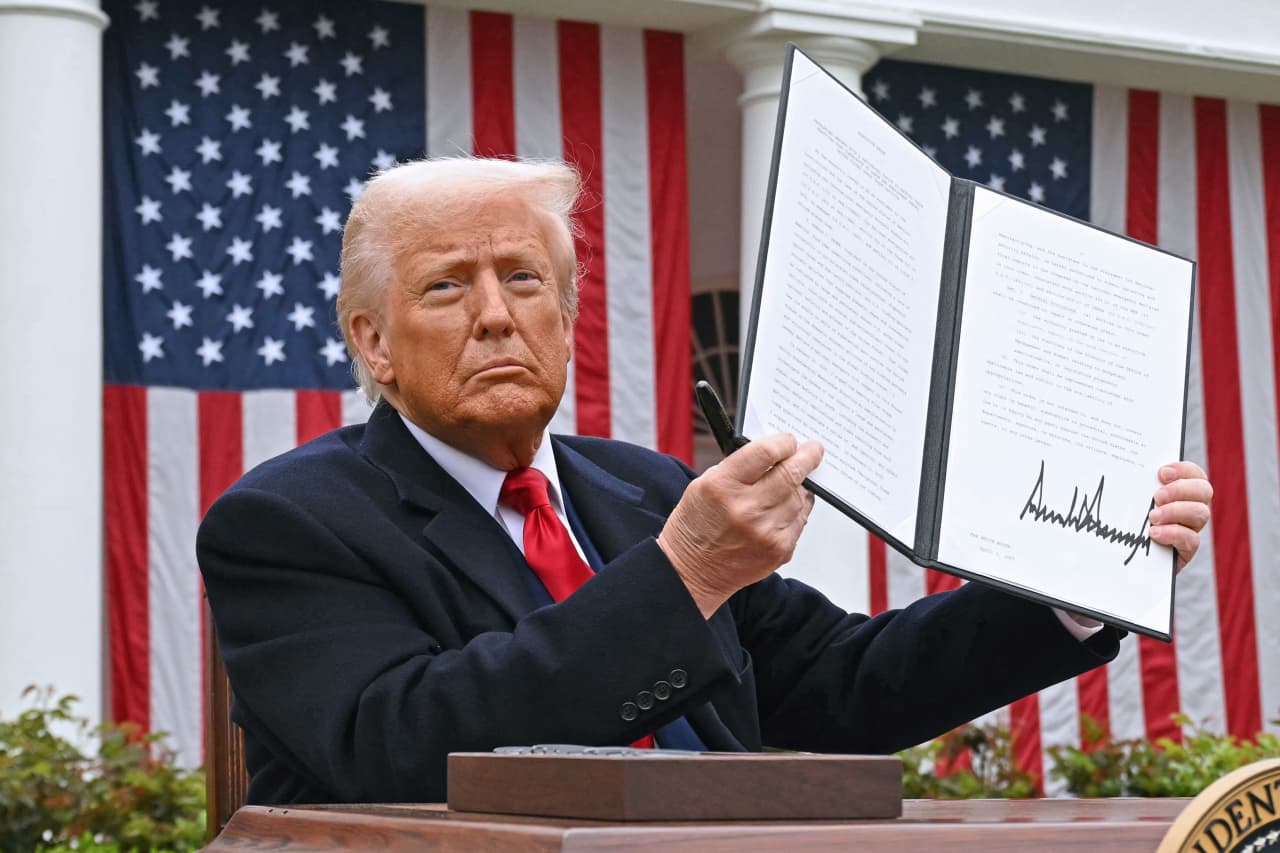
The US Supreme Court on 29 June 2026 handed Donald Trump a sweeping expansion of presidential authority over independent federal agencies, while drawing a single, conspicuous line: the Federal Reserve. In a pair of decisions released the same morning, the justices reversed a ninety-year-old precedent restricting the president's power to fire agency heads, then turned around and blocked Trump's attempt to remove Fed Governor Lisa Cook — preserving, at least for now, the institutional firewall around US monetary policy.
The rulings arrive at a moment when the boundary between executive discretion and independent oversight has become one of the most consequential questions in American governance. Trump came to office promising to assert direct control over regulators he views as obstacles; the court has now told him he can, almost everywhere, except at the central bank.
The pattern is unusual enough to require unpacking. Two decisions, issued within hours of each other, point in opposite directions on the same constitutional question: how removable are the officials who run agencies Congress designed to be insulated from day-to-day politics? The answer, it turns out, depends on which agency you mean.
What the court actually decided
Deutsche Welle reported on 29 June 2026 that the Supreme Court reversed a 1935 precedent — the so-called Humphrey's Executor ruling — that had restricted the president's authority to remove heads of independent agencies. The reversal gives the president the practical ability to dismiss the leaders of bodies Congress established as bipartisan watchdogs: the Federal Trade Commission, the National Labor Relations Board, the Securities and Exchange Commission, and similar outfits whose independence was the explicit point of their design.
The BBC, reporting the same day, characterised the Federal Reserve decision as a win for central bank independence. Cook, whom Trump sought to remove over allegations related to mortgage declarations, will remain in her post while the underlying dispute returns to the lower courts. The Indian Express, citing the wire coverage, framed the pair of rulings in a single sentence the political class had been waiting for: "Supreme Court says Fed's Cook can keep her job for now, but upholds other Trump firings."
The Bloomberg-account relayed by CNBC and picked up by Unusual Whales on X was terse: the court rules Trump cannot fire Fed Governor Lisa Cook for now. Polymarket's markets feed registered the same breaking line within minutes. The decisiveness of the Fed portion of the ruling — issued as a stay rather than a final judgment — is what gave the trading floor its signal.
The distinction the court drew is technical but consequential. Independent agencies, the majority concluded, exercise what amounts to executive power and therefore answer to the president who appoints them. The Federal Reserve, by contrast, was set up under a different constitutional logic: it is structured to make decisions about interest rates without political interference, and its independence has been treated as a structural feature of the US financial system since 1913.
The precedent that just fell
The 1935 precedent the court overturned had its origin in the early New Deal. Congress, wary that Franklin Roosevelt would pack independent commissions with loyalists, wrote removal protections into agency statutes. The Supreme Court, in Humphrey's Executor v. United States, upheld those protections and effectively drew a circle around the regulatory state: certain agencies would be led by officials the president could not dismiss at will, preserving a measure of bipartisan governance in bodies that adjudicated disputes between private parties and the public interest.
That framework survived for nearly a century. It was narrowed, expanded, and tested by successive presidents of both parties, but never overturned. Until Monday. The Deutsche Welle report makes clear the court did not abolish independent agencies — they continue to exist, and their leaders continue to enjoy statutory terms — but it altered the constitutional balance in a way that will reshape how every such body operates from this point forward.
The implication is that the Federal Trade Commission, the SEC, and the NLRB are now functionally extensions of the executive branch in a way they were not before. The chairs of those bodies serve at the pleasure of the president. Whether that produces more accountable regulation or more politicised enforcement is the question the ruling leaves open.
Why the Fed was treated differently
The carve-out for the Federal Reserve is the part of the ruling that will draw the most attention from markets and from foreign governments whose currencies, debt markets, and central-bank relationships are anchored to the dollar. The Fed's independence is not merely a domestic legal convention; it is a feature of the global financial architecture. Foreign holders of US Treasury debt — China, Japan, the Gulf states — price American sovereign paper on the assumption that the institution setting US monetary policy is insulated from electoral cycles.
A president who could fire a Fed governor at will would, in effect, acquire a lever over interest rates that no predecessor has held in the modern era. The court appears to have recognised this. The Indian Express dispatch, summarising the dual rulings, makes the trade-off explicit: broad removal authority elsewhere; a hold on the Fed for now.
What the sources do not specify — and what the lower courts will now have to work out — is whether Cook's continued tenure is provisional or substantive. The Supreme Court's intervention was a stay, not a final judgment on the merits of her removal. The factual allegations against her, related to mortgage declarations made before her appointment to the Fed, remain disputed. The case returns to the trial courts for further proceedings, and the eventual outcome could reach the justices again.
What this means in practice
For the executive branch, the practical effect is broad. Trump can now direct the leadership of the Federal Trade Commission, the Securities and Exchange Commission, the National Labor Relations Board, and the constellation of independent regulators whose chairs previously enjoyed for-cause removal protection. Each of those bodies adjudicates disputes worth billions of dollars and shapes rules that affect everything from antitrust enforcement to labour organising.
For the Federal Reserve, the effect is narrower but symbolically weighty. Lisa Cook remains in her seat. The court has signalled, in the language of a stay, that the central bank's independence is a constitutional matter the justices are willing to police — at least when the underlying dispute reaches them directly.
For financial markets, the immediate read was relief. The Polymarket data point cited by traders captured the sentiment: the worst-case scenario, a fully subordinate Fed, did not materialise. Bond yields and equity futures stabilised within hours of the ruling.
The counter-narrative
There is a competing read of the ruling worth taking seriously. Some legal commentators will argue that the court has not protected the Fed at all — it has merely postponed a fight. The stay preserves Cook's position while litigation continues, but the underlying question of whether the president can remove a Fed governor remains unanswered. A future ruling, on the merits, could go either way.
Others will argue that the dual decisions reveal a court willing to defer to executive authority in most contexts and to intervene only at the boundary of the financial system — a boundary that exists not because of constitutional text but because of the practical consequences of a politicised dollar. On this reading, the Fed's independence is protected less by principle than by the recognition that dollar hegemony requires it.
A third reading, common among critics of expanded executive power, holds that the court's pattern is incoherent: it grants the president broad removal authority in one breath and blocks him in the next, without articulating a principle that explains the difference. The decisions will be parsed by administrative-law scholars for years to come. For now, the operative reality is what the BBC called it: a win for central bank independence, partial though it may be.
What remains uncertain
The source material does not specify the precise vote counts in either decision, the identities of the majority and dissenting justices, or the timeline for the lower-court proceedings on Cook's removal. Those details will emerge in the coming days and will shape how the rulings are interpreted.
What is clear from the wire coverage is the structure of the outcome: an expansion of presidential authority over independent agencies, a preservation of Fed independence in the short term, and a constitutional argument that will continue to be litigated well after the headlines fade. The Supreme Court has not ended the fight over Lisa Cook's seat. It has merely paused it.
How Monexus framed this: where wire coverage emphasised the split nature of the ruling, Monexus reads the pair of decisions as a single signal — that the court's appetite for curbing presidential power runs out where the dollar begins. The Fed carve-out is not a footnote; it is the constitutional boundary the justices were most reluctant to cross.
Wire provenance
This editorial synthesis draws on the following public wire/social posts:
- https://x.com/unusual_whales/status/
- https://x.com/polymarket/status/
- https://en.wikipedia.org/wiki/Humphrey%27s_Executor_v._United_States
- https://en.wikipedia.org/wiki/Federal_Reserve_System
- https://en.wikipedia.org/wiki/Lisa_Cook