Tehran's denial diplomacy and the Friday question
Three Iranian officials in three hours contradicted Western reporting on Friday's expected Geneva signing. The pattern is the story.
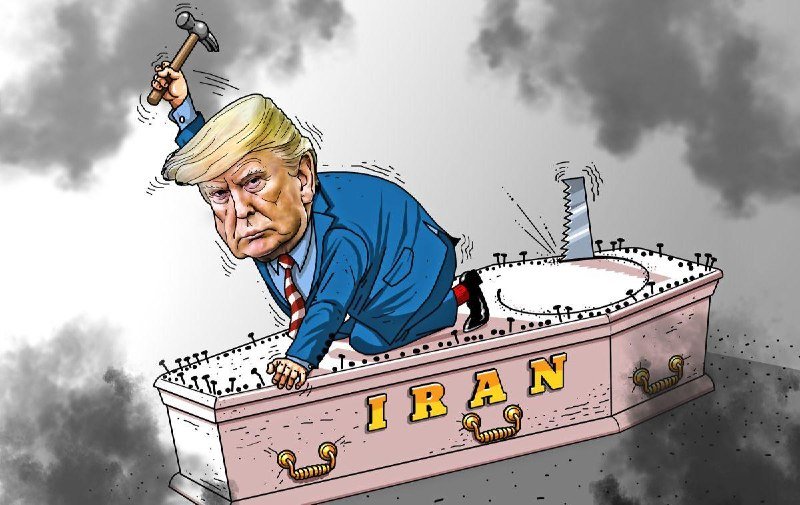
By 10:37 UTC on 29 June 2026, the Iranian foreign-affairs apparatus had spent roughly eleven minutes issuing what amounted to three coordinated denials — each contradicting a different piece of Western reporting about the same Friday. Iran said technical meetings under the memorandum of understanding were not scheduled this week. The army rejected claims that its air-defence systems had been destroyed, describing them as under "constant development." And a deputy foreign minister rejected reports of Iran–US technical talks in Qatar, framing Doha's role as ongoing "consultations" rather than a venue for bilateral negotiations. The sequence, reported across Middle East Eye's live blog and Iranian state outlet Press TV, is less a set of factual corrections than a performance of calibrated ambiguity — the kind Tehran has perfected when a deal is close enough to be politically useful but fragile enough to require deniability.
What is actually scheduled for Friday in Geneva, and what is not, has become harder to read with each passing hour — and that opacity is itself the point of the exercise.
The Friday question
The proximate trigger is a US–Iran accord, confirmed for signing on Friday in Geneva, that Middle East Eye reported in its live blog on 29 June. The signing itself appears settled; what remains contested is the architecture around it. Tehran's morning messaging focused on three distinct pressure points: the technical sub-meetings that would operationalise any MoU; the state of Iran's air-defence network, where reports of destruction have circulated in Western and Israeli outlets; and the Qatari mediation channel, where back-channel work has reportedly advanced further than Tehran's public line admits. Each denial is narrow and technical, the diplomatic equivalent of a chess move that protects one square while leaving another exposed.
The pattern matters because negotiations between adversaries rarely collapse over the headline deal; they collapse over the implementation scaffolding — the working groups, the technical committees, the third-party mediators — that determines whether ink on paper becomes a change on the ground.
Denials as diplomacy
Iran's foreign ministry has, over two decades, refined a particular instrument: the narrow, technically accurate denial. It does not deny the deal. It denies the meeting. It does not deny the meeting. It denies its location. Each correction is small enough to be defensible and large enough to shift the political weight. By 10:26 UTC on 29 June, Press TV was carrying the army's rebuttal on air-defence destruction; by 10:16 UTC, the same outlet had relayed the deputy foreign minister's pushback on the Qatar talks. The timing — denial first on the most sensitive item, defence posture second — suggests an internal triage of which leaks Tehran considers most damaging to its bargaining position ahead of Friday.
For outside observers, the practical effect is a fog in which every claim about Iran's negotiating posture can be sourced to either Tehran or Washington, with neither side's reporting easily reconciled with the other's.
The air-defence variable
The air-defence denial deserves separate treatment because it is the only one of the three with a kinetic dimension. Reports of degradation to Iran's integrated air-defence system have been a recurring feature of Western and Israeli coverage of the broader confrontation. Tehran's army statement — that the systems are under "constant development" — is the diplomatic register's way of saying: assume capability, do not price in weakness. Whether that framing reflects operational reality or negotiating posture is precisely the kind of question the sources do not resolve, and one where Israeli and Iranian readings diverge sharply.
The point is not which side is correct. It is that both sides need the ambiguity. A confident Iranian denial of damage discourages escalation by Israel or the United States; quiet Western confidence in the damage sustained keeps pressure on Tehran ahead of Friday.
What Friday actually settles
If the Geneva signing proceeds as planned on 3 July 2026, it will resolve the headline question and leave the implementation architecture — technical meetings, Qatari mediation, the air-defence question — exactly where it is today: contested, deniable, and unresolved. That is not a failure of diplomacy. It is, increasingly, the form that successful diplomacy between the United States and the Islamic Republic takes in 2026. The deal lands. The scaffolding remains a fog. The next round of denial diplomacy begins.
The honest read of the morning's three statements is that Tehran is buying optionality. Each denial preserves a future negotiating position. The Friday ceremony, when it comes, will tell observers less about what was agreed than about what was deliberately left ambiguous.
Monexus framed this as a story about negotiating posture, not a confirmation of either side's factual claims — the Western wire line and the Iranian state line are presented as competing primary sources, with the reader left to weigh which gaps in reporting are gaps in the deal itself.
Wire provenance
This editorial synthesis draws on the following public wire/social posts:
- https://t.me/presstv
- https://t.me/presstv