Ankara and Riyadh just signalled where the next phase of Middle East trade runs
A new Ankara–Riyadh trade chamber and customs pact lands at a moment when Gulf and Anatolian capital are quietly rewriting who trades with whom — and on whose terms.
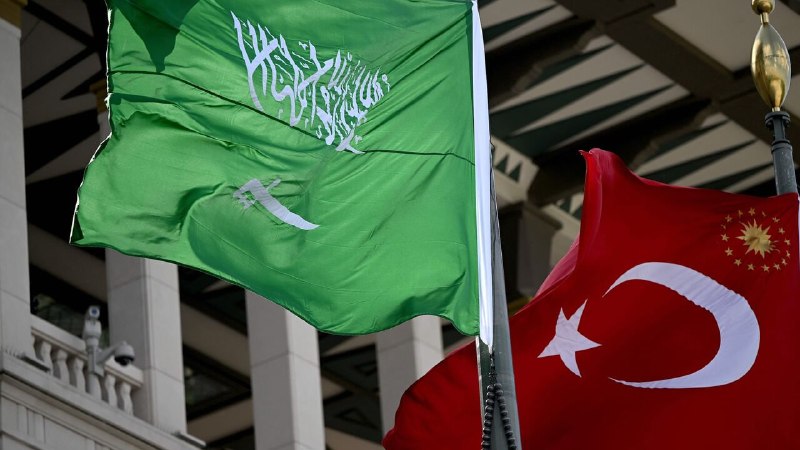
On 29 June 2026, Ankara and Riyadh committed to establishing the Turkiye–Saudi Arabia Joint Chamber Forum — a new bilateral body explicitly designed to ease customs friction, harmonise non-tariff barriers, and lower the cost of moving capital and goods across the two economies. The deal, reported by The Cradle Media on 29 June 2026 at 15:11 UTC, is being billed in regional press as a "landmark" trade pact, though neither government has yet released the full legal text or a tariff-schedule annex.
Read past the rhetoric and the substance is more interesting than a handshake ceremony. Turkiye and Saudi Arabia are two of the larger non-aligned middle powers of the Middle East, sitting awkwardly between NATO, the Gulf Cooperation Council, and an increasingly confident set of BRICS+ outreach tracks. A formalised joint chamber is the kind of institution that quietly reshapes supply chains — it standardises documentation, banks the relationships, and gives a private sector in both capitals a permanent address in the other country. In other words, it does the slow, boring work that actually moves money.
The immediate context: a courtship that has been running for years
This is not a sudden alignment. Ankara and Riyadh have spent the better part of a decade cycling through diplomatic estrangement, reconciliation, and a slow rebuilding of trust — including the 2017–2021 period of open hostility around the Khashoggi affair and the blockade of Turkiye-aligned actors in the Gulf. The two governments have spent the last two years exchanging senior visits, currency-swap arrangements, and quiet co-investment vehicles. A joint chamber is the institutional furniture that locks that thaw into something harder to unwind. According to The Cradle Media, the new forum is intended to "ease customs and trade barriers" — the standard diplomatic phrasing for the unglamorous machinery of certificates of origin, halal certification, and VAT treatment that actually decide whether a container leaves Jeddah for Mersin or takes the long way through the Suez.
The counter-narrative: why the sceptics are not wrong
Two honest scepticisms are in order. First, the region is littered with memoranda of understanding that produced no follow-through: a 2016 Saudi–Turkish currency swap was never operationalised at scale, and a string of "strategic cooperation council" announcements from the early 2020s produced mostly communiqués. A chamber forum is more concrete than those, but it is still a framework, not a balance of trade. Second, the geopolitics around both capitals remain active — Riyadh's posture on energy benchmarks, OPEC+ discipline, and the China-brokered rapprochement with Iran, and Ankara's refusal to fully align with Western sanctions architecture on Russia, all mean that any bilateral is also a hedge. The deal could end up being a useful insurance policy without ever becoming a primary corridor. The dominant framing, though, holds: a chamber is a step change from a memorandum, because it institutionalises a private-sector interface and a dispute-resolution venue. The sceptic view is necessary ballast, not a dismissal.
The structural frame: corridor politics, minus the slogans
What is happening underneath the joint-chamber language is a quieter phase of economic statecraft across the Middle East. The Gulf monarchies, having spent the last fifteen years building sovereign-wealth capacity, are now deploying that capital to anchor supply chains that do not pass through the traditional Western trade-finance plumbing. Turkiye, with its industrial base in steel, automotive components, white goods, defence electronics, and increasingly defence platforms, is a natural complement to Saudi sovereign-wealth deployment in mining, petrochemicals, tourism infrastructure, and data centres. A joint chamber formalises the matchmaking. In a regional context where a swathe of the consumer-goods trade has been routed through transshipment hubs in the UAE, an Ankara–Riyadh axis pulls some of that volume north and west, through Turkish ports and the wider Eastern Mediterranean land bridge. None of this overturns global trade overnight, but it shifts a few percentage points of routing — and in trade, a few percentage points compounded over a decade is a reordering.
The stakes: who wins, who hedges, what to watch
If the chamber is operationalised, the clearest winners are the chambers' member firms — Turkish industrial exporters, Saudi logistics operators, and the banks on both sides that pick up the new letter-of-credit business. Workers in the Anatolian manufacturing belt and in the Red Sea logistics chain capture the second-order gain. The principal hedge actors are the intermediaries who currently dominate the routing: transshipment hubs in the UAE, and broader Western trade-finance institutions whose transaction fees get competed away as more deals clear directly in lira and riyal. The forward watch-points are three: the publication of an operational annex (tariff lines, certification reciprocity, and a clearing-currency framework), the first announced joint-investment vehicle with a real capital number attached, and the response from other Gulf capitals — notably Abu Dhabi and Doha — to a bilateral architecture that bypasses the GCC framework. On the evidence currently available — a single reported framework announcement, no published text — the prudent reading is that this is a structurally significant but operationally incomplete step, more durable than a memorandum and less transformative than a customs union.
What remains genuinely uncertain is the scale. The sources do not specify the value of trade flows the chamber is expected to redirect, the timetable for an operational annex, or whether a clearing-currency mechanism — which would be the most consequential element — is on the table. The Cradle Media's reporting frames the agreement as a landmark; the underlying facts, as of 29 June 2026, support institutional significance rather than transformative scale. The next data point to watch for is whether a follow-up joint statement names a working group, a publication date for a charter, or an inaugural head of chamber — the dull administrative details that tell you whether a deal is about to start moving cargo, or is about to join the long shelf of beautiful communiqués.
Desk note: Monexus reports this as an institutional-economic story first, with the geopolitical corridor logic as the structural frame. Wire coverage is currently limited to The Cradle Media's regional reporting; we will upgrade the sourcing ledger when the Turkish and Saudi trade ministries publish the operational annex.
Wire provenance
This editorial synthesis draws on the following public wire/social posts:
- https://t.me/TheCradleMedia
- https://t.me/thecradlemedia