Live Wire
16:05ZENGLISHABUIsraeli Defense Minister says Trump prevented Hezbollah collapse16:04ZOANNTVNASA plans activities for 250th anniversary of US independence16:04ZDDGEOPOLITABC anchor admits on live TV she cannot find Bosnia on map16:01ZFIRSTPOSTILebanese clip garners millions of likes on Arabic Instagram in 24 hours16:00ZCLASHREPORJohn Kerry Slams Trump for Reversing Obama's Iran Nuclear Deal16:00ZNOELREPORTUK-led Operation Interflex trains over 63,000 Ukrainian troops, program expanding after four years16:00ZINTELSLAVAStrike hits facility in Kharkiv, causing large-scale smoke15:59ZMEHRNEWSRubio, Witkoff to brief Congress on US-Iran memorandum
Markets
S&P 500739.04 1.38%Nasdaq25,667 1.46%Nasdaq 10029,588 1.61%Dow521.08 0.64%Nikkei92.91 0.12%China 5031.75 0.49%Europe87.82 0.79%DAX40.77 0.33%BTC$59,690 0.23%ETH$1,578 0.03%BNB$551.06 0.47%XRP$1.05 0.33%SOL$73.75 2.54%TRX$0.3229 0.11%HYPE$64.87 2.84%DOGE$0.0727 0.97%RAIN$0.016 2.87%LEO$9.4 0.36%QQQ$719.77 1.88%VOO$679.15 1.33%VTI$366 1.04%IWM$296.87 0.99%ARKK$79.81 2.15%HYG$79.97 0.17%Gold$369.46 1.12%Silver$52.53 1.42%WTI Crude$107.43 1.84%Brent$40.97 1.64%Nat Gas$11.47 3.37%Copper$37.2 0.36%EUR/USD1.1406 0.00%GBP/USD1.3230 0.00%USD/JPY161.86 0.00%USD/CNY6.7940 0.00%
OPENNYSEcloses in 3h 53m
The Monexus
Vol. I · No. 180
Monday, 29 June 2026
Saturday Ed.
Updated 16:06 UTC
  • UTC16:06
  • EDT12:06
  • GMT17:06
  • CET18:06
  • JST01:06
  • HKT00:06
← The MonexusOpinion

The Doha Pause: A Ceasefire on Paper, Not Yet a Settlement

A ceasefire announcement and a $6bn asset release in Doha bought time — but no technical talks are scheduled, and drones have already hit a cargo ship.

A group of men in dark suits walk together down a carpeted hallway beneath an illuminated green emergency exit sign. @The_Jerusalem_Post · Telegram

At roughly 11:36 UTC on 29 June 2026, the United States and Iran announced a ceasefire, with further talks to be held in Qatar. The headline reads like a breakthrough. The fine print, read carefully, does not justify the relief.

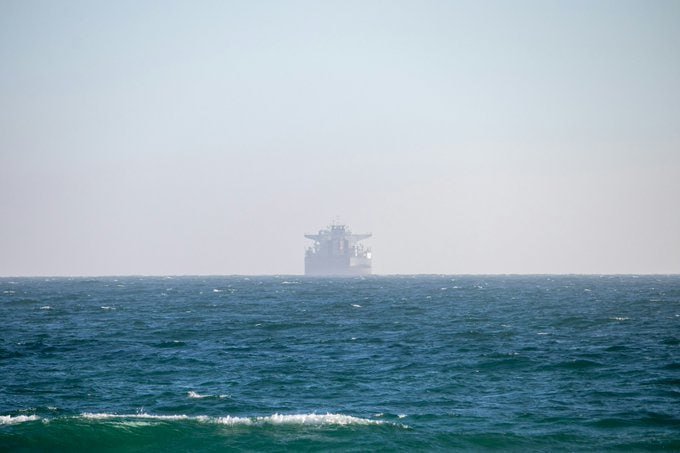
In a single news cycle, Tehran claimed Qatar would release $6 billion in frozen Iranian assets, Washington's posture visibly softened, and yet Iranian deputy foreign minister-level officials publicly told reporters in Doha that no technical talks with the United States are scheduled for the week — only "consultations with media," in the wording relayed by the disclosetv wire at 11:36 UTC. Roughly eleven hours earlier, at 00:46 UTC, the President of the United States confirmed that the U.S. military had shot down three of four one-way attack drones launched by Iran, with one drone striking the upper deck of a cargo-carrying ship. A ceasefire in name arrived hours after the maritime strike it is supposed to govern.

The shape of the deal — and the parts that aren't there

What is on the table, as of 11:36 UTC on 29 June, is narrow: a halt to kinetic exchange at sea, an understanding that the next round of diplomacy will take place in Qatar, and a $6 billion tranche of Iranian funds that Iran's president says Qatar will release. Qatar has historically mediated between Tehran and Washington, including around the 2023 prisoner-exchange arrangement. The choice of Doha is itself a signal: this is a deal routed through a Gulf intermediary, not a direct bilateral.

What is conspicuously absent: a date for substantive talks, an agenda for those talks, and any Iranian acknowledgement that the drone attack that hit the cargo ship at roughly 00:46 UTC is a ceasefire violation. Iranian messaging on 29 June has been calibrated to claim diplomatic momentum while denying that any negotiating track is formally open this week. The U.S. framing, from the President's own remarks on the maritime incident, treats the strikes as a discrete act of aggression already handled — three of four down, one hit — without conceding that the underlying pattern is ongoing. Both sides are claiming a win that the record does not quite support.

Why Doha, and why now

The geography matters. Qatar hosts Al Udeid, the largest U.S. air base in the region, and has spent the last decade positioning itself as the indispensable broker between Iran and the West. Doha's mediation of the $6 billion release is consistent with that role: it puts Qatari sovereign credibility on both sides of the ledger, and it gives Washington political cover to argue that any funds released are, in Doha's custody, monitored rather than fungible. Whether that monitoring regime exists in any operational sense is a separate question, and one the public reporting on 29 June does not resolve.

The timing is harder to read. A maritime strike inside the same 24-hour window as a ceasefire announcement is not an accident. It is either the last spasm of a cycle that the ceasefire now interrupts, or the first data point of a cycle that the ceasefire does not actually cover. The Iranian deputy foreign minister's refusal to schedule technical talks in Doha this week points toward the latter. So does the absence of any Iranian statement, on the wires available at 11:36 UTC, that explicitly acknowledges the U.S. shoot-down of three drones as a contested incident rather than a settled one.

What we cannot tell yet

Three things remain genuinely unclear. First, the scope of the ceasefire: does it cover Iranian-aligned proxy action in the Gulf, in Iraq, in Syria, or only the maritime corridor where the 00:46 UTC strike occurred? The public framing on 29 June does not say. Second, the disposition of the $6 billion: Iran's president says Qatar will release the funds; Qatari sources have not, on the wires available, confirmed the timeline or the conditions. Third, what the United States has offered in return. Concessions on sanctions, on banking access, on the fate of Iranian detainees — none of these are visible in the 29 June reporting. A ceasefire that costs the U.S. side nothing is, in this region, a ceasefire that the Iranian side will quietly test.

The structural frame

What we are watching is not a settlement but a managed pause inside a longer contest over sanctions architecture, oil corridors, and the question of whether the United States and Iran can transact at all without a formal diplomatic upgrade. Ceasefires of this kind tend to last until one side calculates that the cost of breaking them has fallen below the cost of holding them. The maritime strike hours before the announcement suggests that calculus is already live. Doha has bought time. It has not bought a settlement, and the day's own evidence — drones in the water, money on a Qatari shelf, no technical talks on the calendar — is the proof.


Desk note: Monexus framed this around the gap between announcement and substance, rather than treating the ceasefire as a discrete diplomatic win. The Iranian deputy foreign minister's denial of scheduled technical talks — a detail the wires carried prominently — was treated as first-order evidence of how thin the agreement actually is.

Wire provenance

This editorial synthesis draws on the following public wire/social posts:

  • https://t.me/s/disclosetv
© 2026 Monexus Media · reported from the wire