After the stand-down: how thin is the line between a US–Iran ceasefire and a renewed war?
A weekend of mutual strikes has left Washington and Tehran each claiming the other broke the rules. The pattern, not the rhetoric, is what should worry capitals from the Gulf to Beijing.
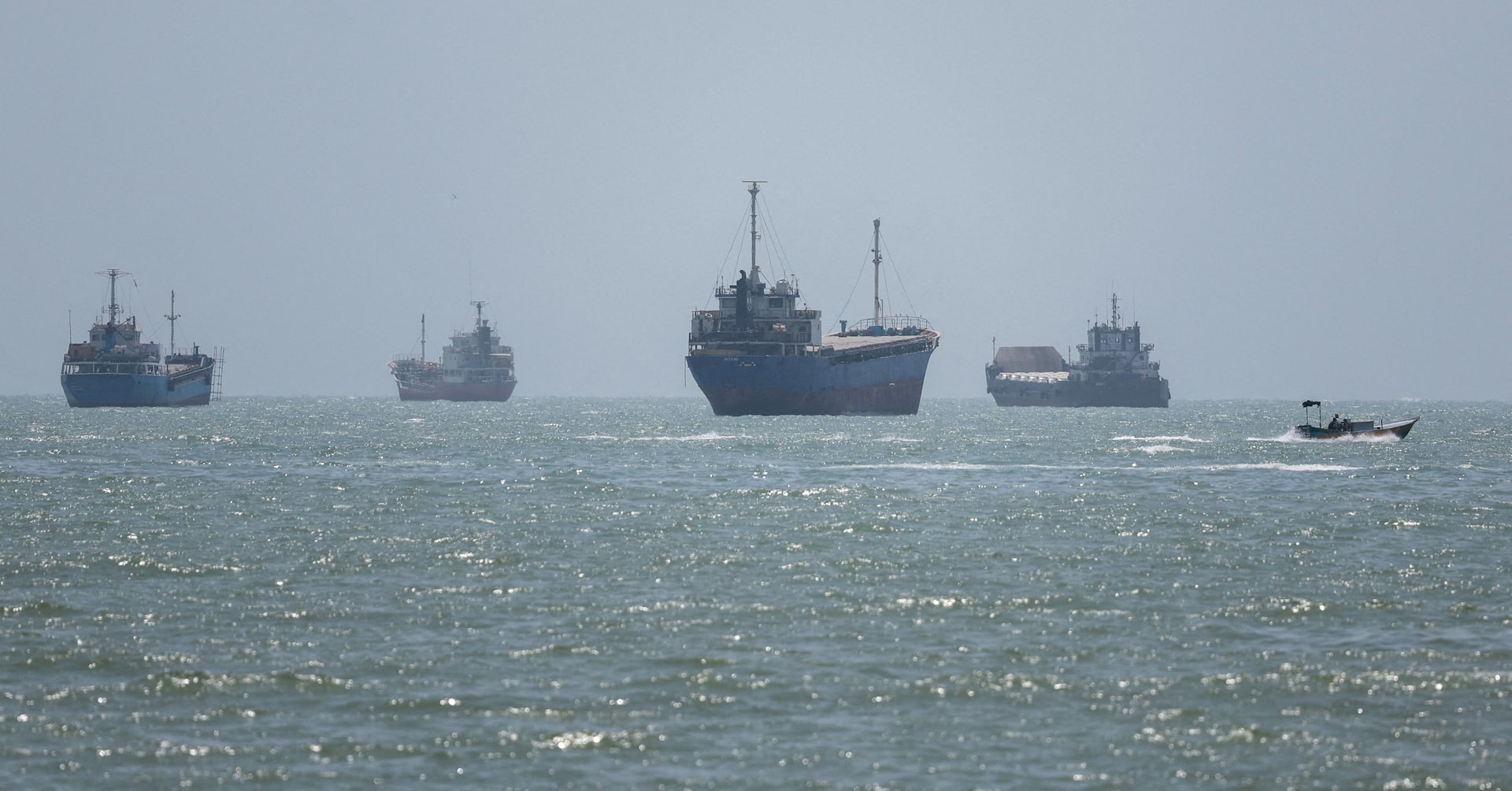
On the evening of 28 June 2026, the United States and Iran each accused the other of violating a ceasefire that, by their own account, was only hours old. The BBC reported on 29 June that Washington had agreed to "stand down" after a weekend of strikes between the two countries, with both governments trading responsibility for the latest collapse. The exchange followed a pattern that has become familiar in the Gulf over the past two years: a public truce, an ambiguous incident at sea or in the air, a retaliatory strike, and then a return to the bargaining table — usually at a higher price.
What is unusual this time is not the breach itself but the speed with which both sides have framed it as the other's fault, and the willingness of markets to price in the next breach almost before the current one is fully verified. A market on the prediction platform Polymarket, posted on 28 June 2026, puts the probability of a renewed US naval blockade of Iran by the end of the following month at roughly 20 percent — a low base rate, but a non-trivial one for a measure that, until recently, would have been considered a step short of war. The combination — open signalling, mutual recrimination, and a public market in the next escalation — is the story worth examining.
The weekend in sequence
According to the BBC's 29 June reporting, the United States said it had agreed to "stand down" after a series of strikes over the weekend in which Washington and Tehran each accused the other of violating the ceasefire. The framing is itself a signal: in a normal diplomatic exchange, one side does not publicly declare itself on pause. The word presupposes an activity — a forward posture — that has only reluctantly been arrested. That language, more than the strikes themselves, defines the current state of play.
The Iranian side, for its part, has held the rhythm of public mourning rather than public bargaining. The Tasnim News English channel on Telegram, on 29 June 2026, posted the funeral route of a figure it identified only as "Mr. Martyr of Iran, Badarqa Aghai," a title format the outlet uses for personnel killed in service. The funeral procession, in other words, is being run on the same channel and at the same moment as the diplomatic rupture. The two tracks — grief and geopolitics — are deliberately braided. Iranian state-aligned media rarely cover funerals and ceasefires in adjacent posts by accident.
The asymmetry of disclosure is worth noting. The BBC's report names the American position in some detail — stand-down, accusations of violation — while the Iranian counter-narrative reaches English-language audiences largely through Tasnim's martyr-commemoration notices rather than through substantive on-the-record briefings in English. Readers who only watch one feed will come away with very different impressions of who blinked first.
What the prediction market is telling us
Polymarket's 20 percent estimate for a renewed US blockade of Iran by the end of the following month is a small number in absolute terms, but it is structurally revealing. A blockade is not a rhetorical move. It is an act of war short of a declaration of one — a use of naval supremacy to enforce a political demand, in this case presumably over nuclear inspections, missile transfers, or the freedom of movement of Iranian oil. Pricing it at one-in-five implies that traders with money at stake consider a return to that posture more likely than not, given current information.
The market itself is not a verdict. Prediction markets have repeatedly mispriced low-probability tail events in geopolitics — sometimes by orders of magnitude — and the participants skew toward Western retail traders with imperfect access to Iranian and Gulf sources. But the order of magnitude matters: a one-in-five price for a blockade within weeks of a public stand-down tells the reader that the ceasefire, as currently constituted, is not being treated as a stable equilibrium by people who have to put capital behind a view.
There is also a structural point. The existence of a liquid, public market in escalation probabilities is itself a new variable in the Gulf standoff. Twenty years ago, the equivalent signal lived in the spread on oil futures and the colour of diplomatic cables. Now it is a contract that anyone with an internet connection can buy. That changes both the information environment for policymakers and the incentive structure for escalation: each new breach moves a price that someone is watching.
The counter-narrative: a managed crisis
The dominant Western framing — implicit in the BBC's "stand down" language — is that the United States is the party exercising restraint, and that Iran is testing the limits of an agreement. The counter-narrative, more common in Iranian state-aligned and some Global South commentary, is that the crisis is being managed rather than resolved. In that reading, periodic breaches, accusations, and stand-downs serve both sides: Washington demonstrates resolve without paying the cost of a wider war, and Tehran extracts diplomatic concessions and oil-market leverage without crossing the line that would trigger a sustained campaign.
The structural feature that makes the managed-crisis reading plausible is the geography of the Strait of Hormuz. Roughly a fifth of the world's oil transits the strait, and even a partial disruption moves global prices within hours. Both the US and Iran have leverage in that chokepoint — Iran through coastal anti-ship missiles and small craft, the US through carrier presence and over-the-horizon strike capability. A ceasefire that neither side is willing to convert into a full settlement, but each side is willing to keep renegotiating, is in some sense the equilibrium that maximises both sides' optionality.
That does not make the managed-crisis reading correct. It makes it non-trivial. Any account of the weekend that does not engage with the strategic logic of ambiguity is missing the most durable feature of the Gulf security order over the past decade.
The structural frame: a ceasefire without an architecture
What this episode exposes, more than any specific strike, is the absence of an architecture behind the ceasefire. There is no named treaty, no third-party guarantor with teeth, no inspection regime with agreed dispute-resolution procedures. There is, instead, a series of public understandings between Washington and Tehran — sometimes mediated by Oman, Qatar, or Iraq — that are renegotiated each time they appear to fail. That is not a ceasefire in the sense the term is used for, say, the contacts between India and Pakistan. It is a sequence of deconflections.
A sequence of deconflections is not inherently unstable. The India–Pakistan full-stop after the May 2025 exchanges followed a similar pattern of repeated cycling and incremental reduction. But the US–Iran case lacks two features that made that parallel tractable: a relatively symmetric capability profile at the contact line, and a sustained back-channel between security establishments. Neither condition holds here. The US retains overwhelming conventional superiority in the Gulf; Iran retains a deep bench of asymmetric options, including proxy capabilities that span Lebanon, Iraq, and Yemen. The back-channels exist but are narrower and more politically constrained than they have been at any point in the past decade.
In plain terms: what the United States and Iran have is not a peace but a queue. Each incident is processed, each accusation is logged, and the next round is queued for the next opportunity. The Polymarket price is a measure of how long the queue is expected to hold.
What is contested and what is not
Three things remain genuinely uncertain in the public record. First, the precise nature of the weekend's strikes: the BBC describes a "series of strikes" with mutual accusations, but the specific targets, platforms, and casualty figures are not detailed in the reporting available at the time of writing. Second, the diplomatic content of the stand-down: whether it was a unilateral American decision, a mutual deconfliction, or a mediated pause is not specified in the sources. Third, the role, if any, of third-party intermediaries — Oman and Qatar have historically played this role, and their absence from the English-language reporting is itself a piece of information.
What is not contested is that both sides continue to communicate through English-language channels at all. The Tasnim funeral notice, the BBC report, and the Polymarket market are all, in different ways, attempts to set the frame for an international audience rather than a purely domestic one. That is consistent with a managed crisis: neither side has decided to break the channel of communication, even as each accuses the other of breaking the rules.
Stakes
If the current trajectory holds, the most likely next eighteen months look like a continuation of the pattern: periodic breaches, mutual accusations, stand-downs, and a slow drift in the underlying posture of both sides — Iran expanding its enrichment capacity and proxy reach, the US deepening its forward presence in the Gulf and tightening sanctions enforcement. The economic cost of that trajectory falls disproportionately on the Gulf states, on importers of Gulf hydrocarbons in Asia and Europe, and on Iran's own population, which bears the domestic price of sanctions and counter-sanctions.
If the trajectory breaks, the most plausible direction of break is upward rather than downward. A blockade — the event Polymarket prices at one-in-five — would not necessarily produce a sustained US campaign, but it would compress decision timelines across the region and almost certainly close the Strait of Hormuz to commercial traffic for some period. The second-order effects on oil markets, on the politics of Iraq and Lebanon, and on the bargaining position of China — the largest single buyer of Iranian oil — would be substantial.
The narrow band between a stand-down and a blockade is, in other words, the actual battlefield of US–Iran policy in the summer of 2026. Reporting that treats the weekend's strikes as a discrete incident misses the wider geometry; reporting that treats them as the prelude to a wider war overstates what the public record supports. The honest reading is that the queue is short, the architecture is thin, and the markets — both financial and predictive — are not convinced it will hold.
Desk note: Monexus framed this piece around the sequencing and the structural thinness of the ceasefire, rather than around the strike narrative alone. Western wires led with the breach; Iranian state media led with the funeral; the prediction market priced the next escalation. This publication treats the triangulation of those three signals as the actual news, and the strikes themselves as one input into it.
Wire provenance
This editorial synthesis draws on the following public wire/social posts:
- https://t.me/tasnimnews_en
- https://t.me/tasnimnews_en
- https://en.wikipedia.org/wiki/Strait_of_Hormuz
- https://en.wikipedia.org/wiki/Iran%E2%80%93United_States_relations