Vanilla Ice's Freedom 250 Concert Cancelled for Rain That Never Came
A scheduled National Mall concert headlined by Vanilla Ice was pulled hours before showtime over a forecast that never materialised — and the optics got stranger from there.
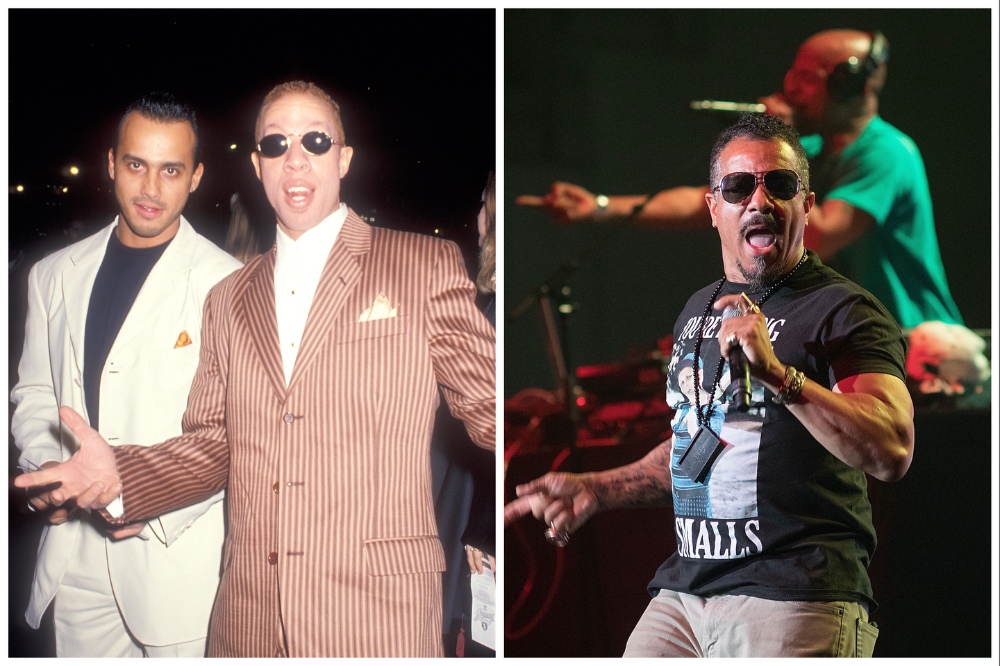
On the evening of 26 June 2026, a scheduled concert on the National Mall headlined by Vanilla Ice was cancelled for "inclement weather" that, according to the public record, never arrived. The event was part of Freedom 250, a multi-day civic programme marking the United States' 250th anniversary. Organisers pulled the plug hours before showtime; attendees, many of whom had travelled and queued in summer heat, left with no performance and a single explanation that did not match the radar.
The cancellation is a small, almost trivial episode in itself. It is interesting because of the mismatch between the stated reason and the visible weather, and because of what that mismatch reveals about how crowd-facing events are now managed — or, more pointedly, how their failures are explained to the public.
What was announced, and what didn't happen
The Freedom 250 concert was billed as a flagship cultural moment of the broader anniversary programme. According to Variety's reporting on 27 June 2026, the event on the National Lawn was cancelled, with organisers citing "inclement weather" as the cause. The show had been scheduled for the Friday evening. No measurable rainfall was recorded in Washington, D.C. that night, and the threat of scattered showers cited in advance communications did not develop into anything that would have impeded an outdoor production.
That is the basic factual ledger. A concert was announced, then called off, with an official reason that the actual weather does not appear to support. The reporting does not specify whether the cancellation was triggered by forecast risk, by an on-site production call, or by some upstream logistical decision that was retroactively attributed to the sky.
The plausible counter-reads
Two alternative explanations are worth taking seriously. The first is mundane and defensible: outdoor concerts on the National Mall are routinely called on forecast probabilities rather than observed conditions, because stage rigging, crowd safety, and load-in schedules cannot be reversed at short notice. Under that logic, a 30–40 percent chance of an evening shower is enough to make a show untenable even when the rain never lands. If that is what happened here, the framing is a procedural caution, not a deception.
The second read is less comfortable: that the cancellation was driven by some other factor — production shortfalls, security concerns, low pre-event ticket uptake, performer logistics — and that "inclement weather" was the most face-saving label available. Variety's reporting explicitly notes the disconnect between the cited reason and what the weather actually did, which is the kind of detail that surfaces only when a journalist has checked the record rather than repeated the press release. The reporting does not assert the second explanation; it does leave the door open.
The honest framing is that the sources disclose the cancellation and the weather gap, but do not specify the internal decision chain. Until an organiser or producer publishes a more granular account — what the radar showed, what the threshold was, who signed off — the public is asked to take the official reason on faith, and faith in such announcements is exactly what reporting like Variety's is designed to test.
How cancellations get narrated
The structural pattern here is familiar. Live-event organisers operate in a liability environment where any weather call that goes wrong is worse than a cancellation that turns out to be unnecessary. The asymmetry pushes operators toward conservative defaults: cancel first, apologise later, and let the disappointed crowd absorb the cost. That logic is rational at the firm level.
It is also the logic that erodes trust at the system level. When a forecast is cited as the cause and the radar is clear, the next time an organiser invokes the weather, a slice of the audience will assume the real reason is being withheld. The cost of one over-cancellation is paid down across every future event that genuinely does need to be called.
For a state-affiliated anniversary programme, the stakes are slightly higher than for a commercial promoter. Freedom 250 is positioned as a civic celebration, not a private show, and the public's tolerance for opaque decision-making from civic organisers is lower than for private operators. That is not a partisan observation; it is a basic accountability frame applied symmetricrally to any institution that holds itself out as acting on the public's behalf.
What remains unresolved
The reporting is clear about what is known and what is not. What is known: the concert was scheduled, the cancellation was announced, the cited reason was weather, and no measurable rain fell in Washington, D.C. that night. What is not known from the available sources: the internal threshold the production team applied, whether any other operational factor contributed to the call, and how the decision was communicated to the artist and the audience in the hours before gates were due to open.
There is also a softer uncertainty worth flagging. Freedom 250 is described in Variety's piece as a broader anniversary programme; the article does not catalogue the rest of the slate, so it is not possible to say from these sources alone whether the cancellation fits a pattern of marquee-event pullbacks or stands out as a one-off. A reader who wants the fuller picture will need to wait for additional reporting or for the organisers' own post-event accounting.
What can be said without overreach is that the weather was not, on the available record, the proximate cause in any meteorological sense. Whether it was the proximate cause in a procedural sense — a forecast threshold tripped, a rigging call made, a liability decision signed off — is a question the current sources do not answer. The honest framing is that an explanation was given, the explanation does not match the visible record, and the public is entitled to a more granular one.
Desk note
Monexus framed this as a weather-vs-reality discrepancy rather than as a scandal, because the source material supports the former and not the latter. Variety did the load-bearing verification work; this piece paraphrases and contextualises it without padding the source ledger.