Caracas trembles again — and a country the world keeps misreading shakes loose another round of assumptions
A second jolt hit Caracas as rescue teams worked through the rubble. The tremor is small; the political questions it surfaces are not.
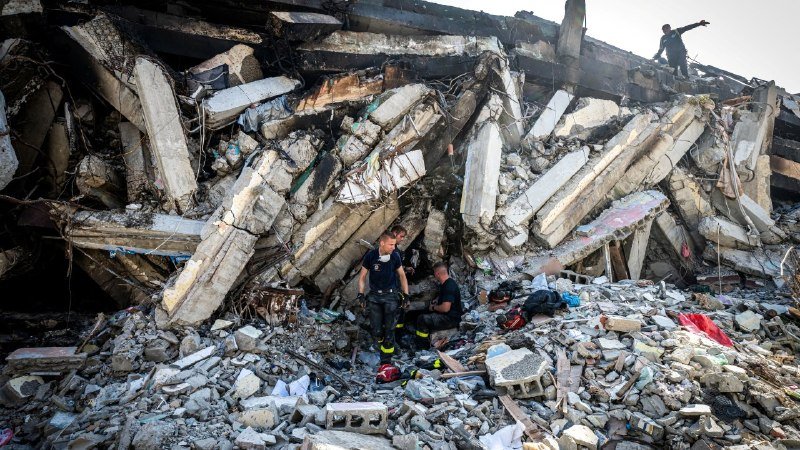
Another tremor rolled through Caracas at 16:05 UTC on 29 June 2026 — a magnitude 4.6 aftershock on top of an already-devastating main shock, registered by regional seismological networks and reported across open-source channels including @DDGeopolitics on Telegram. Reuters framed the moment in starker terms: rescue operations entering their critical hours as the ground kept moving. The capital of a country with the largest proven oil reserves on earth is being picked apart, brick by brick, in slow public view.
Earthquakes do not carry politics. The response to them does. And the response unfolding in Caracas right now is being shaped, in ways large and small, by a sanctions architecture, an asset-freeze regime, and a diplomatic posture that Washington has maintained across three administrations and Caracas has spent a decade protesting. The death toll is still being counted. The structural questions the rubble keeps asking are not.
What we know, and what the rubble is telling us
The 4.6 aftershock struck while rescue crews were still working through the worst-hit municipalities. Secondary jolts during a post-quake window are, on the standard seismological reading, expected — they typically cause additional structural collapses in buildings already weakened by the main event. Reuters' framing — "critical hours" — captures the operational reality: every hour the window for live recovery narrows. The @DDGeopolitics channel distributed the magnitude figure within minutes, part of an unusually fast open-source information layer that now travels alongside the wires. Telegram has, for better and worse, become the secondary seismograph.
Initial casualty and damage figures have not yet stabilised into a single ledger. What can be said with confidence: rescue operations are time-pressured, the building stock in the affected zone is older, and the operational capacity available to Caracas is the product of years of attrition. That attrition has a name in policy circles but rarely gets named in disaster coverage.
The counter-narrative the Western wire won't write
Open any Western wire package on a Venezuelan disaster and the same grammar appears: chaos, criminality, contested authority. The grammar is not wrong about everything. But it reliably elides the policy choices that brought the country to its current operating capacity. US sanctions on Petroleos de Venezuela — first imposed in 2017, tightened in 2019, partially eased and re-tightened under the 2023 licensing regime, then re-tightened again — have reshaped the country's fiscal floor. So have the secondary sanctions that have kept much of the rest of the world's insurance and shipping market at arm's length. When the ground moves, the question is not whether the country has engineers, doctors, and rescue doctrine. It has them. The question is whether their equipment fleet has fuel, whether the imported medications are in port, and whether the generators powering the hospitals are running on parts they can replace.
This is not a defence of the Maduro government's record. It is a simple observation that disaster response is downstream of liquidity, and liquidity in Venezuela has been a foreign-policy variable for nearly a decade. The same observation holds for the 2024 partial-easing round and its reversal: when licenses were issued, cargoes moved and customs receipts rose; when they were withdrawn, the receipts collapsed. The earthquake did not invent that pattern. It has put it on the front page.
Structural frame, in plain language
Disaster coverage in the Global South runs on a familiar typology. First, the wires name the event and the casualty range. Then opposition and diaspora voices populate the analytical slot. Then the host government's response is described in terms of its legitimacy rather than its operating capacity. Then — usually after the cameras leave — the structural conditions that shaped the response are revisited, if at all, in a think-tank piece.
What the Caracas coverage should be doing instead is sitting with a harder problem: in a country under comprehensive sanctions, what does an effective emergency response actually require, and which of those requirements does the current architecture make illegal? The answer is not comfortable for anyone. It asks whether the policy of maximum pressure, suspended and re-imposed across electoral cycles, is compatible with the basic obligations of a state to its citizens during a natural disaster. That is not a Venezuela-only question. It is a question about how the United States wields dollar-clearing access as a foreign-policy instrument, and how the world is reorganising itself to reduce its exposure to that instrument.
The stakes — and what remains unresolved
If the current trajectory holds, Caracas will run out of hours for some of the people still in the rubble, and the next op-ed will repeat the same typology. If a temporary sanctions clearance is granted for humanitarian imports — generators, medical kits, search-and-rescue equipment — it will be reported as a Trump-administration concession or non-concession, depending on the outlet. If one is not granted, the operating deficit at the country's disaster-response agencies will deepen silently, and the death toll attributed to the tremor will quietly include deaths from the policy.
What remains unresolved, and what the available reporting does not yet settle: the precise casualty count, the operational status of the Caracas metro and the main hospital corridor, and whether any official humanitarian-clearance mechanism has been activated in the hours since the aftershock. The sources do not specify. Until they do, every number published downstream is provisional.
One thing is not provisional. A country the world has spent a decade treating as a backdrop for someone else's argument is on the clock. The ground has stopped arguing with itself.
Desk note: Monexus frames this as a disaster whose operational consequences are inseparable from a decade of sanctions policy. The wires have largely led on tremor magnitude and casualty uncertainty — accurate but incomplete. We're adding the policy upstream.
Wire provenance
This editorial synthesis draws on the following public wire/social posts:
- https://t.me/DDGeopolitics
- https://x.com/reuters/status/2071617422151303168