Venezuela's Earthquake and the Audit Caracas Won't Order
A deadly quake has reopened the question of state-built housing in Venezuela — and engineers are demanding the audit Caracas has spent a decade avoiding.
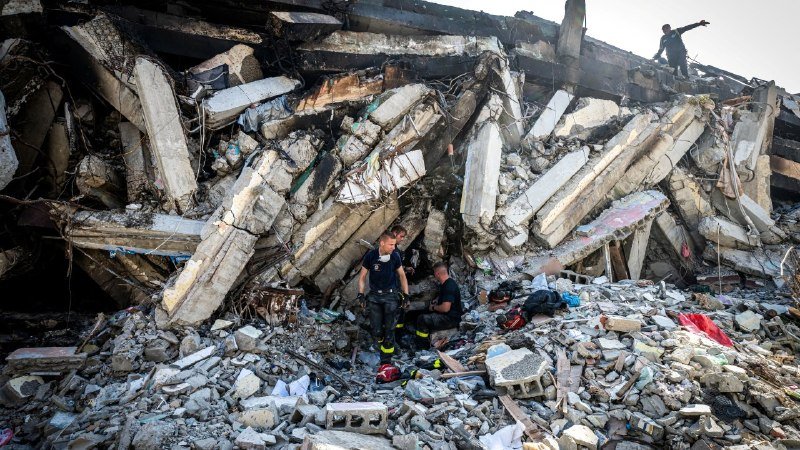
At first light on 29 June 2026, search teams were still pulling at concrete slabs in the states hardest hit by the tremors that rolled across northern Venezuela the day before. Reuters broadcast crews from the rescue perimeter; the death toll was still being counted. By midday, Reuters was carrying a sharper, less visible story: Venezuelan engineers, in their professional capacity and on the record, were demanding that the Maduro government open a forensic audit of the state housing built during the Chávez and Maduro years — the Gran Misión Vivienda Venezuela programme and its successors — to determine which buildings held and which did not, and why.
That second story is the more consequential one. The first is a disaster. The second is a reckoning — one that Caracas has resisted for the better part of a decade, and that the geopolitics of 2026 have made newly inconvenient for everyone involved.
What the engineers are asking for
The Venezuelan Society of Structural Engineers and related bodies have, in past disasters, called for independent technical reviews of state-constructed housing. After the 2010 quake and again after tremors in 2018, those calls went largely unanswered. The 2026 request is more pointed: a line-by-line audit of construction records, structural drawings, material certifications, and soil studies for buildings that collapsed, with engineering responsibility assigned by name.
The political economy of that ask is straightforward. State-built housing has been, since 2011, a flagship of chavista legitimacy — millions of units announced, hundreds of thousands delivered, ribbon-cuttings broadcast on state television. If the housing stock failed systematically in this quake, the failure is also a political fact about how the programme was procured, supervised, and staffed. The engineers know this. The government knows this. That is why the audit has not been ordered.
The aid question Washington is wrestling with
Into this domestic standoff arrives an outside variable. On 27 June 2026, reporting circulated that the United States was preparing a nine-figure humanitarian aid package for Venezuela — a substantial figure for an administration that has, in successive rounds of sanctions and counter-sanctions, treated Caracas primarily as a sanctions problem.
The package, if confirmed, lands in a strained political space. The Maduro government has historically preferred aid that arrives through Caracas-friendly intermediaries and on Caracas-friendly terms, partly because direct Western humanitarian flows are read domestically as validation of the blockade narrative. Engineering unions and opposition mayors, meanwhile, will want the money tied to independent technical oversight — exactly the kind of conditionality the government is most allergic to.
There is also the read-the-room problem for Washington. A nine-figure cheque, in a country where the opposition accuses the sitting government of building fatal buildings, is going to be asked, in writing, what it is paying for. Sanctions relief and disaster relief are different policy instruments. Conflating them — even for a legitimate humanitarian purpose — sets up the next round of Caracas–Washington recriminations.
The structural pattern
This is not a one-off. Resource-dependent governments across the western hemisphere have, at various points in the last twenty years, turned large public-works programmes into instruments of political distribution: contracts awarded without competitive tendering, supervision staffed by political loyalists rather than credentialed engineers, completion statistics reported as outputs without quality controls. When a disaster hits — a quake in Venezuela, a collapse in Surfside, a bridge failure in Genoa — the same debate opens. Did the state build fast? Yes. Did it build well? The audit, when it is finally permitted, usually answers that question in language the politicians would rather not hear.
Venezuela's case is acute rather than unique. What makes it politically distinctive is the scale of the housing programme, the depth of the political ownership of that programme, and the diplomatic cost of any honest accounting. A serious audit would name buildings, name contractors, and name the officials who signed off. It would also tell the Venezuelan public how many of their neighbours died inside structures the state vouched for.
What remains uncertain
The casualty count is still moving; the sources are cautious about firm figures. The dollar value of the reported US aid package is described as nine-figure but the reporting has not yet specified the precise figure, the delivery channel, or the conditions. Most importantly, the engineers' call for an audit has been made publicly but the government's response has not been confirmed in the available reporting. Whether Caracas opens the books, blocks the request, or negotiates a narrower inspection — perhaps focused on a handful of failed buildings — will determine whether the disaster produces accountability or simply produces another round of contested statistics.
The political temptation, on every side, is to treat the quake as a humanitarian event bracketed off from the political questions. That bracketing is itself the political question. The engineers understand this. The reporting suggests they are unwilling to be quiet about it this time.
Desk note: Monexus frames the story around the engineers' audit demand rather than the disaster tableau — the disaster is the catalyst, the accountability gap is the story.
Wire provenance
This editorial synthesis draws on the following public wire/social posts:
- http://reut.rs/3SNInaH