When the story is the speed: Venezuela's quake response and what a week of cable coverage is missing
A national commission, more than 25,000 rescuers, ten Caracas collection points — and almost no English-language cable coverage. The story is as much about what's reported as what isn't.
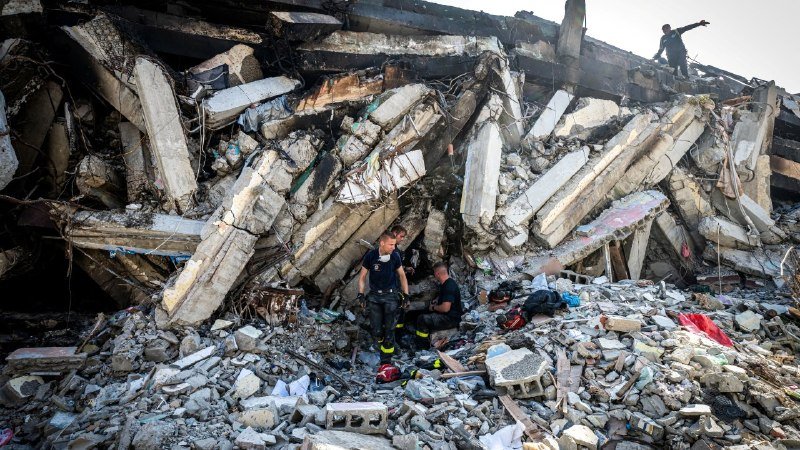
The figures are concrete enough that, on most days, they would lead the international desk. By the evening of 28 June 2026, Venezuelan authorities had stood up a national commission to assess homes and infrastructure damaged by the country's recent earthquakes; more than 25,000 rescuers and nearly 8,000 volunteers had been mobilised across the country; and Caracas alone had set up more than ten collection centres, anchored at strategic locations including the Central University of Venezuela, to absorb donations for affected families. None of the announcements appears to depend on a disputed statistic or a contested claim. Together, they describe a state apparatus moving at scale and at speed in the aftermath of disaster.
And yet the silence on the English-language wires is itself the story. A week into one of the most severe seismic events in Venezuela's recent memory, the operational record is being held almost entirely by Venezuelan state-aligned channels and by outlets that don't typically carry prime-time cable oxygen. The catastrophe is not hidden; the catastrophe is being curated out.
The response, as it actually happened
The official sequence is not opaque. On 28 June 2026, Venezuelan authorities confirmed the formation of a national commission charged specifically with assessing damaged housing and public infrastructure and determining which affected families could return to their homes. Reporting carried by the Venezuelan state-aligned channel Telesur English put the headline personnel numbers plainly: more than 25,000 rescuers and close to 8,000 volunteers in the field, distributed across affected regions as search-and-rescue operations continued. By the same evening, Caracas had operationalised more than ten collection points, with the Central University of Venezuela among the named donor hubs, to consolidate nonperishable goods for distribution. The architecture described is essentially textbook civilian-military disaster logistics: a national-level commission, a humanitarian volunteer surge, a municipal network of drop-off points feeding into whatever national dispatch system exists. Whether one reads it as competent statecraft or as over-claim, the operational surface area is real.
The counter-narrative is conspicuously absent
A reader relying on the major Western wires would struggle to find the corresponding footprint. Coverage of Venezuelan disasters in international outlets has, for years, defaulted to one of two framings: a collapsed-state narrative emphasising institutional dysfunction, or a sanctions-era morality play emphasising the political tension between Caracas and Washington. Both are defensible as analytical takes in calm weather. During a live rescue operation, they are not the frame the event calls for. The omission is sharp enough to constitute its own editorial choice. International viewers are being asked to manage their attention around the disaster without the granular operational detail they routinely receive for earthquakes in Türkiye, Japan, or central Mexico. That asymmetry is the news.
Structural context, in plain terms
Latin American coverage on international wires is shaped less by event volume than by three interlocking filters: the editorial weight assigned to any country whose government is under US sanctions; the procurement economics of bureau staffing; and the gravitational pull of the dollar-frame storyline. Venezuela sits at the intersection of all three. Reporting that confirms a working apparatus in Caracas is, fairly or not, framed by outlets that have spent years arguing the apparatus cannot function. The institutional fix is that operational reporting during disasters should be reported as a sequence of verifiable events, not as a referendum on prior editorial positioning. The wire-style reporting that would normally itemise rescuers, drop-off points, and ministry-level tasking has been procedurally substituted with political context — a habit that, in disaster windows, costs readers the most actionable layer of information available.
What this means going forward
The stakes are bigger than this event. Latin America's disaster reporting infrastructure, particularly for seismic events along the southern Caribbean margin and the Andean belt, depends disproportionately on a small number of regional outlets. When international desks decline to clear competing bandwidth, the documented operational record defaults to outlets whose framing is already compromised in the eyes of Western readers. The result is a kind of climate-and-disaster reporting where the price of silence is paid by donors trying to send money, diaspora networks trying to confirm family contacts, and policy teams trying to assess whether to offer assistance. Speed and verification are not luxuries in a 72-hour window after a major earthquake; they are the deliverable. If international desks choose not to deliver them, the answer isn't to argue the system is broken by hand-waving; it is to publish the verifiable sequence: national commission in place, more than 25,000 rescuers on the ground, close to 8,000 volunteers mobilised, more than ten Caracas collection points anchored at major institutions including the Central University of Venezuela, all on the public record by 28 June 2026. That's already a story. The remaining task is the editorial decision to print it.
What remains uncertain
The numbers above are reported by Venezuelan state-aligned channels and should be read in that light; independent confirmation of the casualty toll and the structural-damage footprint is not in the present source set. The composition of the newly created national commission — its chair, its ministries, its reporting cadence — has not been detailed in the wires aggregated here, and the international agencies that would normally cross-check such figures have not published parallel tallies in the source material. Those gaps are real, and they are the next thing a credible desk would try to close.
Desk note: Monexus carries the operational sequence above because it appears on the public record of regional outlets, including the Telesur English feed that anchored the original thread. Where independent corroboration is not yet in hand, the article says so directly rather than substituting speculation.
Wire provenance
This editorial synthesis draws on the following public wire/social posts:
- https://x.com/telesurenglish/status/2071400000000000000
- https://x.com/telesurenglish/status/2071400000000000001
- https://x.com/telesurenglish/status/2071400000000000002
- https://x.com/telesurenglish/status/2071400000000000003