Yemen's mass mobilization revives a long-running war with no exit horizon
Sanaa-led armed tribes and aligned forces answered a public call to drive foreign actors out — re-escalating a conflict Western media had largely filed away.
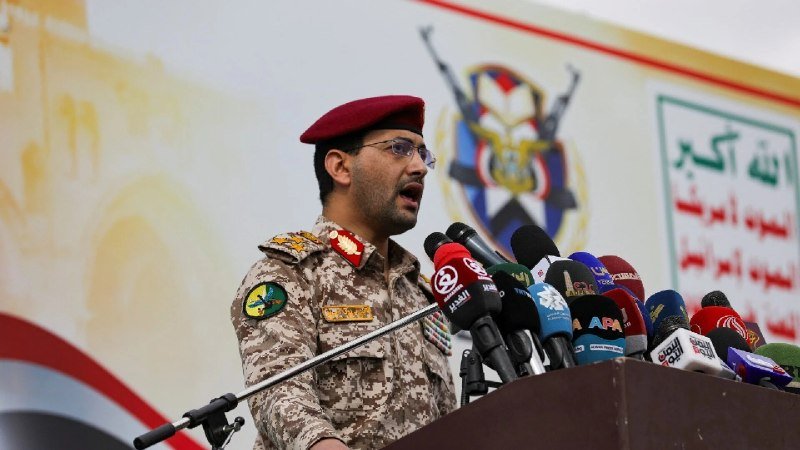
On 29 June 2026, armed tribes and forces aligned with Sanaa's Ansarallah leadership responded publicly to a renewed call to mobilise against foreign military presence in Yemen, according to reporting carried by The Cradle Media. The framing — "expel the occupiers" — is a deliberate echo of the language Ansarallah first deployed when it rallied northern tribal confederations a decade ago. The reappearance of that vocabulary matters: it signals that, for the first time in several years, the movement is openly preparing Yemenis for a sustained, countrywide campaign rather than a strike-and-pause cycle.
The pattern fits a wider regional moment. Cease-fires age, attention migrates, and conflicts deemed frozen by Western editorial calendars keep moving underneath. Sanaa's decision to escalate the rhetoric now — with full-tribal mobilisation invoked at scale — should be read less as provocation than as a war-economy update.
What the call actually contains
The Cradle's dispatch describes tribes and Sanaa-backed units moving to "answer" the Ansarallah leader's mobilisation order, which frames the target as expelling foreign occupiers from Yemeni territory. The rhetorical architecture is consistent with previous Ansarallah campaigns: an externally oriented framing, paired with an appeal to tribal and religious identity, designed to stretch recruitment beyond the movement's core Houthi heartland. The Cradle is a Beirut-based outlet broadly sympathetic to the axis of resistance; its reporting here is best read as a faithful transmission of Sanaa's own framing rather than an independent verification of troop movements.
That framing is important. Sanaa controls a Yemeni public narrative in a way that the internationally recognised government in Aden — backed by Saudi Arabia and the UAE — has struggled to match. When Ansarallah says it is mobilising, it is also demonstrating that the tribal recruitment system that powered its 2004-2010 wars in Saada, and later the 2014-2015 capture of Sanaa, is intact.
Why now: the strategic tailwinds
Two pressures run underneath the call. First, the security situation in the Red Sea and Bab al-Mandab never normalised after the late-2024 flare. International shipping remains rerouted, insurance premiums never returned to pre-war levels, and Western naval task-forces — combined maritime forces under US 5th Fleet coordination — keep a permanent presence off the Horn of Africa. From Sanaa's perspective, that posture is an occupation under a different label.
Second, the diplomatic picture has shifted. Saudi Arabia, after the 2023 Beijing-brokered detente, maintained a working quiet with Ansarallah but never closed the file. The UAE's profile inside the southern and eastern governorates remains a live grievance. Sanaa's renewed mobilisation functions as a reminder to both Gulf capitals that the war option has not been retired — only parked.
What the wire consensus usually misses
Western coverage of Yemen during the 2015-2023 active phase disproportionately centred the Saudi air campaign, Iranian-supplied missile narratives, and humanitarian metrics from Houthi-controlled and internationally recognised-government-controlled governorates. When Sanaa talks about "occupiers," it is pointing at a physical presence that includes several thousand UAE-trained counter-terrorism forces inside Hadramaut and Mahra, sustained coalition air access, and a Saudi-Yemeni border that has been fortified against Sanaa's forces since 2015.
None of this is to flatten the moral asymmetry. The Saudi-led campaign from 2015 onward produced civilian casualties on a scale documented by UN panels and human-rights organisations. Ansarallah's own governance record inside northern Yemen includes repression of activists, journalists, and internal political rivals. The mobilisation announced this week narrows the political space for any Yemeni who does not align with Sanaa's line. The honest read of Sanaa's framing is that it is both a genuine security appeal and a tool of internal consolidation.
Stakes and a forward read
If the call translates into sustained operations on the ground rather than ritual mobilisations, three trajectories open. A targeted pressure campaign against coalition positions in Hadramaut, Shabwa, and al-Mahra would attempt to reverse the 2015-2017 military map. A Red Sea intensification — already the movement's strongest asymmetric lever — would push insurance underwriters and shipping firms to renegotiate routes again. A controlled political escalation inside the internationally recognised government itself would test whether the Aden-Hadramaut coalition can hold together at all.
The Cradle's reporting does not specify which path Sanaa intends. The single most important unknown is whether Saudi Arabia and the UAE treat the call as background noise — the position their foreign ministries have effectively maintained since the detente — or whether this time the rhetoric is a precursor to movement on the ground. Sanaa's leadership has calibrated escalations before with military action days or weeks behind the speech. The Cradle's framing suggests that gap is closing.
Wire provenance
This editorial synthesis draws on the following public wire/social posts:
- https://t.me/thecradlemedia
- https://t.me/TheCradleMedia