One town, eight dispatches: what the Beit Yahoun bombardment tells us about Israel's Lebanon border campaign
Eight near-identical dispatches in thirty-seven minutes show how the southern Lebanon border campaign is being reported, by whom, and to what end.
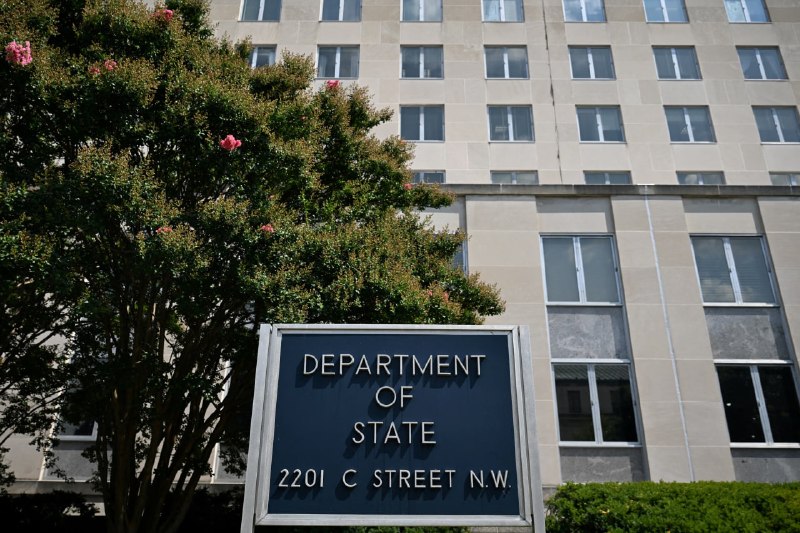
By 14:06 UTC on 30 June 2026, three Telegram channels had posted the same sentence in the same minute. "BREAKING | Israeli artillery shelling targets Beit Yahoun, in southern Lebanon," wrote the operators of The Cradle Media at 14:06:22 UTC. Six minutes later the same channel updated the line: Israeli forces were continuing to target the town. By 14:40 UTC the war-monitoring account wfwitness had posted twice in twenty-seven minutes from the same account handle, each time describing the same act of fire. An Iranian state outlet, Fars News International, citing the Beirut-based Al-Manar correspondent, described it as "the artillery of the Zionist regime." Across thirty-four minutes, eight dispatches from five distinct channels converged on a single fact: Israeli artillery was hitting Beit Yahoun, a small town in the Tyre district of south Lebanon that sits inside a long-disputed strip of land Israel has designated, since late 2024, as a security zone inside Lebanese territory.
The point of this article is not the shelling. The point is the reporting. What eight near-simultaneous dispatches about one small town reveal is a layered and uneven information architecture covering the Israeli campaign in southern Lebanon — an architecture in which Lebanese-frontline war monitors, Iran-aligned media, and a Beirut-based channel affiliated with Hezbollah are doing the bulk of the real-time English-language reporting, while most Western wires remain in a posture of consequence-tracking rather than presence. The result is that a reader's first picture of events on the border, on any given afternoon, often arrives through channels that carry an explicit political line — and arrives before any neutral corroboration has been filed.
A single afternoon in eight messages
The dispatches cluster tightly in time. The earliest, from Fars News International, registered at 14:06 UTC and credited the Al-Manar correspondent on the ground. Seconds later, two messages from the same The Cradle Media account — a Beirut-headquartered outlet that has grown into the most-read English-language source for Iran-aligned coverage of the Levant — repeated the breaking line. By 14:13 UTC, wfwitness had posted the first of two updates; the second followed at 14:40 UTC, describing "additional Israeli artillery bombardment" against the town. At 14:42 UTC and again at 14:43 UTC, both the lowercase and capitalised variants of The Cradle Media's Telegram feed published short video bulletins confirming that the fire was continuing.
Each dispatch is short. Most are a sentence; the longest is two. None names the unit responsible, the calibre of artillery, the specific neighbourhood within Beit Yahoun, or whether there are casualties. None cites the Israeli military. The wfwitness account, which posts in English and Arabic and is widely followed by journalists covering the front, adds a phrase the others do not: it describes Beit Yahoun as being inside "the security zone in southern Lebanon." That single phrase is doing a great deal of work. It signals that the account's operators understand the operation to be taking place inside the buffer strip that Israel announced in October 2024 and that Lebanon, the United Nations, and a wide body of international lawyers regard as occupied territory.
What we can verify from this stack — and what we cannot
The verified core is small but real. On 30 June 2026, between 14:06 and 14:43 UTC, Israeli artillery fired on or near the town of Beit Yahoun in southern Lebanon. Five distinct channels reported the event in near real time. The Cradle Media published both a text breaking line and a follow-up video. Fars News International attributed the on-the-ground account to Al-Manar, the television station of the Lebanese Shia political party and armed movement Hezbollah. wfwitness, an open-source account widely cited by analysts, provided two updates and was the only one to frame the location as inside a security zone.
What the stack does not tell us is just as clear. It does not establish the number of rounds fired, the target type, whether the fire was counter-battery, retaliation, or pre-emptive, whether Israeli forces were responding to a rocket or anti-tank launch toward Israeli territory, or whether there are wounded or killed. It does not provide a spokesperson from the Israel Defense Forces confirming or characterising the action. It does not include any wire-service report — no Reuters, no Associated Press, no Agence France-Presse. It does not include any on-the-record statement from the Lebanese army, the Lebanese government, or the United Nations Interim Force in Lebanon (UNIFIL), which has monitored the border since 1978.
For an article built on a wire stack, that asymmetry is itself the news. The information vacuum on the Western side is not a sign that nothing is happening; it is a sign of how the present Israeli campaign along the Lebanon border is being covered in English. The dispatches that exist are dominated by accounts that, however accurate on the bare fact of artillery fire, are not positioned to make neutral claims about the operation's strategic rationale, the rules of engagement, or the casualty picture.
How the source ecology on the Israel-Lebanon border is built
To read the stack honestly, it helps to understand who is actually posting. The Cradle Media is a Beirut-based outlet founded in 2022 as an English-language counterpart to regional reporting that grew out of independent and Iran-aligned media. Its editorial line is sympathetic to the "axis of resistance" framing, in which Iran, Hezbollah, the Syrian government, and allied Iraqi and Houthi movements are presented as a coherent counter-order to US and Israeli regional policy. It is read widely by analysts, journalists, and diplomats because it provides real-time footage and rapid English translation of material that would otherwise require Arabic-language fluency and direct contact with Hezbollah-aligned media offices. It is not a wire service. It is not a court of record. But on the southern Lebanon front, it is often the only English text filed within minutes of a strike.
Fars News International is the English-facing arm of the Iranian Students' News Agency, which operates under the supervision of the Iranian Ministry of Culture and Islamic Guidance. Al-Manar, the channel's source for the on-the-ground account, has been sanctioned by the United States Treasury since 2004 as a Specially Designated Global Terrorist entity and by the Arab League, on the explicit basis that it operates as the media arm of Hezbollah, which the United States, the United Kingdom, Canada, the Netherlands, the Arab League, and Israel designate as a terrorist organisation. Al-Manar maintains its own correspondent network in south Lebanon and produces some of the most granular real-time reporting from the front.
wfwitness, the war-monitoring account, is harder to place. It posts in English and Arabic, often with location pins, geolocated photos, and timestamps derived from open-source intelligence. It is followed by working journalists because it frequently produces the first reliable civilian-casualty and damage imagery from locations in Lebanon, Syria, and Iraq. Its operator has not been publicly identified in a way that this publication can verify. It does not publish a masthead. It is useful precisely because its accounts are short, factually bounded, and rarely editorial.
Read together, these three layers — an Iran-aligned regional outlet, a Hezbollah-affiliated broadcaster cited through an Iranian state-news translation, and a frontline OSINT account — form the working source stack for English-language coverage of this stretch of the Israel-Lebanon border on this particular Tuesday afternoon. The Western wire machinery is absent from the timeline; Israeli government channels are absent; Lebanese government channels are absent; UNIFIL is absent.
Why the gap matters
The gap matters because the southern Lebanon campaign is not a marginal story. Since the collapse of the November 2024 ceasefire between Israel and Hezbollah, Israeli ground and air operations in south Lebanon have killed and wounded thousands, displaced most of the population of the border districts, and produced a slow-burning but steady drip of legal and diplomatic complaint from Beirut, the UN, and a range of European capitals. The operations have taken place in and around towns such as Kfar Kila, Maroun al-Ras, Aita al-Shaab, Yaroun, and Beit Yahoun, all of which sit inside the area Israel treats as a security zone. The actions are contested as violations of Lebanese sovereignty and of the 2006 UN resolution that ended the previous war. The Israeli government argues that the operations are necessary to prevent Hezbollah reconstitution in the border belt and to degrade the residual rocket, anti-tank, and drone threat to Israeli towns in the Galilee.
In that context, who reports an artillery bombardment first — and in what frame — is a substantive piece of the story, not a piece of meta-coverage. A reader who sees "BREAKING | Israeli artillery shelling targets Beit Yahoun" arrive on Telegram at 14:06 UTC is, for a window of hours, reading a single-sided account of a kinetic event in a country at war. The frame the account supplies is the frame they will carry into the rest of the day's reading. If the account describes the town as inside a security zone, as wfwitness does, that framing imports a contested political fact: that Israel is operating inside a strip of territory it controls but does not, in the standard sense, own. If the account uses the language of the Iranian state outlet, the framing is sharper still — occupation, aggression, "the Zionist regime."
Western wires, when they do file, will eventually anchor the bare fact of the shelling to broader claims: the Israeli military's stated rationale, the number of civilians displaced, the casualty report from the Lebanese health ministry or the UN, the UNIFIL position, the diplomatic posture of the Lebanese government, and a reaction from capitals. The point is that the wires arrive later. The first version of the story arrives through the channels in this stack, and it arrives with a frame.
Counterpoint, and what it would take to break the frame
A reasonable counter to the framing being presented here is that the dominance of Iran-aligned and Hezbollah-affiliated channels in the immediate English-language window is not a distortion; it is a fact of the geography and the access. They are present at the front in a way that Western correspondents have not been since the early months of the 2023-2024 Gaza war, when the Israel-Lebanon border hardened and the press access regime tightened on the Israeli side. Western reporters who do make it across the border often travel with the Lebanese army, which controls access to the south, and reach the area after the fact, not during. The Al-Manar correspondent was already there. wfwitness's team was already there. The Cradle's team was already there. Reuters' team, in most cases, was not.
That counter is real. It is also incomplete. A reporting ecology in which the first English text on a strike comes from outlets that have a stated political position is not, on its own, a reason to reject the text. It is a reason to read the text for what it can and cannot establish. The bare fact — artillery fired at Beit Yahoun — is robust across eight independent posts. The framing — that the fire is part of an occupation campaign, that it is an act of aggression, that it is a response to a specific Hezbollah action — is not robustly established by this stack. It is asserted. It is the frame through which the channels report. The Western wires, when they file, will draw the lines between fact, claim, and frame more carefully. But they will file after the Telegram timeline is already dense with assertive language.
What would break the frame is straightforward and rarely delivered. It would take an Israeli military readout that names the unit, the target, the rationale, and the proportionality assessment. It would take UNIFIL observers on the relevant stretch of border confirming, or denying, the location of fire. It would take a Lebanese army statement, or a statement from the Lebanese caretaker government. It would take on-the-ground footage from inside Beit Yahoun showing damage, casualty, or absence of casualty. None of those arrived inside the thirty-four-minute window described here. That absence is the most important single fact about the stack.
Stakes
The stakes are about the war, and they are about the map. On the war side, the artillery campaign in the south is one half of a two-front pressure strategy — strikes inside Lebanon intended to keep Hezbollah from re-establishing a permanent presence in the belt north of the border, paired with strikes inside Syria against weapons convoys, and paired with operations inside Gaza and the West Bank. The Beit Yahoun bombardment is one tick in a continuous pattern of fire; the reporting stack around it shows how poorly equipped the international press is to follow that pattern tick by tick in real time.
On the map side, the question is whether the security zone Israel has carved out in southern Lebanon becomes a sustained fact on the ground, recognised or not, or whether it is rolled back under diplomatic pressure, Lebanese state action, or a return to a ceasefire framework. The information architecture around the campaign is part of that question. If the English-language picture of daily fire arrives almost entirely through channels that frame every act of fire as an act of occupation, the diplomatic pressure increases. If the picture arrives through a wider mix of channels — Israeli, Lebanese, UN, wire — the pressure takes a different shape. Today, on this stack, the picture arrived one way. The next afternoon, it may arrive another. The war on the border is being reported one town at a time, and on 30 June 2026 the town was Beit Yahoun, and the report was a sentence repeated eight times in thirty-four minutes.
How Monexus framed this: a long read built around a single, narrow wire stack — five channels, eight dispatches, thirty-four minutes — used as a window onto the broader reporting ecology of the Israel-Lebanon border, rather than as the basis of a standalone front-line story. Where Western wire confirmation was absent, the article says so plainly. Where Iranian, Hezbollah-affiliated, and OSINT accounts carried the load, the article names their affiliation and their standing, in keeping with Monexus's habit of weighting sourcing, not copying its tone.
Wire provenance
This editorial synthesis draws on the following public wire/social posts:
- https://t.me/wfwitness/31712
- https://t.me/wfwitness/31705
- https://t.me/TheCradleMedia/24118
- https://t.me/thecradlemedia/24118
- https://t.me/TheCradleMedia/24122
- https://t.me/thecradlemedia/24124
- https://t.me/DDGeopolitics/59140
- https://t.me/FarsNewsInt/41208