The AI Power Bill Comes Due: How Data-Centre Construction Became America's Single Largest Infrastructure Line Item
US data-centre construction spending has eclipsed the combined outlay on airports, marine terminals and mass transit. The bill for the AI build-out is now the country's most consequential infrastructure story — and one of its least examined.
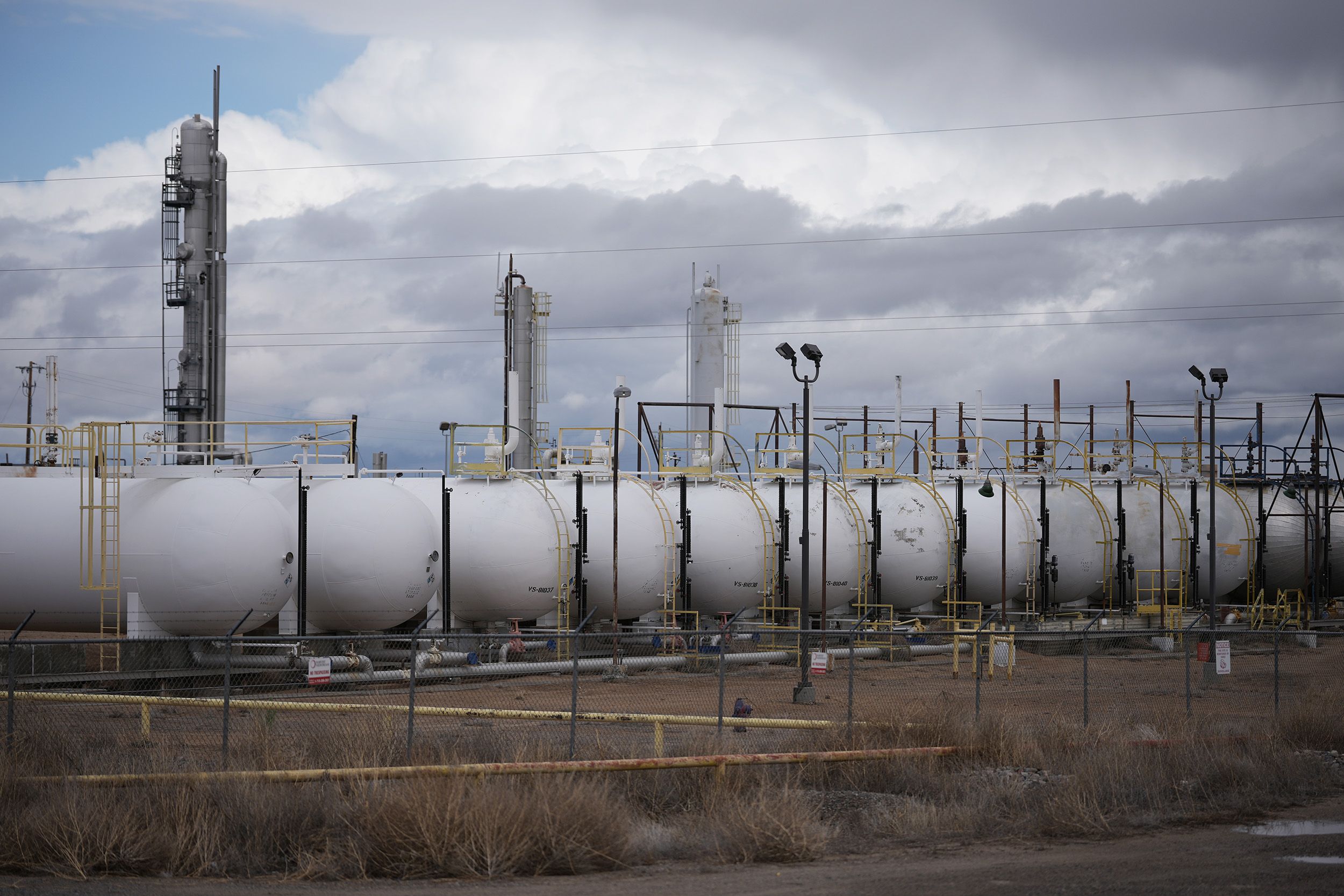
Lead
On 30 June 2026, the market-data account Unusual Whales published a single comparison that crystallised a quieter shift in American capital allocation: annual US data-centre construction spending now exceeds what the federal government and private operators combined pour into airports, marine terminals, and mass-transit systems. The arithmetic is not contested. The framing is. For most of the post-war period, the line items bundled under "infrastructure" meant roads, runways, rail and ports. As of mid-2026, the category has been re-ordered, and the new incumbent is a building type that did not exist in its current form a decade ago.
The figure raises a question that has so far been left mostly to the chipmakers and the hyperscalers: when one category of construction absorbs more capital than the rest of the country's physical connective tissue put together, what kind of economy is being built, and on whose ledger does the depreciation land?
Nut graf
This publication treats the data-centre boom as the country's most consequential infrastructure story — and one of its least examined. The capital is real. The electricity is real. The water is real. The land-use externalities, the rate-base implications for household utility bills, and the geopolitical exposure of concentrating advanced-compute capacity in three or four US counties are also real, and they are being decided largely outside the public hearings that normally accompany trillion-dollar capital programmes. The rest of this piece walks through what is being built, what is being priced in, what is not being priced in, and what the trajectory implies for the next decade of US industrial policy.
Section 1 — The new line item, by the numbers
The comparison that Unusual Whales circulated on 30 June 2026 is stark: the country now spends more, in a single year, on data-centre construction than on airports, marine terminals and mass-transit systems combined. The framing was originally drafted as a one-line piece of context, but it lands as a verdict on a re-ordering of national priorities that has happened with remarkably little public deliberation.
Three things are worth holding in mind when reading the number. First, traditional infrastructure categories — airports, ports, rail, transit — are not shrinking in nominal terms. They have continued to grow. Data-centre construction has simply grown faster, by a margin large enough to dwarf them. Second, the construction line is only the visible capex. The recurring costs — power-purchase agreements, water offtake, fibre back-haul, on-site generation — sit in operating budgets and on utility rate-bases, and are usually invisible in the headline figure. Third, the comparison is domestic. The international competitive backdrop, particularly the build-out in China and the Gulf, is what is forcing the pace.
The result is that the United States now has an industrial policy whose largest single line item is, in effect, a subsidy to a handful of vertically integrated cloud and model-training companies, written through construction contracts, power-purchase agreements, and tax abatements at the state and county level. It is industrial policy without the labelling, and the labelling matters, because the politics of subsidy depend on who is seen to be receiving the subsidy.
Section 2 — The counter-narrative, taken seriously
The dominant counter-narrative, articulated by the hyperscalers, by chipmakers, and by an unusual bipartisan cluster in Washington, holds that the build-out is self-financing. The argument runs like this: AI inference and training workloads are, in the medium term, a productivity shock on the order of electrification or containerisation. The marginal value of a unit of compute is high enough that the rents captured by whoever owns the model and the data centre will, in aggregate, exceed the construction bill. From that vantage, the trillion-dollar capex is not a subsidy but a venture investment by the public balance sheet, and the venture will pay back.
The counter-narrative is not foolish, and the productivity case is not invented. Early evidence from enterprise software, drug-discovery pipelines, and customer-service automation suggests that model-driven productivity gains are real, if unevenly distributed. The problem is the timing. The pay-back, if it comes, comes in years seven through fifteen. The capital expenditure, the power-purchase agreements, the water commitments, and the rate-base impact on household utility bills all arrive in years one through five. That mismatch — between the front-loaded cost and the back-loaded return — is what the construction-spending figure is really documenting.
A second, more sceptical counter-narrative deserves equal air. It holds that the data-centre boom is, in significant part, a financial phenomenon. Long-duration power-purchase agreements, sale-leaseback structures, and the inclusion of data-centre capacity in private-credit and infrastructure-fund portfolios have created a buyer-of-last-resort for newly built capacity. From this vantage, the headline construction number is partly a measure of the financial sector's appetite for yield, not a clean read of underlying compute demand. Both readings can be true at the same time, and probably are.
Section 3 — The structural frame
What we are watching, in plain terms, is a re-ordering of the country's capital stock around a single input: electrical compute, measured in gigaflops and increasingly in megawatts. The pattern is not new. The post-war American economy was, for a generation, a re-ordering around the automobile — highways, suburbs, oil refining, retail format. The 1990s and 2000s were, in their way, a re-ordering around the personal computer and the internet, though the physical capital intensity of that shift was lower and the externalities less concentrated.
The data-centre build-out is closer to the auto-era pattern than to the internet-era pattern in three respects. It is capital-intensive at a scale that requires state-level coordination. It is geographically concentrated, with the result that the externalities (land use, water, grid strain) fall on a small number of counties. And it is being financed, in significant part, through public balance sheets — whether by tax abatement, by utility rate-bases, or by the implicit subsidy of accelerated depreciation. The label is private. The mechanism is public.
A second structural fact is the export dimension. Data-centre capacity is now a diplomatic asset. Foreign governments negotiating cloud and AI compute contracts with US hyperscalers are, in effect, negotiating access to a public-incentivised resource. That gives Washington a tool it did not previously have, and it gives the companies a soft-power role they did not seek. The combination is unusual, and the rules governing it are still being written.
Section 4 — The rate-base question, and the household bill
Of all the under-discussed angles, the household utility bill is the one that will hit voters first. A new data-centre campus, depending on size, can add several hundred megawatts of baseload demand to a regional grid. That demand is usually met by a combination of new gas-fired generation, accelerated transmission build, and — increasingly — long-term power-purchase agreements that lock in price for the campus but also raise the clearing price in the regional market for everyone else.
In several US states, the result has been a politically awkward pattern: industrial-rate customers (the data centres themselves) negotiate multi-year fixed-price PPAs, while residential customers see their share of grid costs rise as the utility passes through transmission and capacity-expansion costs that the data centre triggered but does not, in practice, fully cover. The arithmetic differs by state and by regulator, but the direction is consistent. The data-centre boom is, in many jurisdictions, a quiet transfer from household balance sheets to corporate balance sheets, dressed up as a win for the local economy because of the construction jobs.
The construction jobs are real, and they are concentrated in counties that have, in many cases, lost manufacturing employment over the last twenty years. The political durability of the build-out depends on those jobs being visible. The political vulnerability of the build-out depends on the utility-bill impact being invisible, and the data-centre boom has so far depended on the second condition holding. It will not hold indefinitely.
Section 5 — What the next decade looks like
The forward view, taken seriously, has three layers. The first is engineering. The pace of compute demand, the pace of grid interconnection, and the pace of on-site generation are all running ahead of permitting and transmission build. The result, by 2028, will be a visible queue: data centres that have been financed and approved but cannot come online because the grid cannot accept their load. That queue is the first place the boom will meet political reality.
The second layer is geopolitics. The export of US data-centre capacity — through cloud regions abroad, through sovereign-AI contracts, through the Gulf build-out — is now entangled with export controls on advanced chips. The two policies are not, in practice, fully consistent. Selling cloud capacity abroad requires either foreign data centres (which depend on foreign chips) or remote access to US data centres (which depends on bandwidth and on the political tolerance of the country hosting the cable landing). Washington has not yet had to choose. It will.
The third layer is the cost of capital. The data-centre boom is, in part, a financial phenomenon, and the financial conditions supporting it are not stable. A sustained rise in long rates, a credit event in private credit, or a re-rating of infrastructure assets would all change the marginal project's economics. The construction figures published in 2026 are the result of financing conditions that prevailed in 2024 and 2025. The projects coming online in 2028 and 2029 were underwritten under those conditions. If the conditions change, the queue of approved-but-unbuilt projects becomes the queue of cancelled projects.
Desk note
This publication treated the data-centre spending figure as an industrial-policy story rather than a tech story. Wire coverage has tended to frame the build-out as a function of AI demand, and to take the productivity case at face value. The framing here takes the productivity case seriously, gives the financial-engineering reading equal weight, and pushes harder on the rate-base, water, and export-control questions that the wire roundups have so far left to the specialist press.
Wire provenance
This editorial synthesis draws on the following public wire/social posts:
- https://t.me/TSN_ua
- https://t.me/TSN_ua
- https://t.me/DailyNation
- https://t.me/TSN_ua