The Doha Non-Meeting: Why the US-Iran Track Is Stuck Before It Started
A face-to-face promised for Tuesday in Doha did not happen. The gap between announcement and logistics is now the story.
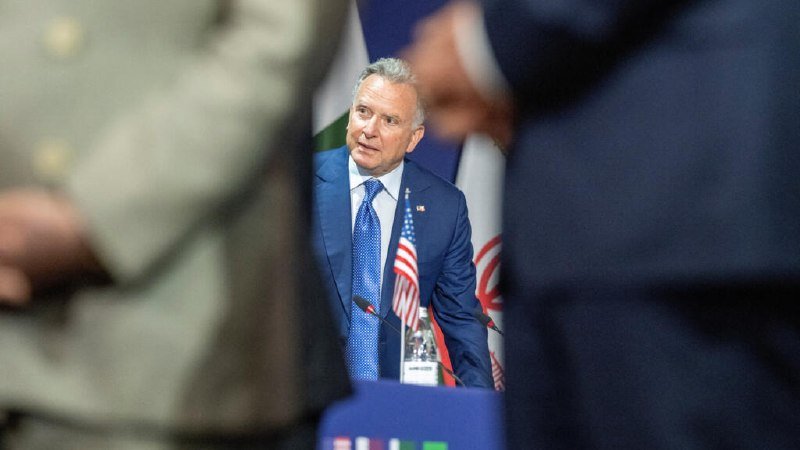
On the morning of 30 June 2026, two facts sat in tension, and the gap between them is the news. Donald Trump had publicly confirmed, twenty-two hours earlier, that US and Iranian officials would meet in Doha on Tuesday (source: x.com/polymarket, 2026-06-29T12:51). By the same afternoon, Qatari intermediaries were telling reporters that envoys Jared Kushner and Steve Witkoff were on the ground in Doha — but that no Iranian counterpart had been arranged (source: telegram channel @BRICSNews, 2026-06-30T10:38). The meeting the American side announced was, in logistical terms, not happening.
What does a non-meeting tell us? More than the smooth summits that do. Doha is the stage on which the next round of US-Iran diplomacy either takes shape or stalls — and right now, the stage is half-built.
The short timeline
The sequence is tight. On 29 June 2026 at 12:51 UTC, Trump publicly confirmed that US and Iranian officials would meet in Doha on Tuesday (x.com/polymarket, 29 June 2026). Less than twenty-four hours later, at 10:38 UTC on 30 June, the picture had shifted: Kushner and Witkoff were in the Qatari capital, but the Iranian side of the room was empty (t.me/BRICSNews, 30 June 2026). Qatar, which hosted the indirect nuclear talks that produced a framework in earlier years, was again serving as convenor — but the convening did not produce a meeting.
The structural read
US-Iran diplomacy has long relied on intermediaries because direct channels are thin. Qatar plays that role routinely. What is unusual this week is the asymmetry of momentum: the American side is publicly confident a meeting will happen; the Iranian side has not, on the available record, confirmed attendance. Two readings are plausible. The first is logistical — Iranian officials are travelling, visas are pending, principals are not in Doha yet, and the meeting will occur within a 48-hour window. The second is substantive — the Iranian decision to send a delegation has not been made, and the American announcement is a negotiating posture rather than a scheduled event. The Qatari framing, as carried by @BRICSNews, lends weight to the second reading: it is one thing for an envoy to be in town; it is another for a counterpart to be en route.
What the wires are not telling us
The thread of available reporting rests on a Telegram channel and an X post. Neither constitutes a US State Department readout, an Iranian foreign ministry statement, or an on-the-record Qatari official. Both items are by nature second-hand — captures of public statements, not institutional confirmations. What is missing from the record: who, by name and title, was supposed to lead the Iranian delegation; whether the meeting, if it occurs, will be direct or indirect; what the agenda contains beyond generalities; and whether any pre-meeting document exchange is in motion. The two sources available do not specify these points, and this publication declines to fill the gap with speculation.
Stakes
A working US-Iran channel matters less for any single communique than for the architecture around it: sanctions enforcement, nuclear-file inspections, regional de-escalation, and the prisoner file. Doha's value has historically been procedural — a neutral capital where two governments can sit in the same building without conceding that they are normalising ties. If Tuesday's non-meeting resolves into a Wednesday meeting, the track is alive and the calendar carries weight. If it does not, the episode will be read by Tehran, by Gulf capitals, and by European foreign ministries as a signal that the American side is signalling harder than it is delivering. The next 48 hours are the test.
This article draws on two publicly surfaced items — a Telegram-channel report from 30 June 2026 and a polymarket-mirrored X post from 29 June 2026 — and treats the gap between them as the news. Where institutional confirmation is absent, this publication has said so rather than filling the silence.
Wire provenance
This editorial synthesis draws on the following public wire/social posts:
- https://t.me/BRICSNews
- https://en.wikipedia.org/wiki/Qatar%E2%80%93United_States_relations