Doha's quiet choreography: why a non-meeting with Iran still tells a story
American envoys landed in Doha to talk to mediators — not to Tehran — and the gulf between those two sentences is where the next phase of US-Iran diplomacy is being negotiated.
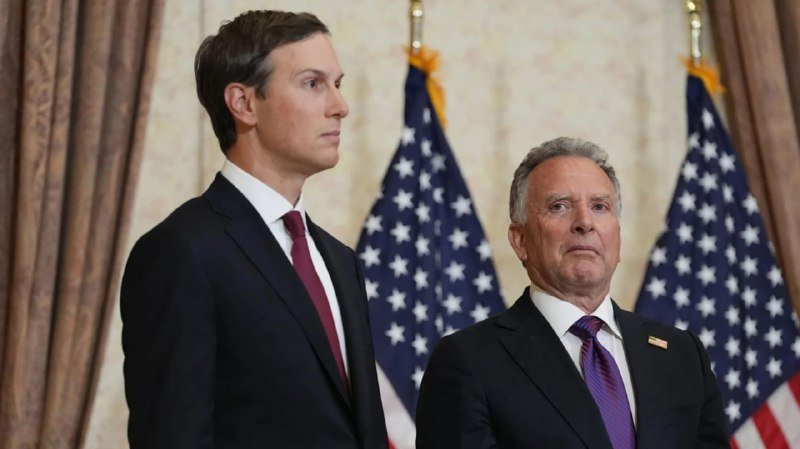
On the afternoon of 30 June 2026, US envoys touched down in Doha carrying no scheduled meeting with an Iranian counterpart. Qatar's foreign ministry spokesman said as much, plainly: no high-level sessions, no direct talks. The Americans are there to talk to the mediators, not the other side. That careful distinction — a non-meeting framed as a meeting-about-a-meeting — is the most accurate snapshot of where US-Iran diplomacy stands at mid-year.
The choreography matters more than the calendar. Washington has invested years in building indirect channels precisely because direct engagement with Tehran carries domestic political costs the administration is unwilling to absorb in an election cycle. Doha, with its long track record of hosting quiet back-channel conversations between adversaries, is doing what it has done for two decades: converting silence between capitals into something a press corps can photograph.
What Qatar actually said
The sourcing is unusually clean. A single, on-the-record statement from the Qatari foreign ministry spokesman — relayed by BBC News at 15:40 UTC on 30 June 2026 — establishes the baseline: high-level meetings between the United States and Iran are not on the schedule. The American delegation is meeting mediators. Whether those mediators also happen to be talking to Tehran in parallel rooms is the kind of operational detail Qatar deliberately does not confirm. The opacity is the point.
Two things follow. First, the absence of a direct sit-down is itself the news. When governments want direct talks, they announce them; when they don't, they announce mediators. Second, the framing tells readers something the wire copy does not — that an arrangement this laboured is unlikely to produce a headline-grabbing breakthrough on this trip, and may instead be designed to manage expectations downward before any future round.
Why Doha, and why now
Qatar hosts the largest US military footprint in the Gulf region and maintains simultaneous working relationships with Tehran and Washington that neither capital replicates with the other. The same geography that made Doha useful for the 2023 indirect exchanges over detainees and frozen assets makes it the default venue when neither side wants the optics of a bilateral. There is no coincidence in the venue choice — only the calculated absence of coincidence elsewhere.
The timing is harder to read. The source material does not specify what triggered this particular round, nor does it name which American envoys are on the ground beyond the generic description of a US delegation. That silence is itself significant: when governments care about personnel as a signal, they name names. When the signalling runs through mediators rather than faces, they don't.
The structural reading
Strip away the diplomatic courtesies and the pattern is a familiar one. Two adversaries with overlapping interests and opposed red lines prefer to manage escalation through small, deniable moves rather than through headline summits. Each side gets to claim forward motion; the public record shows none of the underlying compromise that would be required for a durable arrangement. The mediators absorb the friction.
This is the structural truth underneath most modern great-power negotiations that don't quite happen: the conversation is real, the venue is real, the participants are real — the meeting is not. Doha is hosting the missing meeting, and reporting on its absence is the closest the press can get to the substance. That is a worse outcome than open talks, but it is consistently the one the region gets.
What remains genuinely uncertain
The sources available to this publication do not specify the agenda items the mediators are carrying, nor the identities of the principals involved on either side, nor whether parallel Iranian movement is expected in the coming days. The framing of a non-meeting as a productive diplomatic step is itself contested: critics will read the Doha leg as proof the channel is exhausted, supporters will read it as the careful groundwork a longer process requires. Both readings are plausible. Until a date, a venue, or a principal name appears on the record, readers should treat any confident prediction about the trajectory of US-Iran diplomacy with the scepticism the topic has earned.
Wire provenance
This editorial synthesis draws on the following public wire/social posts:
- https://t.me/BBCWorldoffl/1234
- https://t.me/BBCWorldoffl/1235