Doha's quiet choreography: why the Qatar-mediated US-Iran track is no ordinary back-channel
US envoys are in Doha talking to mediators, not to Iranian officials — and that technicality may be the entire point.
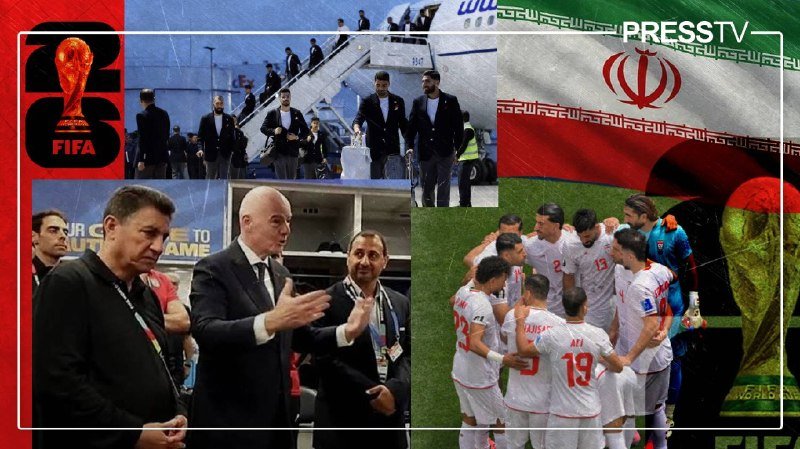
In Doha on 30 June 2026, two stories sat on top of each other and refused to reconcile. Qatar's foreign ministry told reporters that US Special Envoy Steve Witkoff and envoy Jared Kushner had arrived in the Gulf state for talks with Qatari mediators. Within hours, however, Doha qualified the framing: there would be no direct meeting between the American and Iranian delegations — only intermediary contact — a clarification Iran's Fars News bluntly relayed to its audience as "Qatar: Iranians and Americans will not have a direct meeting." The competing versions, read together, describe a diplomatic choreography built precisely to deny the appearance of a direct negotiation while still allowing one to occur.
The substance is bigger than the format. America's two highest-profile Middle East envoys are now sitting in a Gulf capital that has spent the last decade positioning itself as the indispensable third party between Washington and Tehran. Witkoff and Kushner are not career diplomats; they are political appointees whose value to the administration is precisely their proximity to the president and to the Gulf's royal houses. That they are here, and that they are meeting mediators rather than counterpart ministers, is itself the news.
What Doha actually said
The Qatari foreign ministry broke the news in stages. First, around 11:57 UTC on 30 June, the spokesman confirmed that Witkoff and Kushner had travelled to Qatar, would meet Qatari Prime Minister Mohammed bin Jassim, and would use the encounter to discuss mediation on Iran. Within twenty minutes the picture narrowed. The same ministry clarified, per Euronews and corroborated by X dispatches from the ground, that the American delegation would not hold a face-to-face with Iranian officials in Doha. Instead, both sides would communicate "through intermediaries" — a phrase that leaves maximum ambiguity about who those intermediaries are, how messages travel, and what becomes a written commitment.
The Iranian framing landed softer on the substance but harder on the politics. Fars News reported the no-direct-meeting line as a confirmation by Qatari officials themselves. OSINTdefender's monitoring of the foreign ministry's statements emphasised that the contacts were being held "separately" with each side. Read in parallel, the two accounts agree on the procedure — no joint room, no shared table — but diverge on whether that procedure is a euphemism for real talks or for something closer to atmospherics.
Why the intermediary-only format suits the Trump administration
The intermediary track is the diplomatic equivalent of off-the-record sourcing. It produces deliverables without producing optics. For an administration that has spent the year oscillating between threats of force and late-night social posts about Iran's nuclear file, an envoy-driven channel that leaves no signed communique offers two payoffs at once: a venue for genuine bargaining, and a way to walk away from each step if it stops working.
Witkoff's mandate this year has been unusually broad — hostage files, Gaza, Iran — and has produced uneven results. Kushner's involvement signals that the Gulf monarchy track is being elevated rather than surrendered to the State Department. Putting them in a Qatari room with no Iranian counterpart across the table lets the White House claim that diplomacy is "active" while denying Tehran the legitimacy of sitting as an equal. That posture has critics inside Iran as well as outside it; the Fars News line, by repeating Doha's caveat so prominently, signals that Tehran wants Iranian audiences to see this as Qatar failure, not Iranian willingness.
Counter-read: why Doha's caveat may be the whole negotiation
There is an alternative reading worth entertaining. Qatar may be using the "no direct meeting" formulation not to suppress talks but to launder them. A back-channel that is publicly denied is a channel that cannot be held hostage to a hostile headline. Gulf mediation has a long history of this construction — the 2023 Hamas-Israel exchange of hostages and prisoners, multiple Doha-brokered pauses in Sudan — and the format is familiar to Tehran. If the real work is happening through PM Mohammed bin Jassim and his team, then Witkoff and Kushner's presence in Doha is itself a down-payment: American envoys do not fly commercial to Doha to drink coffee with Qatari mediators.
The structural pattern matters. Incumbent powers in a hegemonic transition tend to delegate their hardest deals to small-state intermediaries, precisely because the intermediary can carry proposals both sides would refuse to receive on letterhead. Doha has the credibility with Tehran that Washington now lacks, and the access to the White House that Tehran's own channels do not. In that reading, the "mediator" is not a brake on diplomacy; the mediator is the diplomacy.
Stakes and what remains genuinely uncertain
If the Doha track survives the week, the measurable deliverables are likely to be narrow: a pause on certain nuclear-related activities, a release of detained dual nationals, an extension of technical talks that were already on the IAEA calendar. If it collapses, the failure will also be narrow, and the White House will have preserved the right to deny that a negotiation was ever underway. That dual-use ambiguity is the feature, not the bug.
Several things remain genuinely uncertain. The thread sources do not specify whether Iranian Foreign Minister Abbas Araghchi or any minister-level counterpart is in Doha, nor whether the Iranian side is being represented by its embassy, the United Nations mission in New York, or via Tehran-based principals patched in by secure link. There is no published agenda. There is no read-out from either government beyond the ministry-of-foreign-affairs caveat. And the two sides have not agreed, at least not on the record, on what a successful outcome would look like — which suggests that for now the Doha track is designed to agree on the process before it even tries to agree on substance.
That makes the next forty-eight hours the data point to watch. Any joint statement, any "mediator's read-out," any reference to specific topics — nuclear, hostages, regional — will tell you whether this was a meeting or merely a meeting about whether to meet.
Wire provenance
This editorial synthesis draws on the following public wire/social posts:
- https://t.me/s/osintlive
- https://t.me/s/GeoPWatch
- https://t.me/s/wfwitness
- https://t.me/s/FarsNewsInt
- https://t.me/s/englishabuali