England's right-back depth chart thins further as Quansah and James miss training ahead of DR Congo tie
Two of England's five specialist right-backs sat out training on Tuesday as the squad's pre-existing depth problem in the position crystallised ahead of Wednesday's last-32 tie against DR Congo.
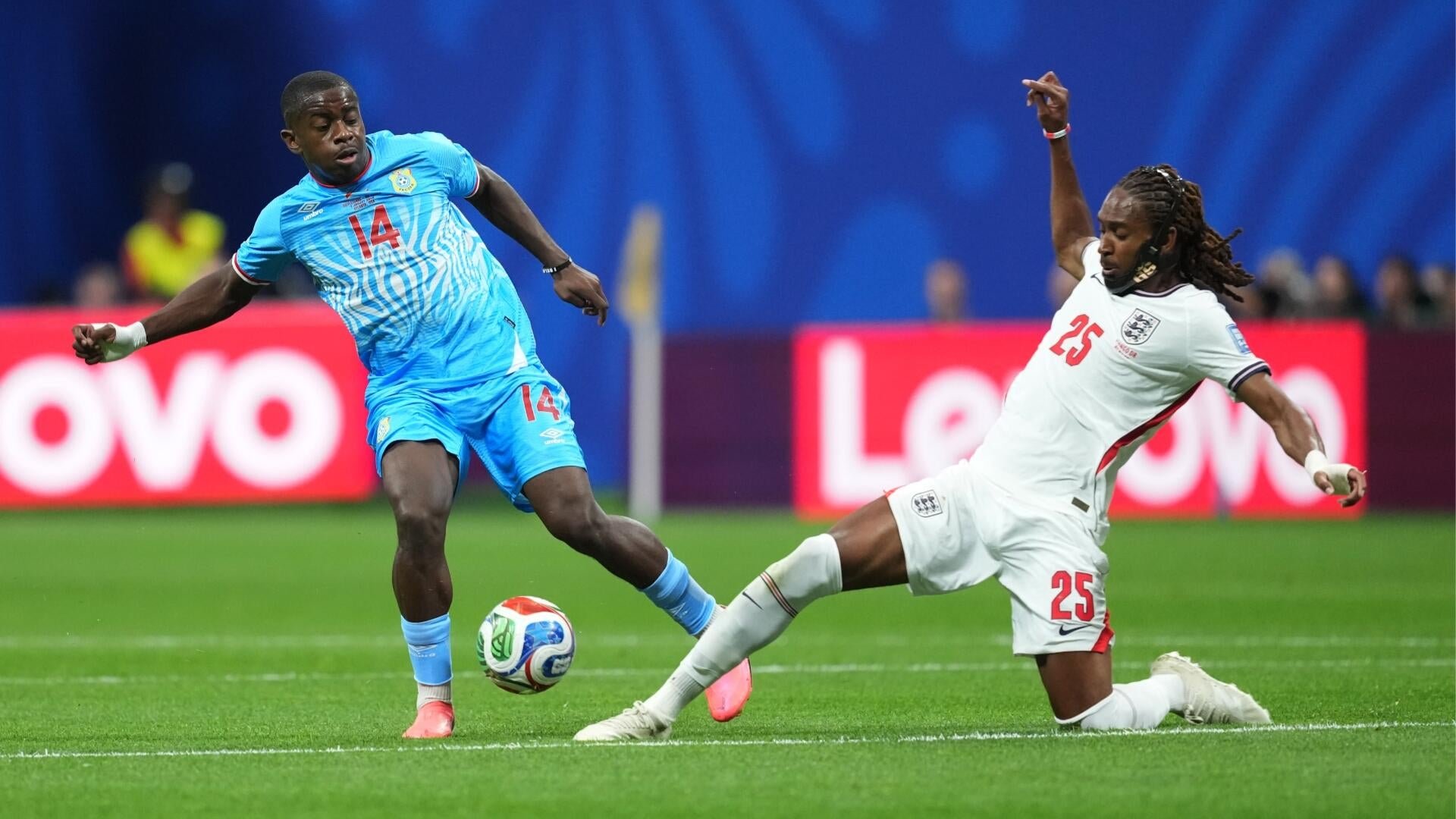
England arrived at the World Cup knockout stage with five specialist right-backs on their roster; on Tuesday morning, two of them could not train. Jarell Quansah and Reece James were absent from the session ahead of Wednesday's round-of-32 tie against DR Congo, according to BBC Sport reporting on 30 June 2026 at 18:52 UTC, deepening what had already been described as a positional headache for head coach Thomas Tuchel.
The absences crystallise a depth problem that has been visible since the squad was named. England, like most top-tier international sides, lean heavily on their full-backs to provide width in possession and cover against wingers out of it. Five named specialists — Quansah, James, and three others publicly identified in pre-tournament coverage — should be enough to absorb a knock or two. The concern is that the attrition is clustering in the same position rather than thinning evenly across the back four.
A position-specific squeeze
At a World Cup, squad balance is tested less by overall numbers than by positional clustering. England's midfield and central-defensive stocks are deep enough that a missing starter rarely becomes a story. At right-back, the math has always been tighter, and the math just got tighter. Tuesday's walk-off was notable less because two players were absent than because both absent players play the same role. With James understood to be one of Tuchel's first-choice options for knockout football — and Quansah, the Bayer Leverkusen defender, viewed as the long-term heir — the contingency plan is now being drafted under live pressure rather than rehearsed in training.
The BBC Sport dispatch on 30 June 2026 does not specify the cause of either absence. Neither the Football Association nor England camp had, as of the report, given a medical update. That silence is itself part of the story at a tournament: an undisclosed training absence at a World Cup is read as either a precaution, a strain, or a tactical reset, and supporters, broadcasters, and bookmakers each project their preferred reading onto the void.
Tactical options already on the table
Tuchel has, since his appointment, framed his England project around a high-possession, full-back-led attacking structure. That system is robust to one injury. It is not obviously robust to two in the same position within 24 hours of a knockout fixture. Should both Quansah and James be ruled out of Wednesday's match, the realistic internal options reduce to three: Kyle Walker, whose pace and defensive instincts remain valued but whose attacking output is more conservative; Trent Alexander-Arnold, whose natural inclination to invert into midfield complicates the right-side balance; and a positional switch, converting a left-back or a right-sided centre-back into emergency cover. None of the three is a like-for-like replacement, and each asks the rest of the back four to recalibrate.
The DR Congo tie also matters for what it implies about the next round. Round-of-32 winners advance into a last-16 matchup that, on the current bracket structure, would likely present a more technically demanding opponent. England would not face a fearsome side simply because Quansah and James are unavailable, but they would face it with a back four assembled mid-tournament rather than one settled across the group stage. That distinction is the kind of detail that decides tight knockout matches.
What the sources do — and don't — establish
Reporting on the eve of a World Cup knockout fixture is, by convention, lighter than reporting on the group stage: less tactical detail, more training-ground observation. The 30 June BBC Sport dispatch falls into that pattern. It documents who was absent, it quotes or paraphrases none of the relevant voices, and it explicitly leaves open the medical status of the players in question. The framing — that England's "right-back issues mount" — is the BBC's editorial characterisation of the situation, not a quotation from Tuchel.
That thinness is worth naming. It would be easy, in a piece like this one, to fill the gap with speculation: which player will start, which tactical adjustment Tuchel favours, what the knockouts will demand. The sources do not yet support that kind of certainty. What can be said is what is observable: two right-backs missed training, the squad was thin in the position to begin with, and a knockout match against DR Congo is 24 hours away. Everything beyond that is the kind of inference the wire has not yet endorsed.
A structural pattern, not an isolated week
The broader context is that right-back has been one of the most attritional positions in modern international football. The demands of the role — high-intensity sprints every few minutes, repeated one-v-one duels, and offensive overlaps against deep defensive blocks — produce soft-tissue strain at elevated rates. Sides built around the position, as England have been under Tuchel, inherit that attritional risk. The same positional architecture that gives the team its attacking thrust also concentrates its injury exposure.
There is no clean managerial answer to that. Squad rotation in the group stage mitigates it; in the knockout stage, rotation is constrained by the fact that defeat ends the tournament. England are not the first international side to confront this trade-off, and they will not be the last. What distinguishes this particular week is that the question has arrived one round earlier than expected, against a dangerous opponent, and that the answer will have to be constructed on the training pitch on Tuesday afternoon rather than carried into the tournament as a settled plan.
What's still uncertain
The central fact — the identity of the two absentees — is reported. The medical status of either player is not. Whether either will be available for selection on Wednesday is unconfirmed. Whether Tuchel will start an experienced-but-different option or hand minutes to a third-choice specialist has not been announced. None of that can responsibly be written as fact on 30 June 2026. What can be written, with confidence, is that England's right-back problem is now visible to viewers at home, and that it will be addressed one way or another on Wednesday evening.
Desk note: Monexus is reporting the medical uncertainty rather than the medical narrative. Wire dispatches of this date rarely close that loop before kickoff, and this piece does not attempt to.