Brussels draws a line: the EU's October clock on China's trade surpluses
The European Commission has set October as the moment of reckoning on China's structural surpluses. Whether Brussels extracts concessions or folds will shape the next phase of the global trade order.
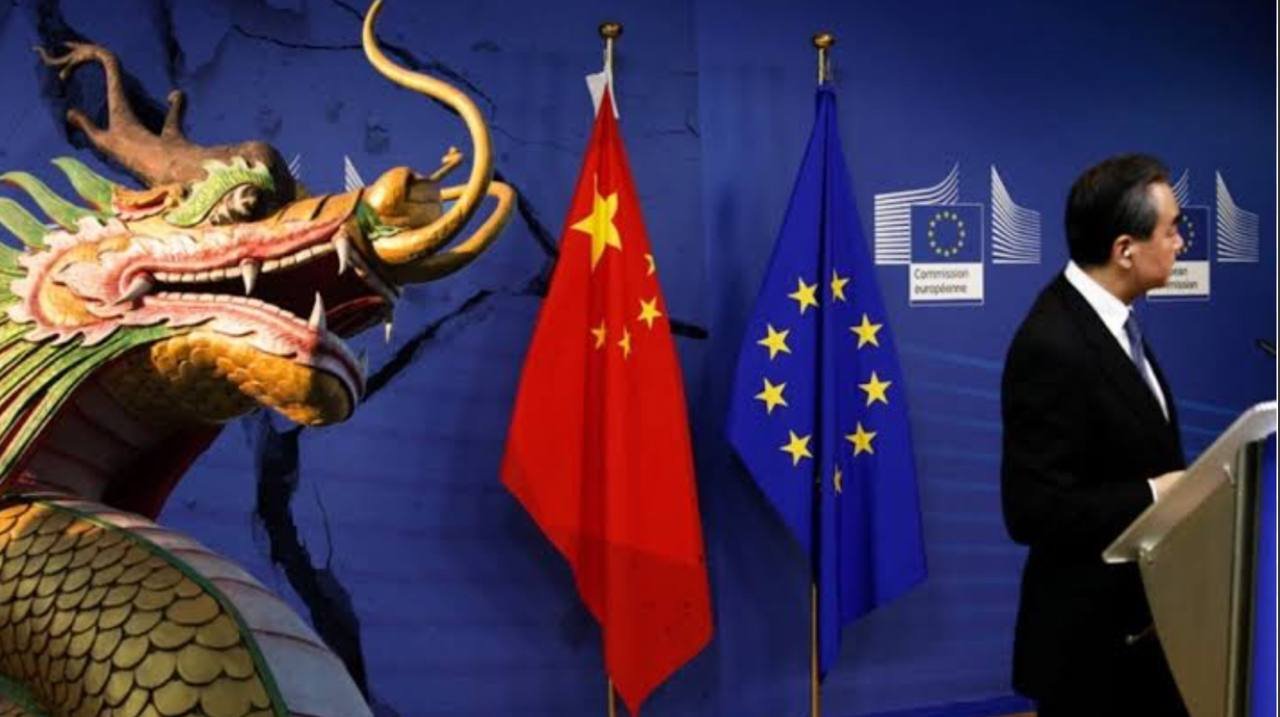
On 29 June 2026, Maroš Šefčovič, the European Union's trade commissioner, walked out of talks in Beijing carrying an unusually crisp instruction: deliver tangible results by October on the imbalances that have defined the EU's economic relationship with China, or face a hardening of Europe's trade defence. The deadline is the clearest signal yet that Brussels is prepared to treat the surplus question not as a matter of routine diplomatic management but as a structural one with a fixed horizon. The South China Morning Post, reporting from the talks on 29 June, framed the demand in language that has become routine in Brussels but is still rare in EU–China communiqués: results, not dialogue.
The trade relationship the EU is trying to recalibrate is no longer the relationship of a decade ago. China is now the EU's largest source of manufactured imports, a status it has held for several years, and the imbalance runs in the opposite direction to almost every other trade flow on the bloc's books. Brussels has spent that time layering instruments — anti-subsidy duties on electric vehicles, probes into medical devices, security reviews of critical infrastructure — and complaining in private that none of it has moved the underlying numbers. October is, in effect, an admission that the layering has run out of road and that something more fundamental is now expected of Beijing. What "tangible results" looks like is left to negotiation, but the framing tells us the Commission intends to walk into the autumn with a checklist, not a request.
A deadline without a definition
What makes the October clock unusual is how little the Commission has said about what would count as success. Reuters reported on 29 June that Šefčovič "wants results on trade talks with China by October," a sentence that fits on a press-release slide but leaves the substance to the parties. That opacity is deliberate. Naming specific deliverables — a numerical commitment on EVs, a binding rule on subsidies, an enforceable schedule for procurement access — would invite Beijing to argue about the numbers in advance of any negotiation and would also lock Brussels into targets it might fail to meet. The looser formulation gives the Commission room to declare victory on partial moves, or to declare failure in a way that justifies the next round of trade-defence measures.
That flexibility is also the deadline's biggest vulnerability. China has spent two decades learning to read Brussels: it knows that an EU deadline is rarely an EU cliff. The bloc's decision-making requires twenty-seven member states, a qualified majority in the Council, and the assent of a Parliament that has, on industrial policy, often been more aggressive than the Commission. The risk for Beijing is not that Šefčovič walks away in October. The risk is that he walks away with a coalition behind him — France, Italy, Poland and the newer eastern flank have all, at different points, called for sharper measures — and uses that coalition to push through measures that have so far been held back by German and northern caution. October is less a date on the calendar than a test of whether Brussels can keep that coalition intact for four more months.
The Chinese counter-position
Beijing has not been passive in the run-up. Chinese officials have framed the imbalance as a function of European demand patterns and the bloc's own macroeconomic choices, not of Chinese industrial policy — a position that has become more pointed as China's domestic consumption has struggled. That framing has a structural kernel: an ageing European consumer base, tight fiscal policy across most member states, and a savings glut inside the eurozone do push the EU toward importing rather than producing. Chinese commentary in outlets aligned with the foreign-policy establishment has also stressed that the European Commission's trade-defence instruments have, in their first eighteen months of operation, hit Chinese exporters hardest in precisely the sectors where China holds genuine technological leadership — electric vehicles, batteries, solar, rail equipment — and that this pattern is no longer consistent with the World Trade Organisation rules both sides claim to honour.
The Chinese position deserves more weight than it usually receives in Western reporting. Beijing's argument that subsidies in the EU and the United States have, at various points, dwarfed the Chinese support now under European investigation is not fringe; it is the explicit basis on which China brought its own cases to the WTO and is also the position that several European industries, including German automakers with plants in China, have made quietly to their own governments. The point is not that the European concerns are wrong. The point is that the concerns are selective, and that Chinese officials are correct to note that selectivity. A serious negotiation in October will require Brussels to acknowledge that selectivity directly. Whether it can do so without losing domestic political cover is the open question.
Why October, and why now
The deadline lands in a global economy that has, by mid-2026, drifted toward fragmentation along lines that were still theoretical three years ago. The United States has, through successive rounds of tariffs and export controls, hardened its position toward Chinese semiconductors and clean-tech goods, and is now openly courting European alignment. The EU has so far resisted alignment on American terms — it has refused to follow Washington into broad tariff regimes and has preferred the slower, more legalistic route of trade-defence instruments — but the pressure to converge is growing. An EU–China deal in October, even a modest one, would give Brussels room to argue that it does not need American-style decoupling because it has its own negotiating leverage. Failure in October would tilt the domestic debate, particularly in Berlin and Paris, toward the more confrontational approach the United States has been pushing.
There is also a Chinese cyclical factor. Reuters and other outlets reported on 29 June that China's economy was showing signs of recovery in June, helped by a rebound in shipments to the United States as exporters raced to clear orders ahead of tariff deadlines. That recovery is fragile: it depends on a US trade environment that is itself unstable, and on domestic demand that has not yet stabilised. Beijing's incentive to make concessions in October is, therefore, asymmetric. If China's exporters are confident about the US market, they have less need to placate Europe. If that confidence wobbles, European leverage rises sharply. The October deadline lands at the precise moment when China's external position is most exposed — which is, presumably, why Brussels chose it.
Stakes and the structural frame
The stakes are not only about specific products. The EU's relationship with China is now the central test case for whether a middle-sized economic bloc can run an autonomous trade policy in a world reordering itself around two larger poles. Brussels has built, over fifteen years, a remarkably dense set of instruments for this: anti-coercion rules, foreign-subsidy regulation, anti-forced-labour due diligence, carbon border adjustments. None of these were designed with China principally in mind, but they have all been used against Chinese exports, and Beijing has noted that pattern. October is the moment when the Commission has to show that the instruments add up to a policy, and not just a collection of tools.
The larger pattern is straightforward. The post-1990s settlement — open markets, just-in-time supply chains, dollar-cleared trade, mutual dependence as a form of insurance — is being replaced, slowly and unevenly, by a world in which blocs manage their interdependence more carefully. The EU is trying to thread a needle: it wants access to Chinese goods and the Chinese market, but it also wants to protect specific industrial sectors that it considers strategically vital, and it wants to do all of this without handing the United States a veto over its choices. October will not settle the question. It will, however, reveal whether the bloc's thread is still intact or whether it has already started to fray.
What remains uncertain
The sources available on 29 June do not specify what concrete measures would satisfy the Commission's demand for "tangible results." They do not name the products or sectors most likely to be at the centre of an autumn deal, and they do not indicate whether Beijing has privately indicated what it would be willing to offer. It is also unclear how far Germany's coalition posture — historically the strongest internal brake on tougher EU action — has shifted. The reporting suggests movement but does not confirm it. What is clear is that the Commission has chosen to convert an ongoing irritant into a deadline, and that, in itself, is a posture. Brussels is gambling that a named date concentrates minds. October will tell us whose.
This publication framed the deadline as a structural test of European trade autonomy rather than a bilateral irritant. The Western wire line tends to read October as a routine summit milestone; the Chinese counter-position treats the imbalance as reciprocal and instrument-driven. Monexus holds that both readings are partial, and that the outcome will turn on coalition cohesion in Brussels rather than on the specifics of any single product line.
Wire provenance
This editorial synthesis draws on the following public wire/social posts:
- http://reut.rs/3RaBfor
- http://reut.rs/3RaBfor