Customs duties, blackouts and a bomb in Rome: three European stress tests for the post-2026 order
On the same June morning, Brussels moved to tax cheap non-EU parcels, Ukraine faced another winter of rolling blackouts, and Italian police arrested four over a bomb aimed at a journalist. The continent's stress points are converging.
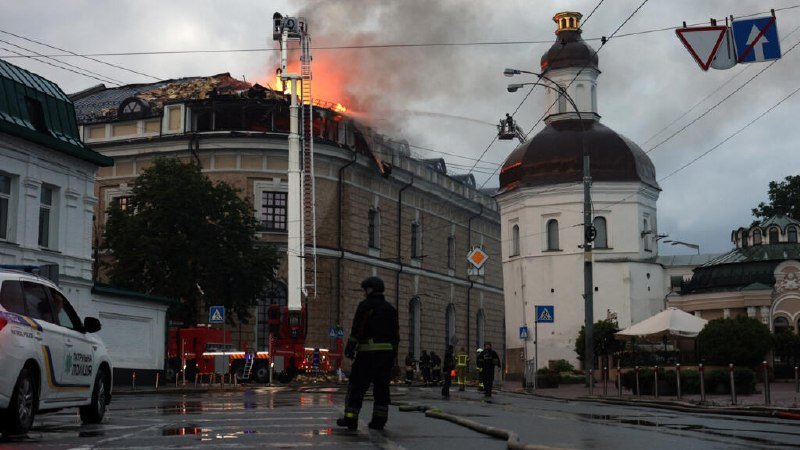
A customs duty, a power-grid warning and a car bomb: on the morning of 30 June 2026, three separate European stories arrived within ninety minutes of each other, and together they sketch a continent that is being asked to do more, with less clarity about who pays.
Read separately, each item is a routine wire note. Read together, they are a small audit of the post-2026 order: the European Union rebuilding its external tariff wall one parcel at a time; Ukraine bracing for a winter of managed darkness as its grid is hit again; and Italy discovering, with four arrests in a single day, that the intimidation of journalists is no longer an abstraction. None of these are the same story. They are the same continent, under three different kinds of strain.
The €3 that changes online shopping
From 1 July, the EU's long-flagged removal of the €150 customs-duty threshold for low-value e-commerce parcels becomes operational in practice, as Corriere della Sera reported on 30 June at 07:45 UTC. The new regime attaches a flat €3 fee to every "mini-parcel" entering the bloc from outside the customs union — the so-called IOSS-light framework — and pairs the charge with extra staffing and bonuses for customs officers to handle a paperwork surge the Commission has been warning about since 2024.
The intent is plain enough. The €150 floor was a 19th-century artefact that, in the age of Shein and Temu, functioned as a structural subsidy to foreign platforms: a way for non-EU sellers to land goods duty-free in European letterboxes while domestic retailers and importers paid full tariffs. Closing the loophole is also a revenue question. Brussels is not hiding that part of the calculation. Italian and other member-state customs agencies have been promised a share of the take, and officers are being offered performance bonuses to clear the expected backlog. There is a logic to this, and it is also a logic that lands as a quiet cost on the consumer.
The counter-narrative is sharper and worth stating without flinching. The same European consumers who have spent three years buying direct from Asian marketplaces because domestic retailers could not match the price are now being asked to absorb a €3-per-parcel charge plus the restoration of full duties above the threshold. Small importers, hobby sellers, and the cross-border Etsy economy will be repriced overnight. Chinese and Turkish e-commerce platforms, which built their European growth around the very loophole now being closed, will either pass the cost through or exit. Brussels is betting the second option is unlikely.
The blackout forecast and what it actually means
At 07:15 UTC, the same Tuesday morning, Ukrainian outlet TSN carried an energy expert's warning of how many hours a day parts of the country can expect to be without power in the coming period — a forecast severe enough that the framing in the headline was that the expert "shocked" listeners. The detail matters less than the pattern: Russia's renewed campaign against Ukraine's energy infrastructure, now in its fourth wartime winter, is again forcing Ukrainians to plan domestic life around the grid rather than the calendar.
The structural point is not that one expert gave one gloomy forecast. It is that Ukraine has been running on imported transformers, mobile gas-turbine plants and rolling emergency shutdowns for so long that the country's civilian experience of electricity has become a casualty figure in its own right. Industrial policy in wartime is partly a story about substations. Every hour of forecast darkness is also an hour in which Ukrainian GDP does not get made, in which a steelworks does not get electrified, in which a household is rationing between a kettle and a router.
There is a counter-read worth airing: every prior Russian campaign against the grid has been met with an EU emergency synchronisation push, a Ukrainian improvised-import programme, and a Western air-defence surge around thermal plants. The forecasts of darkness have, in past winters, been partially averted. Sceptics of the alarm say Ukrainian authorities have an interest in keeping the worst-case number in front of European publics so that military aid does not slip. That is a plausible motive. It is also not a sufficient reason to dismiss the underlying physical reality, which is that the same grid gets hit harder each year and the lead-time on replacement equipment is measured in quarters, not weeks.
The bomb, the commando, and the press
The third thread, at 06:20 UTC the same morning, was the most domestic of the three but the most internationally legible: Italian police arrested four suspects over a car-bomb attack on Sigfrido Ranucci, a journalist known for investigations into organised crime and the far right. Corriere della Sera reported the arrests and the working assumption that the commando "acted on commission" — a phrase that, in the Italian judicial vernacular, points away from amateur politics and toward someone who paid.
Press-freedom watchdogs will rightly read this as a stress test of a different kind. Ranucci is not a marginal figure; he is a household name in Italian public-service journalism, and the fact that a car bomb reached his vehicle says something specific about who, in 2026, feels emboldened to escalate against an investigative reporter. The arrests demonstrate that the Italian state can, when it chooses, move fast. They do not explain why the threat reached the point of a detonation in the first place.
The structural frame here is uncomfortable and deserves to be made explicit. Across the EU, journalists investigating organised crime, extremist networks, and the security services themselves are reporting a thicker climate of intimidation — online harassment, surveillance, and the occasional physical attack. The Italian case is dramatic, but it sits inside a European pattern in which the cost of investigative reporting has been rising just as the funding model for the journalism that does it has been collapsing. That is not a coincidence. It is a market telling the people who would threaten reporters that the institutions those reporters rely on are weaker than they were ten years ago.
What this publication reads in the morning
Three stories, ninety minutes, one continent. A customs regime rewriting itself in the face of a global e-commerce rebalancing; a wartime grid being asked to absorb another winter of strikes; a journalist surviving a bomb that, in a healthier democracy, would have been unimaginable. None of these stories is decisive on its own. Taken together, they suggest the post-2026 European project is being stress-tested along three different fault lines at once — fiscal sovereignty, physical security of civilians, and the integrity of the public sphere. The interesting question is not whether the EU can survive any one of them. It is whether the political bandwidth exists to handle all three in the same news cycle. That bandwidth is finite. It is also, at the moment, the only currency that matters.
This piece is published as part of Monexus's opinion desk. It draws on Italian and Ukrainian wire reporting from the morning of 30 June 2026 and is intended to read those threads in parallel rather than to break new ground on any single one.
Wire provenance
This editorial synthesis draws on the following public wire/social posts:
- https://t.me/CorriereDellaSera
- https://t.me/TSN_ua
- https://t.me/CorriereDellaSera