Tehran claims the blockade is over. The wording matters more than the celebration.
Iran's parliament speaker insists the US naval blockade is finished and Hormuz transit is free for 60 days. The fine print — and the incidents still happening in the Gulf — tell a more unsettled story.
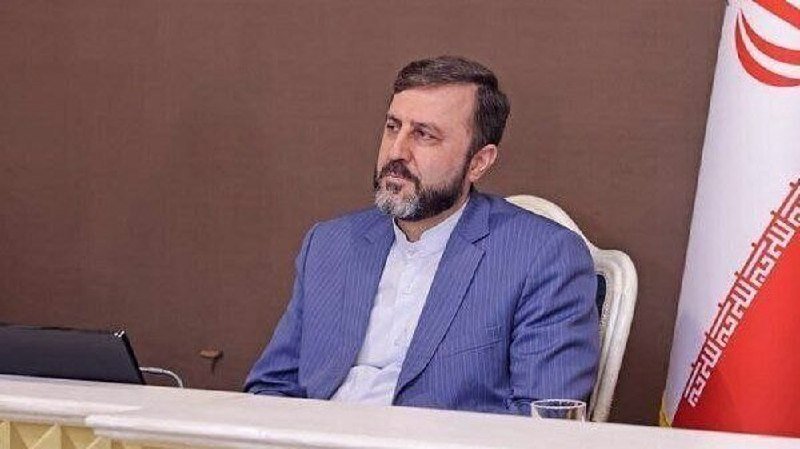
At roughly 19:25 UTC on 30 June 2026, Iranian Parliament Speaker Mohammad Bagher Ghalibaf told reporters in Tehran that the United States and Iran were no longer negotiating. Talks, he said, had concluded at the moment the memorandum was signed — and any contact since was operational, not diplomatic. The line landed as the centerpiece of a longer set of statements from the speaker about a deal that is being marketed, very differently, in Washington and in Tehran.
What the Iranian side is actually claiming deserves a careful read. Ghalibaf framed the memorandum as a victory on three measurable fronts: the end of the US naval blockade under what he called Clause 4, cost-free passage through the Strait of Hormuz for a 60-day window to clear ships already in the area, and a guarantee structure resting on Iranian power rather than on any UN Security Council resolution. The framing matters because each of those three claims is also a contested claim — and the incidents the speaker himself flagged in the Gulf suggest the implementation phase is anything but settled.
What the speaker said, and what the words actually do
Strip the rhetoric and the substantive Iranian position narrows to three engineering problems dressed up as political wins. First, the blockade: Ghalibaf asserted that the US naval blockade "has now fully ended under Clause 4 of the memorandum" and attributed the reversal to battlefield leverage. Second, the strait: he said the memorandum grants cost-free Hormuz passage for 60 days, framed as a humanitarian carve-out for vessels already in the theatre. Third, the guarantor: he argued that the deal's binding force comes from Iranian capability, not from a UNSC resolution — an unusual formulation that pre-empts any future Russian or Chinese push for a formal Chapter VII envelope, and that ties Tehran's compliance record to its own deterrent posture rather than to any external arbiter.
That third claim is the most politically loaded. By locating the guarantee in Iranian power, Ghalibaf is simultaneously asserting that the deal cannot be enforced against Iran and that any future US walk-back would carry a kinetic cost. It is the kind of formulation that reads as confident in Farsi and reads as threat-credentialing in English.
The incidents the speaker had to acknowledge
A deal this grand would not need caveats. Ghalibaf offered two. He said recent incidents in the Persian Gulf "violate the ceasefire" and warned that Iran is ready for war if talks fail. He also conceded, in a separate remark carried by Press TV at 19:35 UTC, that "it was certain that some problems would arise during the implementation of the MoU." The pairing is the giveaway: implementation is acknowledged to be bumpy, even by the deal's loudest Iranian salesman, while the political narrative around it is sold as complete.
This is the part that should embarrass the triumphalist framing on either side. If the memorandum genuinely ended a blockade, Iranian state media would not need to remind its audience, on the same day, that Iran is ready for war and that the Gulf has just seen ceasefire-violating incidents. Either the architecture is settled, or it is not. The Iranian messaging operation is trying to occupy both positions at once, which is exactly the posture of a leadership that needs the domestic politics of victory and the strategic reality of unresolved friction.
Counter-read: why the Iranian framing is also the right framing
There is a defensible case that the Iranian version is closer to the substance than the Western wire line. A 60-day Hormuz transit window is a real concession that the US would not have offered a year ago. A formal Clause 4 termination of the blockade, if it exists in the text, is the kind of specific deliverable that the Iranian negotiating team can take back to the Majles. And a guarantee framework rooted in Iranian capability rather than in multilateral process is consistent with how Tehran has talked about its security for four decades.
The structural context also cuts Tehran's way. Iran spent the run-up to this memorandum absorbing strikes, sustaining losses, and still holding the strait as a chokepoint. A deal in which the US quietly winds down the naval blockade in exchange for nominal de-escalation is, in material terms, what coercive bargaining looks like when the coerced party has real teeth. The Iranian side is not wrong to read it that way — and Western analysts who default to the "Iran folded" story should be pressed on what specifically Iran conceded that it had not conceded two months earlier.
The reading that does not survive the evidence
What does not survive is the clean-win story in either direction. The "blockade is over" headline depends on Clause 4 meaning what Ghalibaf says it means, and on the incidents in the Gulf not metastasising into a casus belli. The "Iran caved" headline depends on ignoring the Hormuz concession and the guarantee structure. Both narratives are doing political work for domestic audiences; neither is a sober description of the document and its implementation phase.
The honest read sits in an uncomfortable middle. The memorandum is real, the blockade easing is real, the Hormuz window is real. So is the ceasefire fragility, so is the Iranian warning of readiness for war, so is the speaker's own admission that implementation problems are certain. The next sixty days will resolve whether this is a structured de-escalation or a pause between rounds. Until then, anyone telling readers the file is closed is selling certainty the document does not contain.
Monexus frames this against the Iranian state-media readout rather than the Western wire summary, on the working assumption that the specific textual claims — Clause 4, the 60-day window, the self-guarantee — are easier to verify in the source the speaker himself is speaking to.
Wire provenance
This editorial synthesis draws on the following public wire/social posts:
- https://t.me/wfwitness
- https://t.me/wfwitness
- https://t.me/presstv
- https://t.me/wfwitness
- https://t.me/wfwitness
- https://t.me/wfwitness