Tehran's negotiating table is a bargaining position, not a confidence
Iran's parliamentary speaker told the world the talks with Washington are talks with an enemy. That framing — adversarial, transactional, public — is itself the negotiating posture, not a slip from it.
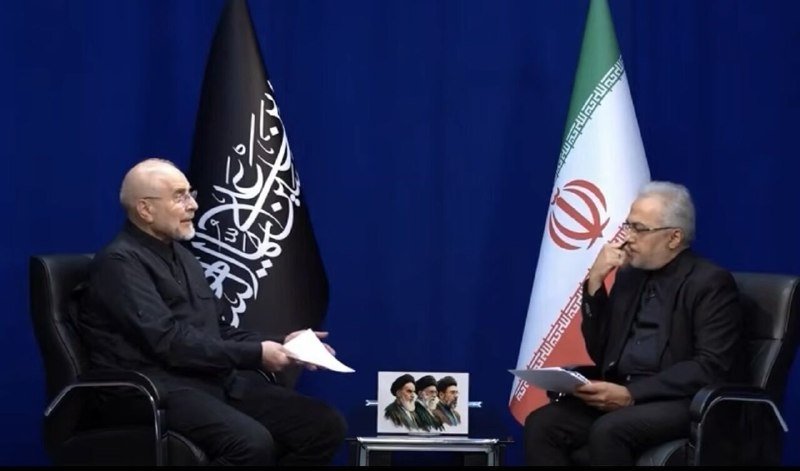
On 30 June 2026, Iran's Speaker of Parliament, Mohammad Bagher Ghalibaf, used a public appearance to remind every diplomat, trader and editorial board watching the livewire that the Republic does not regard its current interlocutor as a partner. "Even now that we are negotiating with America, we are not negotiating with a friend," Ghalibaf said in remarks carried by Press TV and aggregated by Open Source Intel and ClashReport on Telegram. "We are negotiating with an untrustworthy enemy who will definitely take action against us whenever the opportunity arises." He framed the present round as a third "imposed war" — in Tehran's preferred lexicon, full-fledged aggression rather than a policy dispute.
That sentence is not an outburst. It is the negotiating posture, broadcast.
Theatre, then substance
The obvious read is that Ghalibaf is signalling to a domestic audience that will never forgive concessions made in good faith to Washington, and to a regional audience that needs to hear the Islamic Republic still distrusts the United States even while it talks. Both readings are correct, and both are tactical. Iranian negotiators are not new to the choreography: signals aimed inward and signals aimed outward, sometimes within the same sentence, sometimes within the same press conference. The speaker's job is to make sure the bargaining party does not look, at home, like a surrendering one.
The less obvious read is that Ghalibaf is also signalling to Washington. Publicly. The line "enemy who will definitely take action whenever the opportunity arises" is a calibrated warning: any administration that treats the present talks as a cover for an Israeli- or Saudi-encouraged strike campaign will be answering to a parliamentary speaker who has already put the threat on the record. It is also a binding constraint. Once Iran's most senior elected official has named the United States an "untrustworthy enemy" on camera, no Iranian negotiator can sign a document without that framing attached. The terms of any agreement will carry Ghalibaf's adjectives inside them.
What "imposed war" actually means in Tehran
Iranian officials use "imposed war" to describe an external coercion campaign that stops short of a kinetic declaration but is treated as continuous hostilities — sanctions architecture, assassinations of nuclear scientists, cyber operations against infrastructure, the long sabotage record against centrifuges and tankers, and the periodic exchange of fire through proxies. The phrase is also a deliberate refusal to cede the legal high ground. By calling the present moment the third such episode, Ghalibaf places current US-Iran diplomacy inside a longer Iranian narrative: negotiation under duress is a defensive act, and any framework that emerges from it inherits that posture.
That framing has consequences for the actual text a future deal could carry. Sanctions sequencing, escrow arrangements for any enriched-material stockpile, the question of who verifies what, the question of how long snapback provisions last — all of these are technical items that become politically charged once the speaker of parliament has declared the counterparty an enemy. Verification, in particular, is where the language of "untrustworthy" bites hardest: no Iranian faction, however pragmatic, can accept intrusive inspections without a story ready for the public that explains why the enemy was trusted just enough to enter the room.
The adversary is not only in the room
Ghalibaf's remarks also reach a third audience that rarely gets named in Western wire copy: the Iranian military and security establishment that would carry out — or refuse to carry out — any deal the diplomats bring back. The Islamic Republic's negotiating teams have historically been trapped between two veto players: a Supreme National Security Council with hardline civilians, and a regular military-revolutionary guard constellation that does not want to be the institution that gave the enrichment programme away. The speaker's public framing reassures that second audience in advance. It also pre-positions blame. If talks collapse, the parliamentary record already says the counterparty was untrustworthy. If a deal is signed, the speaker's speech becomes the cover story that allows the security services to accept what was negotiated.
Stakes, and what remains unverified
If the trajectory holds, both sides will continue to talk while publicly treating each other as adversaries. That is not a contradiction in Tehran's strategic culture; it is the operating model. The Western wire framing tends to treat the rhetoric as noise around a real negotiation, and the Iranian framing tends to treat the negotiation as the noise around a real hostility. Both framings are right about their own side and wrong about the other, which is why each round of talks produces an unusually high volume of signal and a comparatively small volume of confirmed substance.
What remains genuinely uncertain — and what none of the public reporting on the 30 June statements resolves — is whether the present round has a defined deliverable at all. The sources do not specify the agenda, the venue, the level of the principals, or whether the talks are direct, indirect, or proceeding through Omani or Qatari intermediaries. The dollar figures, sanctions packages, and verification protocols that would let an outside reader judge the distance between the two positions are not in the public record. Until they are, every statement from either capital is best read as positioning rather than progress — and Ghalibaf, by design, has just done a great deal of positioning in a single sentence.
This article situates Iranian negotiating rhetoric inside the structural pattern Tehran has used across multiple rounds of US-Iran diplomacy: public adversarial framing as the price of domestic legitimacy, with the actual terms left to closed channels. Monexus will update when primary-source documentation of the present round's agenda becomes available.
Wire provenance
This editorial synthesis draws on the following public wire/social posts:
- https://t.me/presstv
- https://t.me/osintlive
- https://t.me/ClashReport