Two Crises, One Week: Wildfires and Earthquakes Test Government Credibility in Southern Europe and Latin America
A deadly blaze near Thessaloniki and twin earthquakes in Venezuela have exposed familiar fault lines in state capacity — and familiar fault lines in how Western wires frame them.
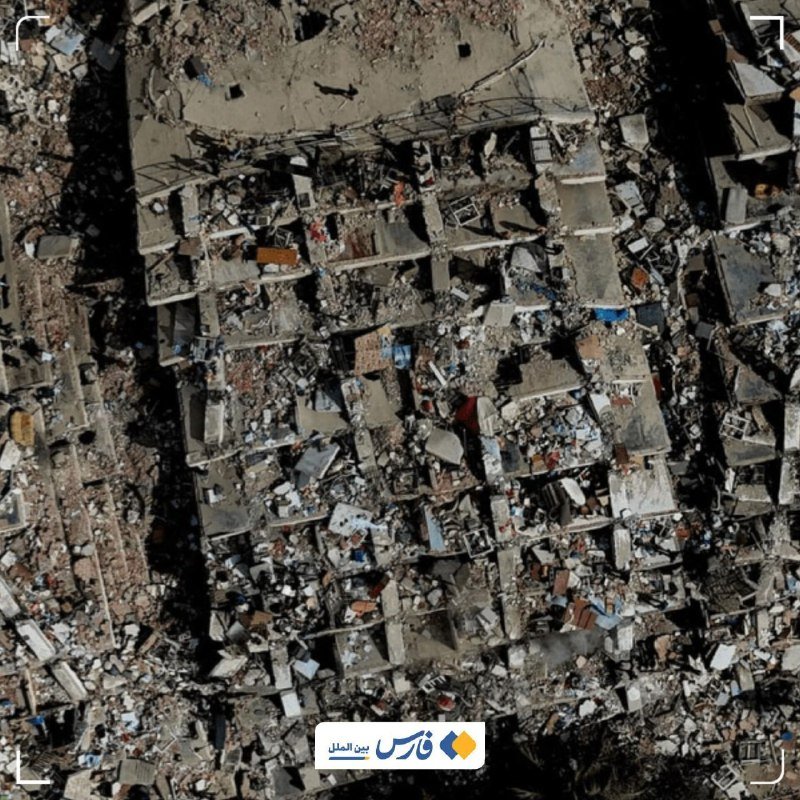
On 30 June 2026, two separate disasters, half a world apart, put a familiar question to two governments: can the state still do the one thing its citizens most expect of it? In northern Greece, more than 100 firefighters were deployed to contain a wildfire near Thessaloniki that has already claimed one life, according to the BBC World Service. In Venezuela, residents in areas devastated by twin earthquakes have publicly accused the government of neglecting them, the BBC reported the same day. The two stories are not connected. The pattern is.
Disasters are stress tests for legitimacy. They are also stress tests for the press, which tends to cover rich-country disasters as engineering problems and poor-country disasters as governance problems. Both stories this week deserve more care than that.
Greece: a country built for fire, still racing the wind
The blaze near Greece's second city is the latest episode in what has become an annual rite of Mediterranean summers. The BBC's reporting is spare on detail: the death, the scale of the deployment, the location. But the broader context, of an EU member state with world-class civil protection capacity now operating at the limits of that capacity every July, is the more important frame. Southern European states have spent two decades building wildfire doctrine borrowed from California and Australia. They have spent far longer watching those doctrines be outpaced by hotter, drier fire seasons linked to a warming climate.
A critical reading of the wire coverage is warranted. When a Greek wildfire kills one person, the headline is about firefighters and weather. When a Venezuelan earthquake levels a town, the headline drifts toward governance. Both framings are partial truths. The Mediterranean story deserves its own structural attention — the question of how an advanced economy plans to keep paying for repeated catastrophe response in a climate that is steadily making the baseline worse.
Venezuela: the political economy of relief
The Venezuelan earthquakes sit inside a different structural frame. The BBC's reporting, drawing on local accounts, foregrounds anger at the state. That anger is the story on the ground, and it would be condescending to dismiss it. But the same skepticism that journalists apply to Caracas should also be applied to the assumption that only state capacity, of the kind measured by Western institutions, can deliver relief. Venezuela has a long history of community-led disaster response, of neighbourhood committees and local organisations stepping in where central authority has hollowed out. The reporting on this disaster should not pretend those networks do not exist, even as it documents their limits.
There is also the matter of how sanctions, an under-covered structural variable in Venezuelan coverage, interact with the state's ability to import equipment, move fuel, and coordinate logistics during a seismic event. The wire services rarely name this directly. Monexus will.
What the framing gets wrong
Two assumptions recur in international disaster coverage and deserve to be named. First, that a state's failure to respond in the first 72 hours is proof of incapacity, when in most jurisdictions — rich and poor — the first 72 hours are chaos. Second, that the appropriate comparator for a Caracas relief effort is Caracas in 2005, or Caracas under some imagined well-governed baseline, rather than Mexico City in 2017 or Marrakesh in 2023, where coordination problems were also acute in the immediate aftermath.
The honest read: Greece has the institutional depth to absorb a deadly wildfire season and rebuild. Venezuela has the institutional depth to mount a major relief operation, but operates under compound pressures — economic crisis, external financial isolation, political polarisation — that make every disaster a referendum on the entire system. Both stories are about competence. Only one is treated as such.
The stakes
The stakes in Greece are budgetary and climatic. The Mediterranean wildfire budget is rising, and the question of who pays — national treasuries, EU Solidarity Fund, private insurance markets that are quietly retreating from high-risk zones — is the live policy fight. The stakes in Venezuela are more elemental. People in earthquake-affected areas need water, shelter, and medical attention now. The political anger documented by the BBC is downstream of that material fact, not a substitute for it.
What remains uncertain in both cases is the trajectory. The Greek fire season runs through October, and the operational picture will worsen before it improves. The Venezuelan government will face a longer test: whether the visible failures of the first week harden into a structural critique, or get absorbed into the country's longer-running political crisis. The press will cover both outcomes. The question is whether it covers them with the same analytical seriousness.
Monexus frames both stories this week as state-capacity tests rather than as morality tales about who governs well — and treats Western wire framings of the Venezuelan response with the same skepticism the same wires apply to Caracas in other contexts.
Wire provenance
This editorial synthesis draws on the following public wire/social posts:
- https://t.me/BBCWorldoffl
- https://t.me/BBCWorldoffl