Naphtha pipeline fire at Haldia Petrochemicals injures 30 as cause remains under investigation
A naphtha pipeline leak triggered a fast-moving blaze at the Haldia Petrochemicals complex in West Bengal on 30 June 2026, leaving at least 30 workers injured and the cause under investigation.
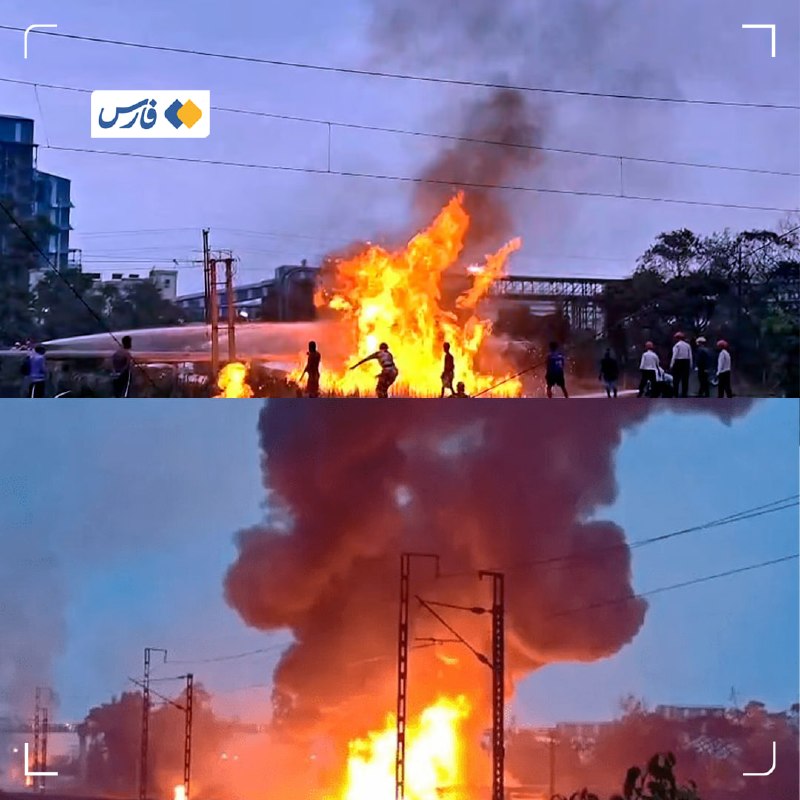
A leak from a naphtha pipeline at the Haldia Petrochemicals complex in West Bengal ignited on the morning of 30 June 2026, sending a column of thick black smoke over the site and sending at least 30 workers to hospital, according to The Indian Express. Tasnim, the Iranian state news agency, reported that the blaze spread quickly after the leak, while Fars attributed dozens of injuries to the incident without yet naming a cause. As of midday UTC, no fatalities had been confirmed in the reporting available to Monexus, though the condition of several of the injured was described as serious in initial accounts.
The fire lands at a moment of unusually close scrutiny of India's downstream-petrochemical safety record. Haldia Petrochemicals is one of the larger private-sector operators in eastern India, supplying polymer and chemicals feedstock to manufacturers across West Bengal and beyond. A pipeline failure at a single node can ripple into polymer and packaging supply within days, even before any official findings on cause are released.
What the initial reporting shows
The Indian Express dispatch, relayed via Telegram at 06:52 UTC on 30 June 2026, is the most detailed account in the thread. It places the fire at the Haldia Petrochemicals plant in West Bengal, ties it to a naphtha pipeline, and puts the injury count at 30. Naphtha is a volatile fraction of crude oil used as feedstock for crackers and as a blending component in motor gasoline; pipeline failures of this kind typically involve either mechanical failure at a joint, corrosion, or over-pressurisation, though the source material does not specify which.
The Iranian state-affiliated outlets Tasnim and Fars carried the same story within minutes of each other. Tasnim's framing — a "massive fire" following a "naphtha leak from a pipeline" with "thick black smoke" — tracks the Indian press line. Fars added an editorial gloss, describing the facility as an "Indian-American refinery" and emphasising the unknown cause. That characterisation is overstated: Haldia Petrochemicals is an Indian-promoter-led private operator with foreign portfolio investors; it is not a U.S.-run refinery in any conventional sense. The framing illustrates how the same underlying event can be packaged differently for different audiences.
The sources do not specify whether the affected pipeline segment was inside a process unit, in the tank-farm area, or on a cross-country right-of-way. They also do not name the emergency services response or whether the blaze had been fully contained at the time of reporting.
Counter-narrative and information gaps
Three things remain genuinely unsettled in the reporting available. First, the cause: every source notes the fire began after a naphtha leak, but none of the three items identifies whether the leak originated at a flange, a valve, a pump station, or a corroded section of pipe. Until a plant incident report or a regulator statement is published, speculation on cause is premature.
Second, the casualty picture. The Indian Express figure of 30 injured is consistent with Tasnim's "dozens" but more specific; Fars refers to "some" of the injured being in serious condition without giving a number. Whether any worker is unaccounted for, whether first responders were among the injured, and whether the 30 figure includes only on-site personnel or contractors and nearby residents, are all open questions. In past Indian industrial fires, initial tolls have risen after delayed admissions.
Third, the framing on ownership. The "Indian-American" tag in the Fars report does not match the public corporate profile of Haldia Petrochemicals, which has historically been associated with Indian promoters and a mix of domestic and foreign institutional shareholders. Readers should treat the geopolitical colouring of that descriptor as a feature of how the story is being marketed to Fars's audience, not as a structural fact about the operator.
Structural frame: a familiar fault-line
India's petrochemical build-out has been one of the quieter successes of the country's industrial-policy era. Capacity has grown, downstream polymer chains have deepened, and eastern India — long a laggard relative to Gujarat and Maharashtra — has seen meaningful investment centred on the Haldia–Kolkata corridor. The trade-off has been recurring safety incidents at ageing units, particularly in older private complexes that expanded in stages through the 1990s and 2000s.
This sits inside a wider pattern in which large industrial operators in the Global South carry out technically demanding processes with infrastructure that has not always been refreshed on a fixed cycle. Comparable naphtha and cracker incidents have occurred at older Asian and Middle Eastern complexes in recent years; the underlying issue is rarely exotic chemistry and more often a corroded fitting, a missed inspection interval, or a procedural shortcut under throughput pressure. Without an official finding, this incident cannot be slotted into any one of those categories, but the pattern is worth naming.
Stakes and what to watch
In the immediate term, the operational question is whether the fire forces a multi-week shutdown of the cracker or specific pipeline sections, and whether any force majeure declarations follow for polymer and downstream customers. West Bengal's industrial economy is exposed to Haldia feedstock on a short leash; a sustained outage would be felt in packaging, bottling, and synthetic-textile chains further inland.
Over a longer horizon, the incident will draw scrutiny from India's factory inspectorate and from state-level environmental regulators. Whether it produces a publicly released root-cause analysis or is closed out internally will itself be informative. India's industrial-safety record has improved in some sectors and lagged in others; petrochemical complexes, where the consequences of failure are severe, sit in the second category.
The sources available to Monexus at publication do not address cause, containment status beyond the early hours, or the full casualty ledger. Any of those three could change the framing of this incident materially; readers should treat the present picture as a snapshot, not a finding.
Desk note: Monexus carries the Indian-press injury count in its strongest form, flags the Iranian-state framing of the operator as inaccurate, and treats the cause as genuinely unknown rather than reaching for an explanation the sources do not support.
Wire provenance
This editorial synthesis draws on the following public wire/social posts:
- https://en.wikipedia.org/wiki/Haldia_Petrochemicals
- https://en.wikipedia.org/wiki/Naphtha
- https://en.wikipedia.org/wiki/Petrochemical_industry_in_India