IMO holds traffic in the Strait of Hormuz hostage to Tehran's permission
The UN shipping body's secretary general has publicly said traffic in the Strait of Hormuz cannot resume without Iran's say-so — a remarkable concession that turns a global chokepoint into a bilateral lever Tehran can pull on demand.
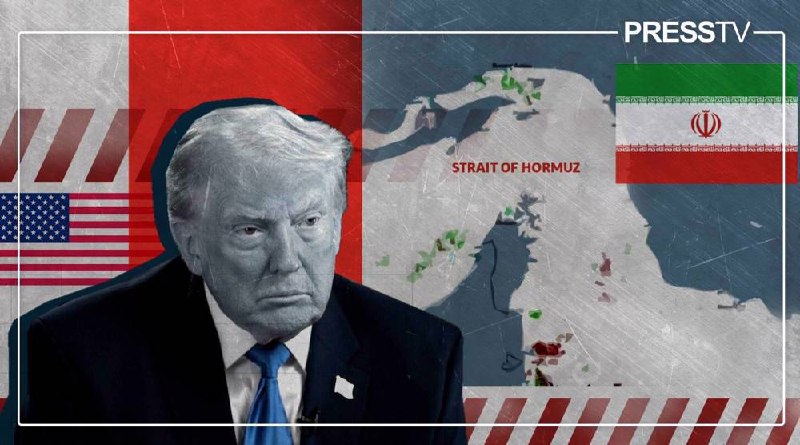
The head of the International Maritime Organization, the United Nations body that regulates global shipping, told Al Jazeera on 30 June 2026 that the organisation is "waiting for Iran's permission" before vessels caught in the Strait of Hormuz can be cleared and traffic through the corridor can resume, according to Iran's Tasnim news agency and the state-linked Mehr News wire. The remark, delivered by IMO Secretary General Arsenio Dominguez in an interview with the Qatari broadcaster, makes explicit what until now has been an unspoken premise of the Hormuz crisis: that the world's busiest oil chokepoint is, in operational terms, a piece of Iranian sovereign territory first and a piece of global commons second.
For three weeks, Iranian naval and Revolutionary Guard units have held commercial traffic in and around the strait under varying degrees of duress. Tankers have been intercepted, ordered to divert, or simply slowed to a crawl by boarding operations and electronic interference. Until 30 June, the framing in Western shipping coverage was that the disruption was a consequence of the wider confrontation between Tehran and Washington — a problem the industry, the US Fifth Fleet, and Gulf-state coastguards could muddle through. The IMO Secretary General's own words, transmitted by Iranian state-aligned media, puncture that framing. He is not describing a contested transit regime; he is describing a queue, and he is naming Iran as the gatekeeper.
What the Secretary General actually said
According to the two Iranian state-affiliated outlets that carried the interview — Tasnim and Mehr News, both publishing in English within hours of the Al Jazeera broadcast — Dominguez framed the situation in unusually direct terms: traffic cannot resume until Iran says so. The remark is striking less for its diplomatic content than for its institutional one. The IMO is the UN specialised agency charged with ensuring "safe, secure and efficient shipping on cleaner oceans." It does not normally take orders from individual member states, and its secretary general does not normally appear on regional broadcasters to request permission from one government on behalf of the rest of the world's merchant fleet. That he has done so here suggests either that the disruption is severe enough that the standard protocols have collapsed, or that the diplomatic price of naming Iran as the holdup has been judged worth paying in order to shift the political burden onto Tehran.
The two Iranian wire services carried the line in slightly different forms. Tasnim's English channel headlined the story "We are waiting for Iran's permission to resume traffic in Hormuz"; Mehr News used "We are waiting for Iran's permission to remove the ships from the Strait of Hormuz." Both are clearly drawn from the same Al Jazeera clip, but the framing difference is worth noting. Mehr's version emphasises the practical — getting the existing backlog of vessels out — while Tasnim's version emphasises the political: the resumption of traffic itself. Read together, they describe a situation in which Tehran is simultaneously being asked to (a) allow the current fleet to depart, and (b) authorise the corridor to reopen for new transits. Neither is currently happening.
The counter-narrative from Tehran
Iranian state media have spent the past three weeks insisting, in parallel, that the strait remains "open" and that any disruption is the fault of US naval deployments, Israeli submarine activity, and what Iranian outlets describe as Western provocations in the Persian Gulf. That line and the IMO Secretary General's interview cannot both be true in any operational sense. Either commercial traffic is moving freely under international rules — in which case there is nothing for Iran to "permit" — or it is not, in which case Iranian forces are the proximate cause of the standstill regardless of who else is sailing in adjacent waters.
The tension between those two stories is itself a piece of the story. Tehran wants to retain the option of denying transit to specific flag states or specific cargoes while preserving the broader claim that the strait is open to neutral commerce. A public statement from the IMO's most senior official acknowledging that the corridor's reopening is contingent on Iranian consent cuts directly against that strategy. It converts a denial-of-service capability into a publicly priced political instrument. From this point forward, every day the strait remains choked is a day the world has on the record that Iran is the chokeholder.
What this means for the global energy balance
The Strait of Hormuz carries roughly a fifth of seaborne oil trade and a comparable share of LNG. The exact share of transit currently affected is not specified in the source material; the IMO Secretary General's own framing implies a substantial proportion of commercial movements, since he is asking on behalf of the broader fleet rather than for a single stranded vessel. Earlier in 2026, Brent and regional crude benchmarks had already priced in a meaningful Hormuz risk premium; the IMO statement, by making the political condition for reopening explicit, is likely to harden that premium rather than relieve it.
The structural point is that the global energy system has, for decades, treated Hormuz transit as a free good — something the international community guarantees in exchange for nothing more than the cost of keeping the lanes charted and the buoys lit. The IMO statement is the first time a senior UN official has publicly attached a permission condition to that guarantee from a non-Western capital. Even if the immediate crisis is resolved in the coming weeks, the precedent will outlast it. The next time a Gulf confrontation tightens, the question shipping insurers and charterers will ask is not whether the US Fifth Fleet can guarantee safe passage, but whether the IMO has the standing to negotiate a transit deal with Iran in the first place.
What remains uncertain
Several things are not yet visible in the public record. The IMO has not, as of the Al Jazeera interview, published a formal statement on its own letterhead confirming Dominguez's remarks, and the full text of his exchange with the Qatari network is not yet in the public domain outside Iranian translations. The condition of the vessels currently held in or near the strait — how many, under which flags, carrying which cargoes — is not specified in either the Tasnim or the Mehr report, and the two Iranian wires give slightly different emphases on what, precisely, Iran is being asked to authorise.
What is clear is that the framing of the crisis has shifted. A week ago, the default read in Western and Gulf-state capitals was that the disruption was an Iranian pressure tactic that the international community would route around. As of 30 June 2026, the UN's own maritime body is on the record saying the international community is, in fact, waiting on Tehran. That is not a route-around. That is a queue.
Desk note: Western wires have so far carried the Hormuz disruption as a story about tanker insurance, US Navy deployments, and Gulf-state diplomacy. The IMO Secretary General's own framing, surfaced here via Iranian state media, recasts it as a question of who governs the global maritime commons. Monexus is publishing the remark in full because it is the first institutional concession of that point by a senior UN official.
Wire provenance
This editorial synthesis draws on the following public wire/social posts:
- https://t.me/tasnimnews_en
- https://t.me/tasnimplus
- https://t.me/mehrnews