Tehran reads the deal out loud: what Baqaei's press conference does and does not tell us
Iran's foreign ministry spokesperson used a single press conference to put reciprocal compliance, real-time US monitoring and Hormuz on the record. The harder question is whether the framing survives contact with Washington.
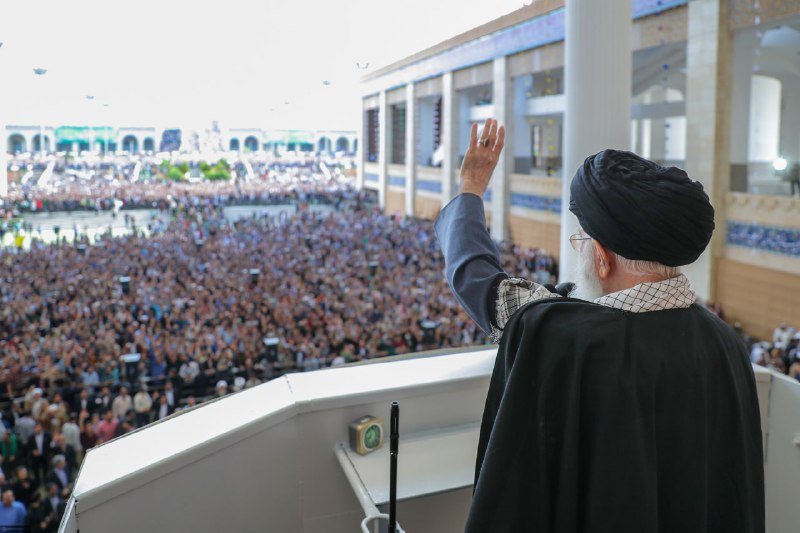
At roughly 11:30 UTC on 30 June 2026, Iran's foreign ministry spokesperson Esmail Baqaei walked reporters through the architecture of the country's recent understanding with the United States, and in doing so drew a careful perimeter around what Tehran is willing to say in public, and what it is not. The readout, carried live by Tasnim, Mehr, Fars and the state-affiliated Jahan Tasnim channel, was not a celebration. It was a contingency map.
Baqaei's central message was that Iran will honour its commitments exactly as long as Washington honours its own, that the text of the memorandum of understanding is "very precise," and that Tehran will monitor American compliance in real time and "use our tools and levers wherever necessary." Read together, the briefings amount to a doctrine of conditional reciprocity, delivered in advance of any breach rather than in response to one.
The conditional-compliance frame
The dominant message across the four state-aligned outlets is that the deal is bilateral in form and conditional in operation. Fars quoted Baqaei saying that "America, as the other party to the agreement, is responsible for stopping" any further escalatory steps, and that Tehran will continue implementing its commitments only "until the other side also implements its commitments." Tasnim's English feed sharpened the formulation: Washington is "committed to ending the war on all fronts, especially in Lebanon," and the memorandum's named counterpart on the Iranian side is, by implication, the United States.
This is not the language of a side that believes it has won. It is the language of a side that is building a public record it can cite later, in the IAEA boardroom, at the UN Security Council, and in the domestic political arena, if the United States moves first.
The IAEA thread
Baqaei was explicit that Iran's interaction with the International Atomic Energy Agency "continues in the same way as it has been in the last few months." That continuity claim matters because the IAEA file is the most plausible vehicle for a future crisis between the two sides. By anchoring expectations to "the last few months," Tehran is signalling that no new inspection architecture, no additional snapback, and no expanded access regime should be read into the current arrangement. The spokesperson was careful to add that Iran remains an NPT member and that its safeguards commitments stand. The framing is calibrated to keep the nuclear file out of the headlines as a breaking story, while reserving the right to treat any future IAEA escalation as an American move rather than an Iranian one.
Hormuz, Macron, and the limits of commentary
The most pointed exchange of the briefing came in response to French President Emmanuel Macron's recent comments about the Strait of Hormuz. Baqaei's response was dismissive in tone: "Commenting on everything is not a sign of responsibility." The Iranian position on the strait, he said, "is clear." Without restating the legal framework or invoking the threat of closure, Tehran chose to treat Macron's intervention as an irritant rather than as a negotiating opening. The structural read is that Iran is unwilling to let a European leader, rather than the American administration, set the agenda for a waterway Iran considers its own strategic prerogative.
The pillar that does the talking
The most striking line of the morning came from a separate Tasnim dispatch reporting that "all the pillars of the system are involved in decisions related to war and peace and negotiations." Translated into plain terms: this is not the foreign ministry freelancing. The readout carries the weight of the broader Iranian security establishment, which means Baqaei's careful phrasing is also the careful phrasing of the Supreme National Security Council, the IRGC's diplomatic channel, and the office of the president. That is why the briefing is so heavily footnoted with conditions, clauses and reciprocal verbs. In a system where multiple veto players must agree on every public sentence, ambiguity is policy.
Counterpoint and what remains untested
The Western diplomatic read of the same text would emphasise a different shape: that "real-time monitoring of American commitments" is the rhetoric of a side that expects Washington to cheat, that calling out Macron is the move of a side trying to peel Europe away from US coordination, and that invoking Lebanon is a reminder that Iran's regional deterrent remains on the table even while the nuclear file is being stabilised. Each of those readings has institutional champions in Brussels, in Tel Aviv and on Capitol Hill, and none of them is foreclosed by what Baqaei said.
What the four readouts do not contain is also informative. There is no dollar figure for any frozen assets, no timeline for sanctions relief tranches, no named envoy travelling to Muscat or Doha for the next round, and no public reference to the specific IAEA monitoring steps that would constitute a "snapback trigger." The sources do not specify whether the memorandum is a political understanding or a binding instrument, whether it survives a change of administration in either capital, or how Tehran would operationalise the "tools and levers" it claims to hold.
The honest summary is that Iran spent thirty minutes on 30 June telling its audience, foreign and domestic, that it is willing to live with this deal, but only on its own terms, and that the terms are written in the conditional tense. Whether that conditional survives contact with Washington's own conditional tense is the question the next IAEA board meeting, the next Hormuz transit dispute, and the next Lebanon ceasefire round will answer.
Monexus framed this as a doctrine-of-conditional-reciprocity story rather than a "deal-or-no-deal" story, because every Iranian readout was built around what happens if Washington moves first. The wire line will likely lead on the Macron exchange; we led on the compliance architecture, which is where the actual leverage sits.
Wire provenance
This editorial synthesis draws on the following public wire/social posts:
- https://t.me/tasnimnews_en
- https://t.me/tasnimnews_en
- https://t.me/farsna
- https://t.me/mehrnews
- https://t.me/JahanTasnim
- https://t.me/JahanTasnim