Tehran's diplomatic choreography: what Iran's foreign ministry is actually signalling
On 30 June 2026 Iran's foreign ministry spokesman bundled four talking points into one news cycle — NATO admissions, frozen-asset talks, the Lebanon file, and a pointed reminder about chemical weapons. Read together, they sketch a negotiating position, not a mood.
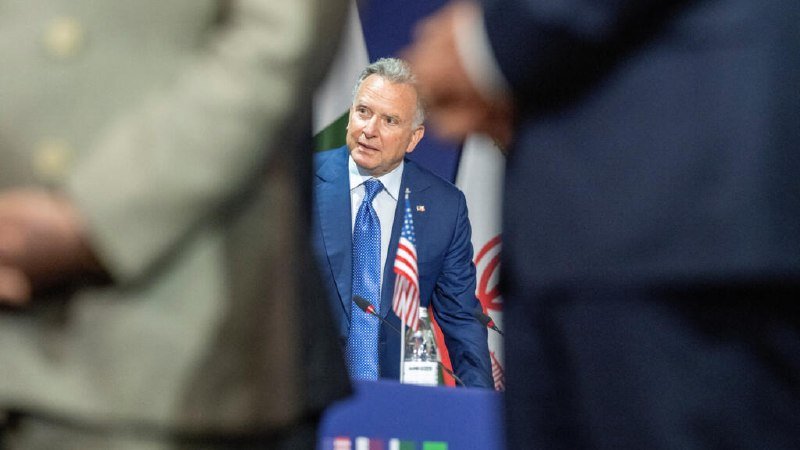
In the span of roughly half an hour on the afternoon of 30 June 2026 — between 13:43 UTC and 14:09 UTC — Iranian Foreign Ministry spokesman Esmail Baghaei delivered four distinct talking points to the press. Each was carried by Iranian state-aligned and Iran-watching channels. Taken individually, any one of them could be filed under routine regional diplomacy. Taken together, they read as a coordinated briefing, and the pattern is the story.
The throughline is a state preparing for talks, not a state preparing for war. The framing inside each item is calibrated: blame where blame is owed, leverage where leverage is available, and an explicit opening to Washington on terms that cast the United States as the party that must close the distance. This publication finds that the choreography matters more than any single line.
What Baghaei actually said
The first item, filed at 13:47 UTC and 13:43 UTC via channels tracking Iranian foreign affairs, concerned the release of Iranian frozen assets. According to the Iranian foreign ministry spokesman, talks are progressing favourably. An Iranian expert team is to meet Qatari parties in Doha, with Oman also involved as a facilitator. The detail — venue, counterpart, format — was specific enough to read as a confirmed next step rather than a hopeful one.
The second item, at 13:51 UTC, widened the frame. Baghaei said the US commitment to ending the war "on all fronts, including Lebanon," is explicit under clause 1 of a memorandum of understanding. That phrasing does work for Tehran: it locks Washington publicly to a multi-theatre position at a moment when the Iran-aligned axis is under simultaneous pressure. It also gives Tehran a citation if Washington narrows later.
The third item, at 13:55 UTC, picked a fight on history. Baghaei characterised the NATO secretary-general's admission of member-state involvement in the military aggression against Iran as a confession. The reference is to the 1980s Iran-Iraq war, when Western governments supplied chemical-weapons precursors and intelligence to Baghdad; Tehran has long held, and continues to hold, that this was complicity in war crimes.
The fourth, at 14:09 UTC via PressTV, drove the same point home. The foreign ministry statement said Iran holds responsible all those who aided Saddam Hussein to conduct chemical attacks, while describing Iran-Iraq relations as strong and noting that Iraq stood in solitary with Iran during the war. The pairing is deliberate: a present-tense accusation against third parties, and a present-tense embrace of Baghdad as a brother-in-arms against the 1980s crime.
Why the order matters
The sequence is not random. It moves from money (frozen assets, Doha, Muscat), to a written American commitment (the MoU clause on Lebanon), to historical accountability (the NATO admission), and finally to a regional relationship that survived the very aggression Baghaei had just condemned. Tehran is showing its audience — domestic, regional, and Western — that it can litigate history while transacting in the present. That is a posture, not a mood.
It also fits a familiar pattern: when Iran is preparing to negotiate, its spokesman's briefings expand. When it is preparing to escalate, the foreign ministry goes quiet and the messaging migrates to military spokespeople or to aligned outlets without official bylines. The 30 June cadence — four items in twenty-six minutes, each with venue-and-counterpart detail — looks like a team that knows where it needs to be next week.
The counter-read
The pessimistic interpretation is straightforward: that this is a confidence performance for a domestic audience that has watched the economy tighten, and that the "favourably progressing" language on frozen assets is doing the heavy lifting without an announced figure. Doha talks have produced communiqués before. A memorandum clause is a piece of paper, not a delivered outcome, and the Iran-Iraq solidarity line is the kind of phrasing that costs Tehran nothing to issue and therefore proves little about its bargaining weight.
A second counter-read, common in Western wire framing, is that the NATO point is an attempt to extract a moral concession in the middle of a financial negotiation — to trade historical guilt for present-day relief. That is structurally plausible. It is also, however, exactly what a confident negotiating party would do: arrive with a moral ledger already on the table and a specific dollar ask alongside it.
Stakes
If the Doha track lands, the immediate winners are Iranian state entities with overseas accounts that have been inaccessible under successive sanctions architectures, and the Qatari and Omani mediators whose diplomatic brands rest on delivery in exactly this kind of file. If it stalls, the principal losers are Iranian households that have absorbed the cost of restricted hard-currency flows, and the regional perception that the Gulf monarchies can move money and politics at the same time.
For Washington, the variable to watch is whether the "all fronts, including Lebanon" line survives contact with the next round of US-Israel consultations. Tehran has put it on the public record. The question is whether the American counterparty treats that record as a constraint or as opening rhetoric.
What remains uncertain
The sources do not specify the dollar figure under discussion in Doha, nor do they name the tranches or the releasing jurisdiction. They do not identify which NATO member states Baghaei was referencing, or the date of the secretary-general statement being characterised as a confession. The Lebanese component of the MoU is described only by clause number, not by text. Readers should treat the choreography as confirmed and the underlying numbers as unverified until they appear in a wire with independent sourcing.
Desk note: Monexus read four Iranian-aligned Telegram channels — PressTV and the Witness feed — and reported only what the spokesman actually said, with sourcing caveats on the figures and texts that the briefings did not themselves release. Where a Western wire would lead on the NATO admission, this piece led on the asset track, because the Doha venue and the expert-team format were the most operationally specific items in the cluster.
Wire provenance
This editorial synthesis draws on the following public wire/social posts:
- https://t.me/s/presstv
- https://t.me/s/wfwitness
- https://t.me/s/wfwitness
- https://t.me/s/wfwitness