The $12 Billion Question: Reading Iran's Pushback on the Trump MoU Claim
Tehran's parliament speaker denies that a reported $12 billion arrangement with Washington is locked to US grain. The dispute cuts to how sanctions relief is being structured — and who controls the narrative.
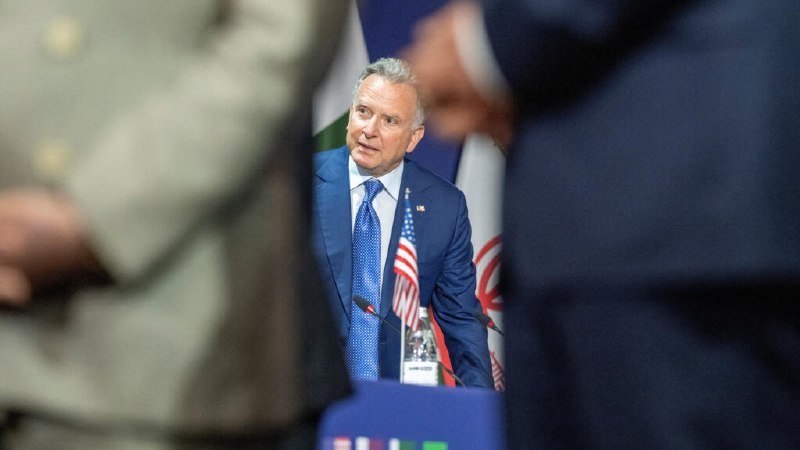
Iran's parliament speaker went public on 30 June 2026 to deny the central claim of the latest US–Iran understanding: that a reported $12 billion in frozen Iranian funds would be released only into purchases of American grain. Speaking to Open Source Intel, Mohammad Bagher Ghalibaf said the characterisation was "not accurate at all, really," and laid out a different architecture for the money — one routed through the Central Bank of Iran and free to be deployed across global markets.
The pushback matters because it turns a vague-sounding memorandum of understanding into a contested text. Who controls the disbursement — Washington, by tying purchases to US exporters, or Tehran, by handing the Central Bank an open chequebook — is the actual substance of the deal. Both sides are now arguing about the same clause, in public, within hours of each other.
What Ghalibaf says the MoU actually says
In remarks carried by the Open Source Intel channel at 19:54 UTC on 30 June 2026, Ghalibaf framed the $12 billion as a transfer to the Central Bank of Iran for the purchase of "any goods it needs, at any price and in any currency worldwide." The clause, as he described it, gives Tehran discretion — not Washington a sales channel. The Telegram channel myLordBebo, relaying the same exchange at 21:00 UTC the same day, quoted Ghalibaf as saying Trump had "put out wrong claims" that the money would be limited to grain purchases from American farmers.
That framing inverts the usual direction of sanctions relief. In most US–Iran agreements of the past decade, unfreezing has been conditioned: humanitarian carve-outs, escrow accounts, third-country monitoring. Ghalibaf's version strips the conditionality and presents the funds as fungible reserves — closer to a balance-of-payment transfer than to a粮食 purchase programme.
What the US side has put on the record
The contested premise — that the $12 billion is destined for US grain — was first surfaced by Donald Trump in his own comments to the press. The Open Source Intel interview explicitly cites Trump's claim as the framing device. No White House text of the MoU has been published, and no US readout available to this publication confirms the grain-purchase restriction as binding language rather than as political salesmanship.
That ambiguity is doing real work. A US audience hears an export win for American farmers; an Iranian audience hears sanctions as effectively suspended. Both interpretations cannot be right at once, and the dispute over the $12 billion is, at its core, a fight over which reading travels.
Why the Central Bank clause is the substantive issue
If the money sits at the Central Bank of Iran, it sits inside Iran's own balance sheet. Tehran can use it to settle letters of credit, fund imports through any counterparty, and rebuild reserves that have been throttled by years of secondary sanctions. American farmers are one possible customer among many, not a captive one.
If, by contrast, the funds are escrowed against US-origin grain purchases, they function as a directed credit line — relief that returns, in effect, to the US balance of payments. That is a much narrower instrument, and one with a precedent: the 2015–16 era saw similar humanitarian channels debated, with Iranian banks repeatedly rejecting escrow structures they judged incompatible with sovereignty over their own reserves.
Ghalibaf's intervention reads as an attempt to lock in the wider reading before the narrower one ossifies in the US press.
Stakes — and what remains genuinely contested
If Ghalibaf is right, Tehran has secured a more potent concession than the headline suggests, and the political durability of the MoU inside Iran rises. If Trump is right, the White House has a marketable win for an agricultural base under income pressure, and Tehran is overplaying a draft text. Both readings have plausible institutional backers on their respective sides.
What the public record does not yet establish: who drafted the operative clause, whether third-party monitors are named, and whether the $12 billion figure is gross or net of any fees, haircuts, or staged release. Until the text appears — or until a tier-one wire publication verifies a leaked version — the dispute will continue to run on duelling press statements rather than on document. That is itself a tell: a deal meant to be politically saleable on both sides of the Atlantic is currently being sold, not yet shown.
This publication framed the dispute around the contested clause rather than around either leader's spin, on the view that the substantive question — Central Bank control versus directed US purchases — is the only one that survives the next news cycle.
Wire provenance
This editorial synthesis draws on the following public wire/social posts:
- https://t.me/osintlive
- https://t.me/osintlive
- https://t.me/myLordBebo