Tehran's oil brag hides a thinner margin than the headline
Iran's parliament speaker touted record oil exports in late June 2026, but the distance between barrel volume and revenue actually retained by Tehran is where the real story lives.
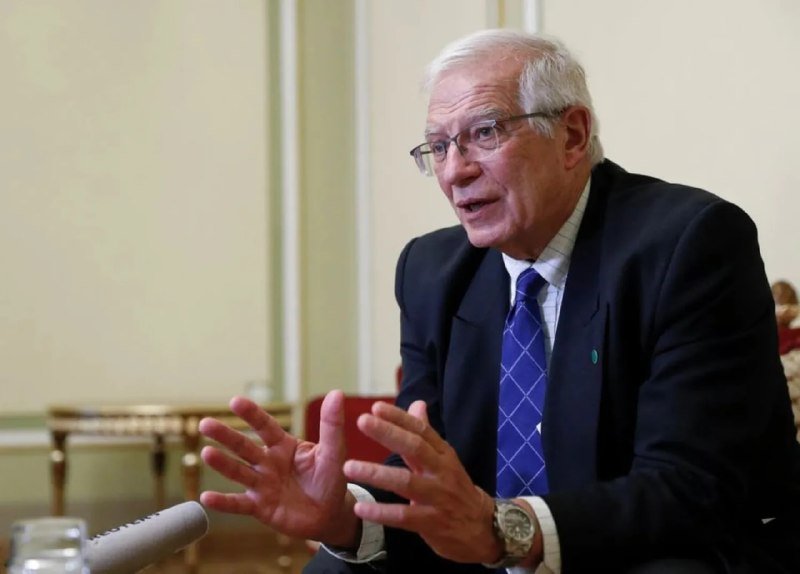
When Iran's parliament speaker stood before cameras in late June 2026 and declared that the country's oil exports had scaled record heights despite Western sanctions, the quote landed like a victory lap. Mohammad Bagher Ghalibaf, the former IRGC commander who now presides over the Majles, has made such declarations before. What was missing from most wire treatments was a second pass at the arithmetic.
Ghalibaf's claim, carried in summary by Western outlets and circulated widely on Telegram channels tracking the Iran file, deserves a structural read. Sanctions-era Iranian oil is a market where the headline number, the export volume, and the revenue retained by Tehran rarely move in the same direction. The distance between those three data points is where the story actually lives.
What the speaker was claiming
Ghalibaf's framing cast sanctions as a defeated policy instrument, and Iranian export infrastructure as having routed around them. The implicit audience was domestic: a parliament whose legitimacy rests partly on delivering economic normalisation after years of pressure. The implicit audience was also foreign: buyers in Asia, refiners in independent jurisdictions, and the small fleet of intermediaries willing to process crude that cannot touch the conventional dollar system.
The speaker did not publish a methodology, and the wires that carried his remarks did not demand one. That is standard practice for a parliamentary address, but it is also the gap where independent analysis has to do work. A barrel that leaves an Iranian terminal is one number. A dollar that lands in a usable account in Tehran is a different number. A barrel whose full margin ends up captured by a Chinese teapot refinery, a UAE-based trader, or a shadow fleet operator is a third.
The three numbers worth separating
Iranian oil economics under sanctions runs on three ledgers, and conflating them is the central error in most Western coverage of these announcements. The first ledger is volume: barrels lifted, terminal turnarounds, the number of vessels loading at Kharg Island or floating storage in the Gulf of Oman. The second is gross revenue: what those barrels sold for at the discounted prices that sanctions-compatible buyers will pay, often $5 to $15 below Brent. The third is net retention: what proportion of that gross revenue actually reaches the Iranian state after discounts, shipping premia, insurance surcharges, intermediary margins, and the cost of evading secondary sanctions enforcement.
The discounts are not theoretical. Industry reporting on Russian crude post-2022 documented comparable discounts in the 20 to 30 percent range; Iranian barrels have historically traded at steeper discounts still. The intermediary layer is not theoretical either. A small number of trading houses, often based in third countries with ambiguous enforcement relationships, sit between Iranian crude and the independent refiners who ultimately process it. Each intermediary takes a margin, and each intermediary adds a sanctions risk premium.
Why the brag reads thinner than the headline
Ghalibaf's claim that exports are climbing is, on its own, plausible. Independent tracking of Iran-bound vessels has long suggested that the Islamic Republic has rebuilt significant export capability since the early-2020s trough, leaning heavily on shipments to China and to a smaller set of buyers willing to navigate secondary sanctions risk. Tehran has also expanded its use of shadow fleet operators, vessel-to-vessel transfers, and renamed shipments to obscure origin.
What does not follow automatically is that higher export volumes translate into a higher fiscal contribution to the Iranian state. The wider the discount, the larger the intermediary cut, the more elaborate the sanctions-evasion architecture, the thinner the effective margin per barrel that Tehran actually books. This is the structural problem with treating parliamentary boasts as economic data: the speaker is reporting on the first ledger, while the budget in Tehran runs on the third.
There is also a temporal mismatch. Sanctions evasion infrastructure carries fixed costs: a renamed vessel, a forged bill of lading, a payment routed through a free-trade-zone intermediary, a reflagged tanker. Those costs do not scale linearly with volume. As Iran's shadow fleet has grown, the unit cost of evading the next barrel has plausibly fallen, which does improve net retention per barrel. But the broader architecture remains expensive relative to a sanctions-free baseline, and the per-barrel margin captured by Tehran is still smaller than the volume headline implies.
What the wires did not interrogate
Western coverage of the Ghalibaf remarks largely passed the quote through with light contextual framing about sanctions and a mention of Iran's main Asian buyers. That is a serviceable wire summary. It is not analysis. The structural question, how much of any given export dollar actually reaches Iranian state coffers, requires sources most wires do not routinely cite: independent vessel tracking, refined product flow data, customs filings in destination jurisdictions, and pricing intelligence from the small set of trading houses operating in this market.
None of that infrastructure was visible in the wire treatments of the speaker's remarks. Which means the public record, as of late June 2026, contains a confident claim of record exports and almost nothing in the way of independent corroboration on net revenue.
The political economy of the claim
Ghalibaf's statement also sits inside an internal Iranian political moment. The parliament speaker is a factional player, not a neutral economic statistician. His office has institutional reasons to project resilience: the establishment that backs him depends, in part, on a narrative that sanctions have been defeated. The audience for that narrative includes not just domestic constituencies but the regional partners Iran is courting, the Chinese buyers whose continued custom is itself a form of geopolitical signalling, and the Western negotiators who may eventually return to a deal.
Read that way, the brag is not just an economic claim. It is an opening bid in a future negotiation over sanctions relief, where Tehran's bargaining position depends on convincing counterparties that the pressure is already being absorbed.
What to watch next
Three data points would shift this analysis from structural speculation toward evidence. First, an independent vessel-tracking estimate of Iranian crude liftings for Q2 2026, with named tonnage and destination breakdowns. Second, a credible reconstruction of the discount Iranian crude is commanding relative to Brent, since the discount is the single largest lever on net revenue. Third, any official Iranian budget document that reconciles projected oil revenue with the export figures the speaker is claiming. None of these was available in the wire record around the Ghalibaf remarks, which is itself the finding. Until the three ledgers are reconciled, the brag is the only number on the table.
Desk note: Monexus treated the parliamentary claim as a data point to interrogate rather than a fact to relay, reading the rhetoric against the structural backdrop of sanctions-era oil economics and flagging the gap between headline volume and net state revenue.