Tehran draws a red line over Hormuz, and quietly tests whether the world will respect it
As Tehran negotiates a Friday accord in Geneva and prepares to bury Ayatollah Khamenei, Iran's delegation has publicly declared the Strait of Hormuz non-negotiable and warned it is 'more prepared for war than ever before.'
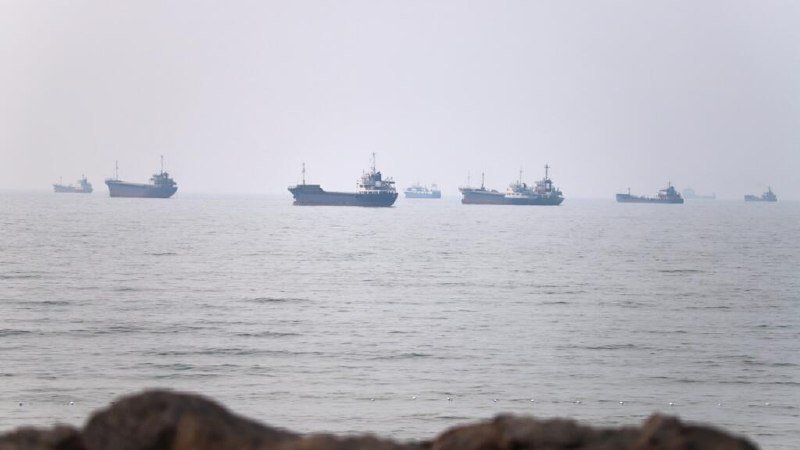
On 2 July 2026, an Iranian negotiator walked into a Geneva hall and announced that Iran would not relinquish control of the Strait of Hormuz, would accept nothing less than full implementation of the memorandum of understanding on the table, and was "more prepared for war than ever before." The remarks, broadcast live on YouTube by figures including the Tehran-based analyst S. M. Marandi, were delivered hours before a peace accord signing scheduled for Friday and a day before the funeral of Ayatollah Ali Khamenei, the martyred Leader of the Islamic Revolution, whose sacred flag had just been placed over his body in preparation for a ceremony drawing mourners from across the region. The juxtaposition is the story: a state in active mourning, projecting grief onto its capital's main squares, while signalling that its most strategic chokepoint is, in its own telling, non-negotiable.
The strait and the memo
What the Iranians were defending, in plain terms, is the right to govern the narrow waterway through which roughly a fifth of the world's seaborne oil passes. The American position, as relayed by Middle East Eye's live blog on 2 July, is a direct warning against closing it: a US envoy has publicly cautioned Tehran over any Hormuz closure on the eve of the accord. The MOU under negotiation is the document that would translate that warning into text, a clause-by-clause arrangement that, in the Iranian telling, codifies Iran's authority over the strait and the terms under which foreign vessels may transit. Iranian negotiators have framed the MOU's full implementation as a precondition for the deal holding. Anything less, the argument runs, is a deal on paper and a crisis at sea.
The Israeli factor hangs over the room. According to a New York Times report cited by DDGeopolitics on 2 July, US officials believe Israel planned to assassinate Iran's top negotiators during peace talks earlier this year. US officials suspected during the April negotiations that Israel was attempting to derail the process, the paper said. The reported episode, if accurate, gives Iranian insistence on Hormuz control a logic beyond energy economics: if the Iranian delegation itself was a target, the security architecture around any agreement has to live somewhere physical. The strait, and the air and sea over it, is where Tehran wants that architecture anchored.
What Qatar is selling
Qatar has emerged as the deconfliction broker. Per Middle East Spectator, the Qatari channel described a back-channel arrangement designed to keep the strait open while the MOU's terms are finalised, presented as parallel to the Iranian claim of exclusive demining authority in any post-conflict scenario. Both claims are facts on the ground. The demining authority gives Iran the practical means to clear or hold navigation channels; the Qatari channel gives third-party shipping a way to read the strait's status in near real time. Neither side is framing this as concession. Doha is offering insurance, Tehran is offering reach, and the MOU is supposed to be the document both fit inside.
Why this is being tested now
The Bazan refinery in Haifa, Israel's largest, has suffered damage Middle East Eye reports as "much more extensive than what has been announced by the company or the Israeli government," with repairs measured in years rather than months. Iran is operating from a posture of domestic mobilisation, not isolation: public transport in Qom has been made free for the funeral days, the "Must rise" symbol of the martyred leader's clenched fist has been installed in Tehran's Revolution Square, and a former Irish member of the European Parliament has publicly urged attendance at the ceremony, evidence of a diplomatic optics effort aimed well beyond the Shia world. The clerical-bureaucratic state is showing it can absorb a leadership transition and a regional confrontation in the same week. The MOU is the test of whether its interlocutors believe that.
The red line, measured
Hormuz is not a new red line. It is, however, the first one Iran has drawn in writing while simultaneously signalling readiness for the alternative. The memo's full implementation is what Tehran is asking the world to respect; the strait's closure is the lever it is reserving the right to pull if implementation is judged partial. Whether the Friday signing produces a document Iran recognises as full implementation is the question that converts a warning into a precedent. Geneva answers it. The strait answers what comes after.